By Lucía Marín
Guide reviewed under editorial standards
This experience is structured to provide an itinerary, local context, transport, recommended season and mistakes to avoid. See how we review guides
How to make the most of this experience
Useful planning notes for Pontevedra If It Rains: Squares, Arcades, Market And The Lérez with a Culture lens, especially if you are travelling with limited time or staying nearby.
Recommended duration
Three to six hours if you choose visiting times well and leave room to wander.
Best season
Year-round, adjusting timings to avoid heat, rain or peak crowds.
How to get around
Prioritise public transport and walking sections; avoid moving the car between nearby stops.
Best for
Travellers who want context, museums, architecture and meaningful pauses.
Accessibility
Check access, timed bookings and lifts in specific monuments or museums.
Estimated budget
Medium, with the main spend on tickets, guided visits or temporary exhibitions.
Keep the most demanding visit for the morning and leave the afternoon for walks from your stay.
Arriving without checking schedules or booking limited-capacity spaces too late.
Pontevedra is best understood on foot. The city does not shout for attention: it opens stone squares, arcades, churches, markets, cafés and walks beside the Lérez with a natural ease that slows visitors down almost without them noticing. It is a Galician capital with maritime and mercantile roots, but also a city that has turned walking into part of its identity.
This experience suggests exploring Pontevedra without rushing, entering through its historic centre, following the thread of its squares and then moving toward the river and the ria. It is not a list of isolated monuments; it is a way of letting the city explain itself through granite, terraces, market life, Portuguese Way pilgrims and everyday rhythm.
A city for walking without negotiating with traffic
Central Pontevedra is one of the most pleasant urban experiences in Galicia for travellers who want to move without a car. The scale helps: almost everything important sits within walking distance, and that changes how you look. Instead of jumping between points, you connect streets, squares and small pauses.
The best approach is to leave the car outside or arrive by public transport and accept the pedestrian logic. The city rewards that choice with a rare urban feeling: you can talk, browse, cross a square or stop in front of a façade without measuring traffic lights and noise.
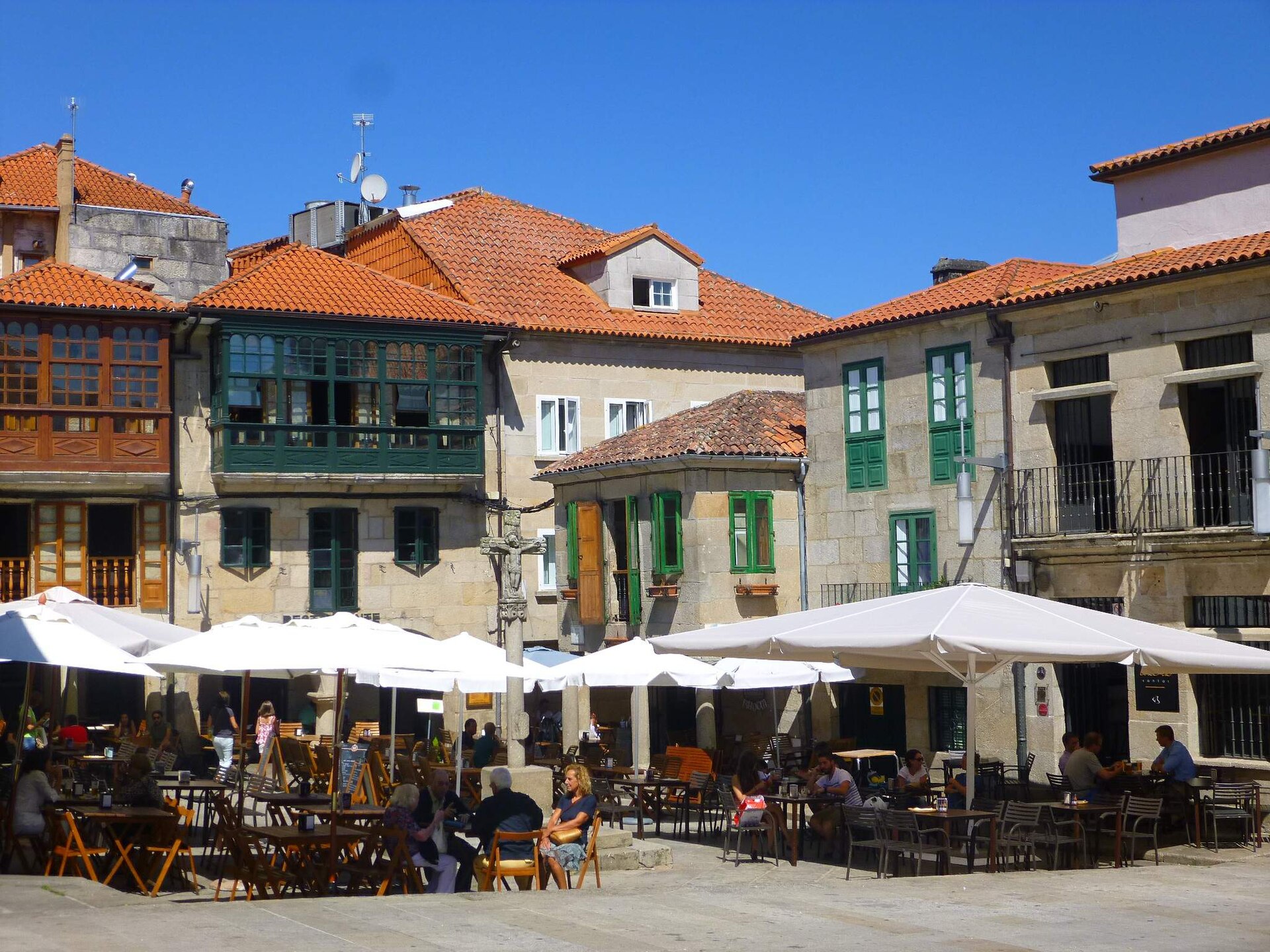
Praza da Leña and the heart of the old town
Praza da Leña gathers the most recognisable image of the old town: stone, a cruceiro, arcades, gallery houses and an almost domestic scale. It was once a market square and today works perfectly as a place to sit, get your bearings and understand Pontevedra’s relationship with public space.
From here, wandering is the right method. Ferrería, Teucro, Verdura and Méndez Núñez appear like rooms in the same house. Each square has a different tone: some feel more monumental, some more social, others still keep a neighbourhood pulse.
La Peregrina and the Portuguese Way
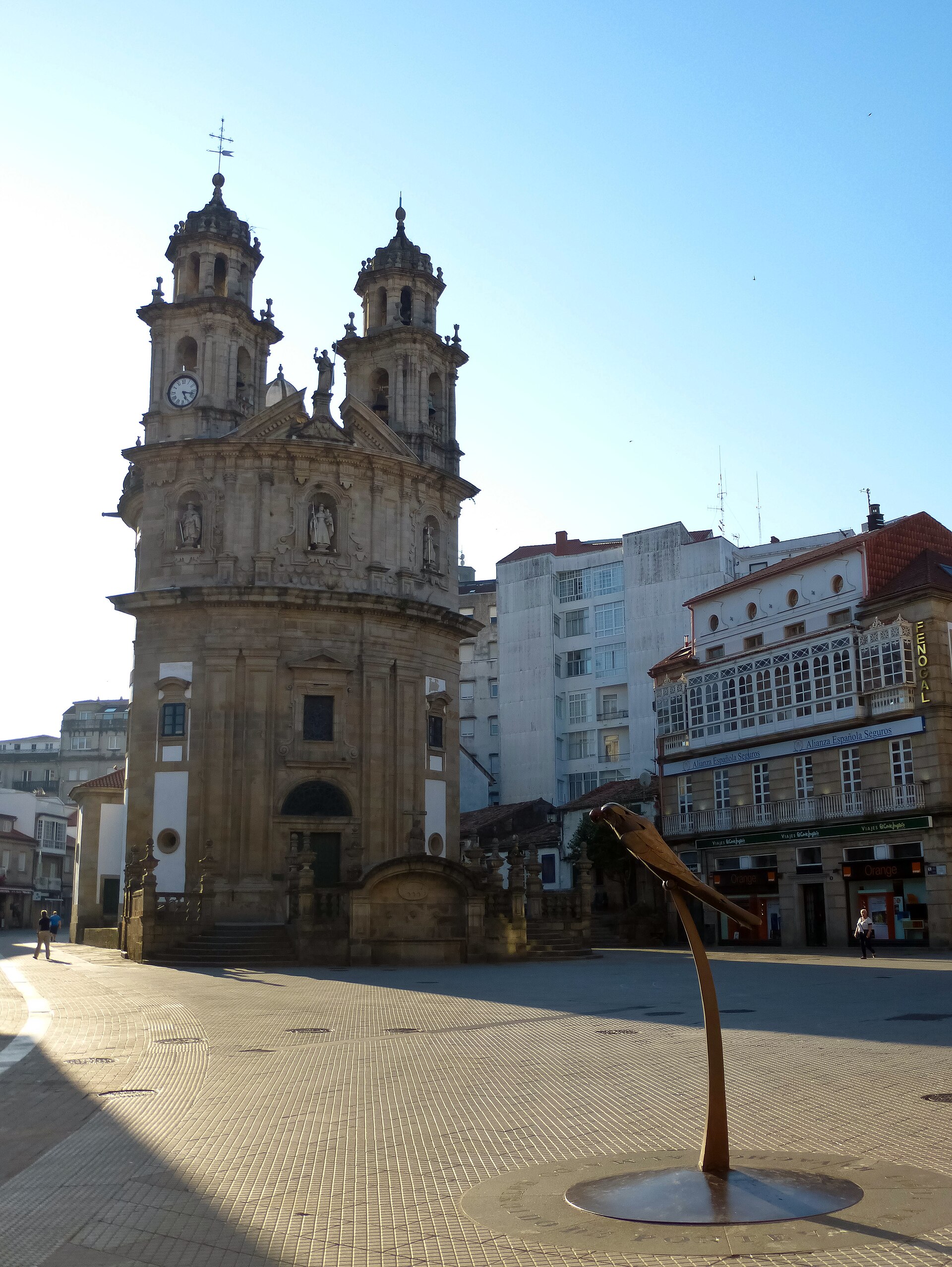
The Sanctuary of the Virgen Peregrina is one of the city’s symbols. Its scallop-shell plan speaks to the Portuguese Way, which crosses Pontevedra on the route to Santiago. Watching pilgrims pass beside shops, locals and visitors shows how the city lives between daily life and travel.
La Peregrina also works as a transition point between the historic city and the more active Pontevedra. Nearby are San Francisco, Ferrería and shopping streets where the walk changes register without leaving the same human scale.
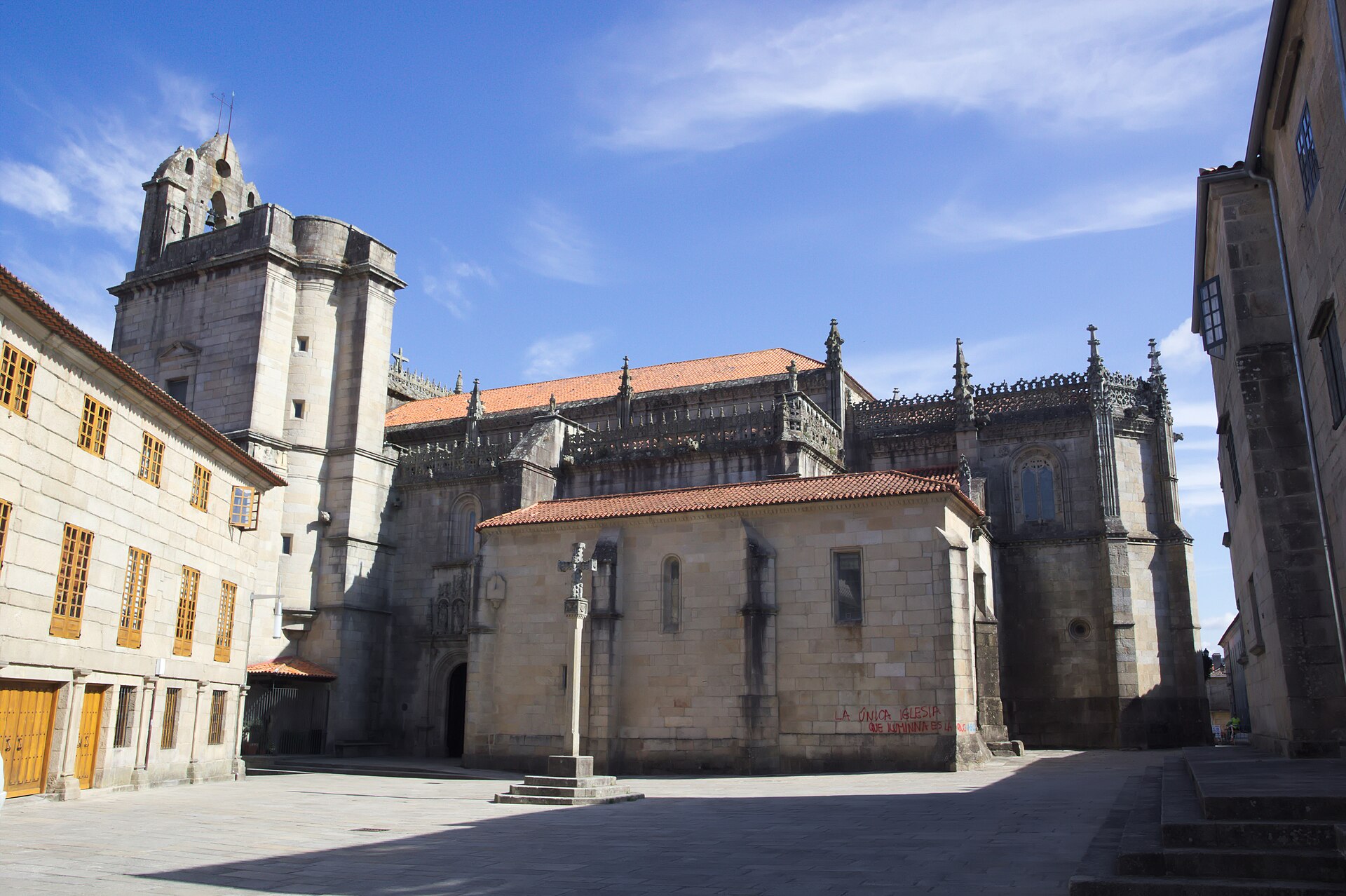
Santa María, Santo Domingo and monumental Pontevedra
The Basilica of Santa María la Mayor recalls Pontevedra’s historic strength as a maritime town. Its stone façade, sculptural details and elevated position deserve an unhurried visit. You do not need to turn it into an art lesson; letting the carved granite impress you is enough.
The ruins of Santo Domingo and the Museum of Pontevedra complete that heritage reading. The city has enough cultural depth to fill a whole morning, but the beauty is that everything feels integrated into the walk rather than staged.
Food market and Rías Baixas gastronomy
The Mercado de Abastos brings the most sensory side: fish, shellfish, vegetables, bread, cheeses and the energy of a small city where produce still has names, opening hours and conversations. It is a wonderful stop for understanding why Pontevedra eats so well.
At midday, the plan can continue with simple Galician cooking or a more polished table in the historic centre. Octopus, empanada, fish, shellfish, seasonal vegetables and Rías Baixas wines fit better when you arrive hungry from walking, not just from having booked.
The Lérez, Illa das Esculturas and the way toward the ria
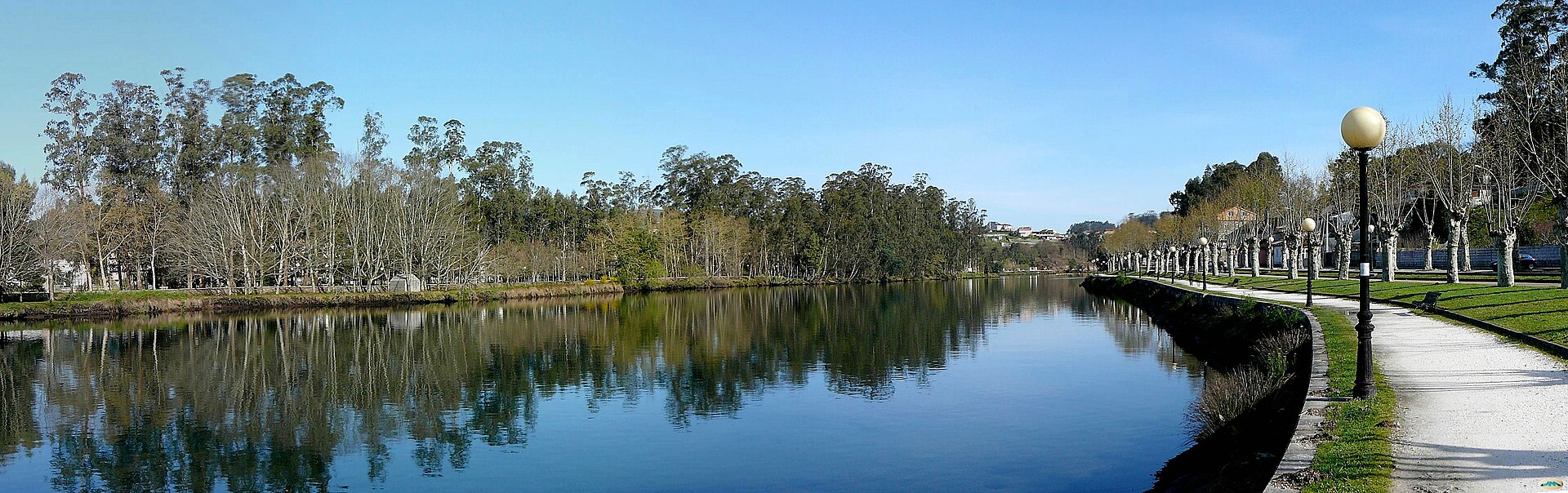
Pontevedra does not end in its squares. The Lérez river opens a different air: greener walks, bridges, quiet banks and the Illa das Esculturas, a place where contemporary art and river nature coexist in a very Pontevedra way, without grand gestures.
If the afternoon allows, continue toward the ria. Combarro is very close and completes the experience with seaside hórreos, cruceiros, fishermen’s houses and that mix of stone and water that sums up much of the Rías Baixas.
When to go and how to experience Pontevedra
Spring and autumn are ideal for walking with good light and less visitor pressure. In summer, Pontevedra works beautifully as a quiet base for combining city, ria and nearby villages. On rainy days, the old town keeps its charm: arcades, cafés and wet stone help a lot.
The perfect experience fits into one long day, but gains a lot with one night. Morning for squares and monuments, market or tavern lunch, a Lérez walk and an afternoon toward Combarro or the ria. Pontevedra does not need epic drama: it needs comfortable shoes and the desire to look slowly.
What To Do If It Rains Or The Day Slows Down
A balanced day in Pontevedra works best like this: in the morning, start with old-town squares and Peregrina as the city wakes; around midday, link the market and Galician lunch without leaving the centre; in the afternoon, walk down to the Lérez or Illa das Esculturas for a change of air; at sunset, go toward Combarro or return to a quiet terrace; and at night, dine in the old town without hurry and walk back. The point is not to fill every minute, but to avoid the most common friction points: heat, queues, long transfers and meals chosen when everyone is already tired.
Covered Route, Short Walks And Shelters
Think of the experience as a simple line: Praza da Leña, Peregrina, Santa María, market, Lérez and a possible Combarro outing. This mental map helps you decide what to skip if the day gets slower than expected. A good itinerary is not the one that covers the most places, but the one that keeps the route coherent and gives each stop enough time to be remembered.
Staying Close To The Backup Plan
If you sleep in an apartment, confirm whether it is in a pedestrian area and how luggage drop-off works. Pontevedra’s comfort lies in not depending on the car.
Grey-Day Mistakes
Do not use Pontevedra only as a stop on the way to beaches; do not drive into the old town without a plan; and do not leave the river out of the itinerary.
Weather, Transport And Real Accessibility
Spring and autumn are perfect; summer lets you combine ria and city; with rain, arcades and cafés keep the plan alive. For transport, choose the simplest connection back to your lodging before adding extra stops. For accessibility, reduce cobbled streets, steep climbs or long beach approaches when travelling with children, older guests, wheelchairs or heavy luggage.
Where To Take Shelter And Eat Well
Eat with judgement by looking at the market, old-town taverns and Rías Baixas produce. A short menu with clear fish or vegetables is better than overbroad tourist menus.
Common questions before you go
Quick answers to decide whether Pontevedra If It Rains: Squares, Arcades, Market And The Lérez fits your trip and how to plan it with a Culture lens.
How much time should I set aside for Pontevedra If It Rains: Squares, Arcades, Market And The Lérez?
Three to six hours is usually enough if you prioritise two or three key visits instead of trying to cover every cultural stop at once.
What is the best season for this experience?
The best time is when you can combine indoor visits with outdoor walks. In summer, keep the middle of the day for museums or rest.
What is the best way to get around?
Group visits by area and walk between them, using public transport mainly to enter or leave the neighbourhood.
What is your advice if I am staying nearby?
Book the most demanding activity early and return to your accommodation before a lighter second outing.
What mistake should I avoid?
Do not only check what to see: check opening hours, bookings and closing days. That detail can save half a morning.
Operating a Rental in this area?
Stay fully compliant with Spain's strict tourism regulations. HazCheckin automates your guest registration and legal reporting directly to Spanish authorities.