By Marcos Riera
Guide reviewed under editorial standards
This experience is structured to provide an itinerary, local context, transport, recommended season and mistakes to avoid. See how we review guides
How to make the most of this experience
Useful planning notes for 48 Hours In Toledo: Three Cultures, Viewpoints And Stone Streets with a Destinations lens, especially if you are travelling with limited time or staying nearby.
Recommended duration
Between half a day and two days, depending on your pace and the stops you add.
Best season
Year-round, adjusting timings to avoid heat, rain or peak crowds.
How to get around
Prioritise public transport and walking sections; avoid moving the car between nearby stops.
Best for
First-time visitors, couples, apartment-based travellers and weekend breaks.
Accessibility
Check slopes, cobbles and real walking distances before closing the route.
Estimated budget
Medium: combine free visits with one or two well-chosen paid entries.
Keep the most demanding visit for the morning and leave the afternoon for walks from your stay.
Trying to see everything in one day and ending up jumping from photo to photo.
Toledo seems built to make travelers slow down. The city rises above a bend in the Tagus River like a golden stone fortress, with towers, walls, convents, synagogues, churches and lanes that change with every shift of light. Less than an hour from Madrid, it preserves an unusual historical density: visiting Toledo is not only about seeing monuments, but about reading the layers several cultures left in a very small space.
This experience explores Toledo slowly, from the valley viewpoints to the heart of the Jewish Quarter, passing through the Primate Cathedral, the Alcázar, the bridges over the Tagus and the streets where the medieval coexistence of Christians, Jews and Muslims can still be felt. It works perfectly as a day trip, but rewards visitors who stay overnight and see it once the groups have left.
Mirador del Valle: Toledo Before You Enter
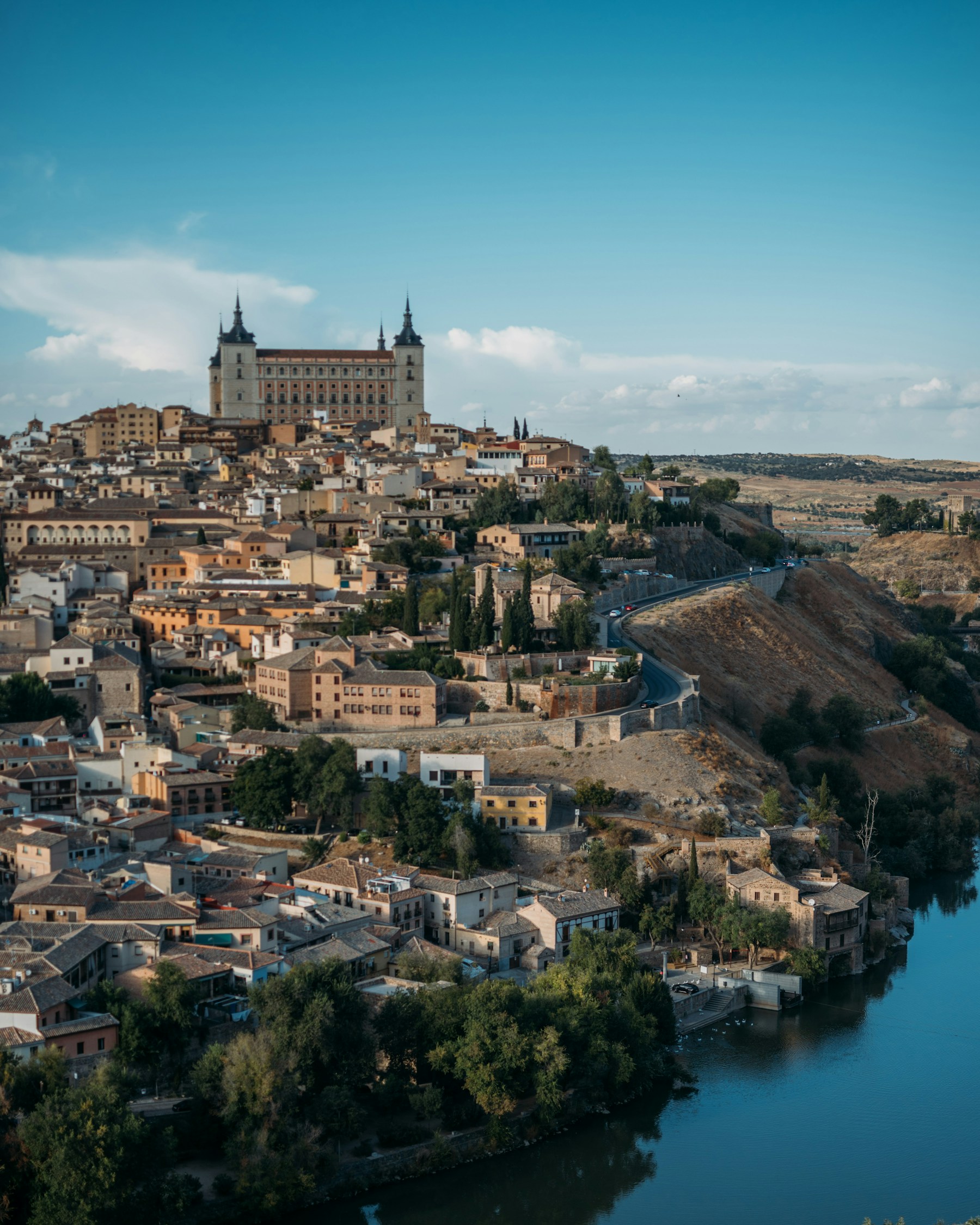
The first encounter with Toledo should be from the Mirador del Valle. From that curve across the river, the city suddenly makes sense: the Tagus surrounding the rock, the Alcázar dominating the skyline, the Cathedral rising among rooftops and the historic center packed tightly above the Castilian landscape. It is a classic view, but also a useful way to orient yourself before entering the maze.
Early morning and sunset offer the best light. In the morning, the stone slowly warms up; at dusk, Toledo turns copper-colored, making it easy to understand why so many painters became obsessed with its profile. Do not make it only a quick photo stop: sitting for a few minutes helps you grasp the city’s true scale.

The Primate Cathedral and the Weight of Stone
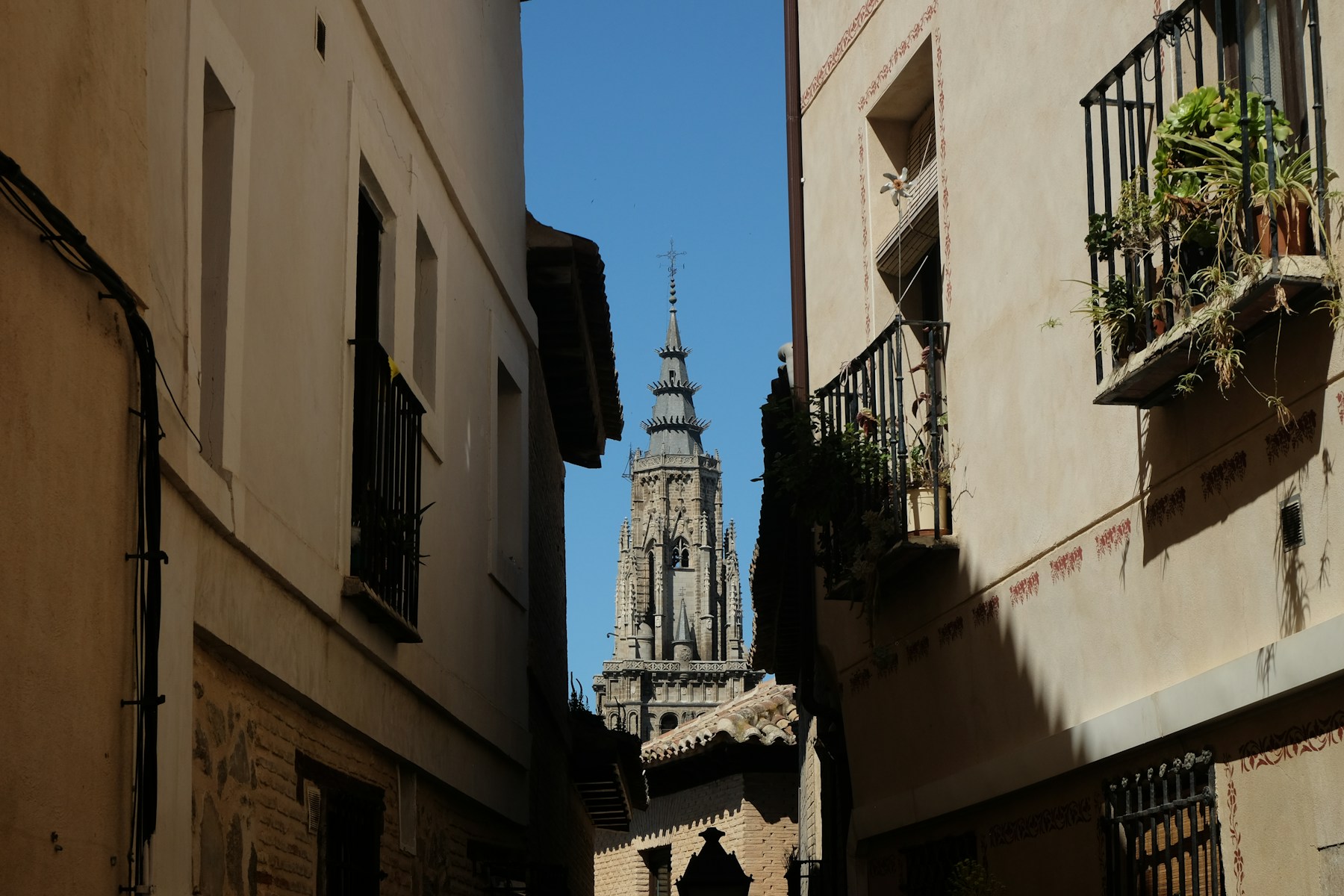
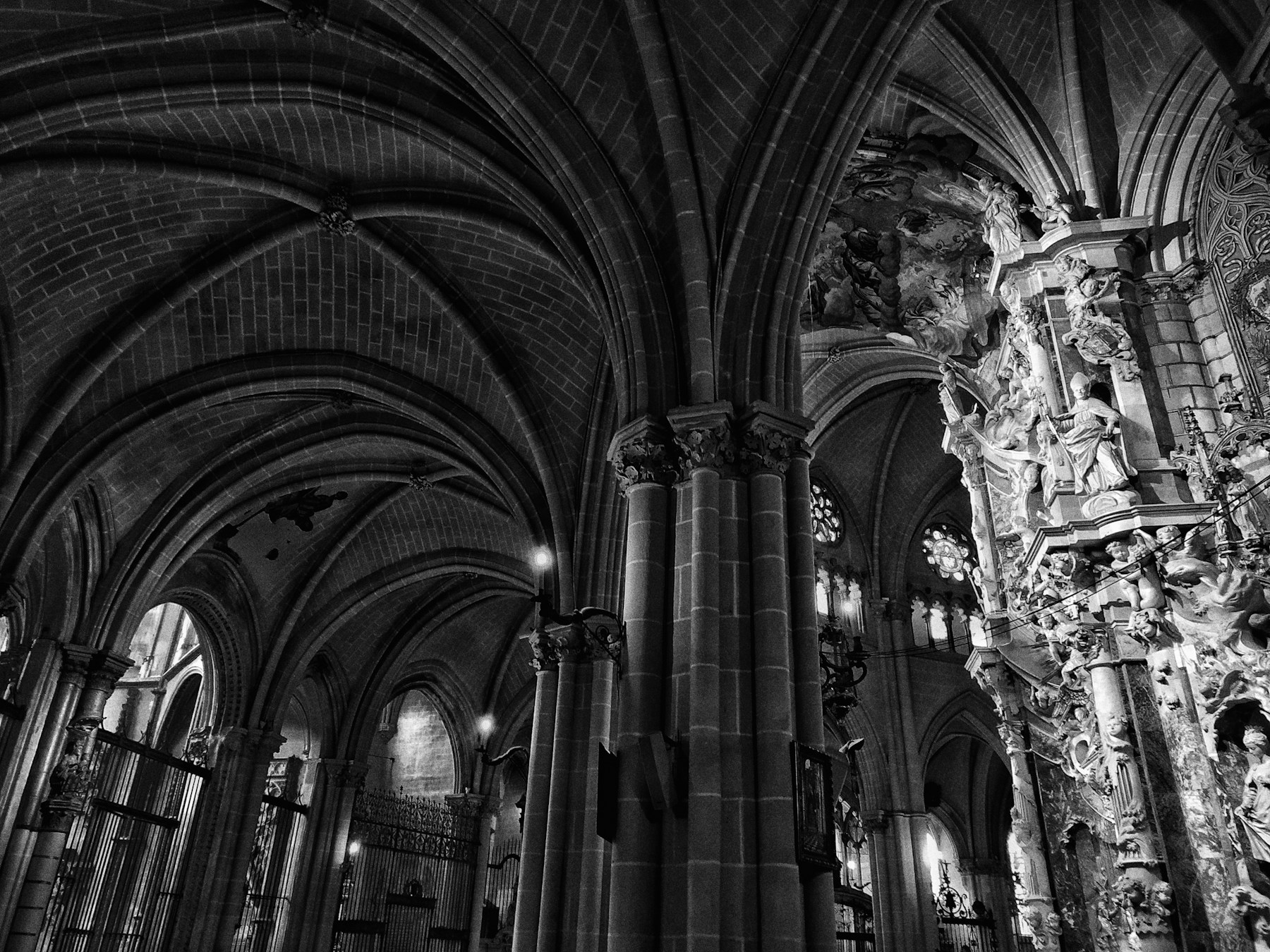
Toledo Cathedral is not only large: it is overwhelming by accumulation. Chapels, grilles, stained glass, choir stalls, sacristy, vaults and altarpieces create a world where Gothic architecture mixes with centuries of ecclesiastical power, art and memory. Entering slowly matters, because each space changes the tone of the visit: some impress through height, others through detail, others through shadow.
The Transparente, the sacristy and the treasury draw many eyes, but the experience improves if you allow some wandering. Toledo is best enjoyed when you stop chasing only the “must-sees” and let the secondary corners appear: a side door, an inscription, a quiet chapel, a column worn by centuries of passing hands.
Jewish Quarter, Synagogues and Streets Folding Inward
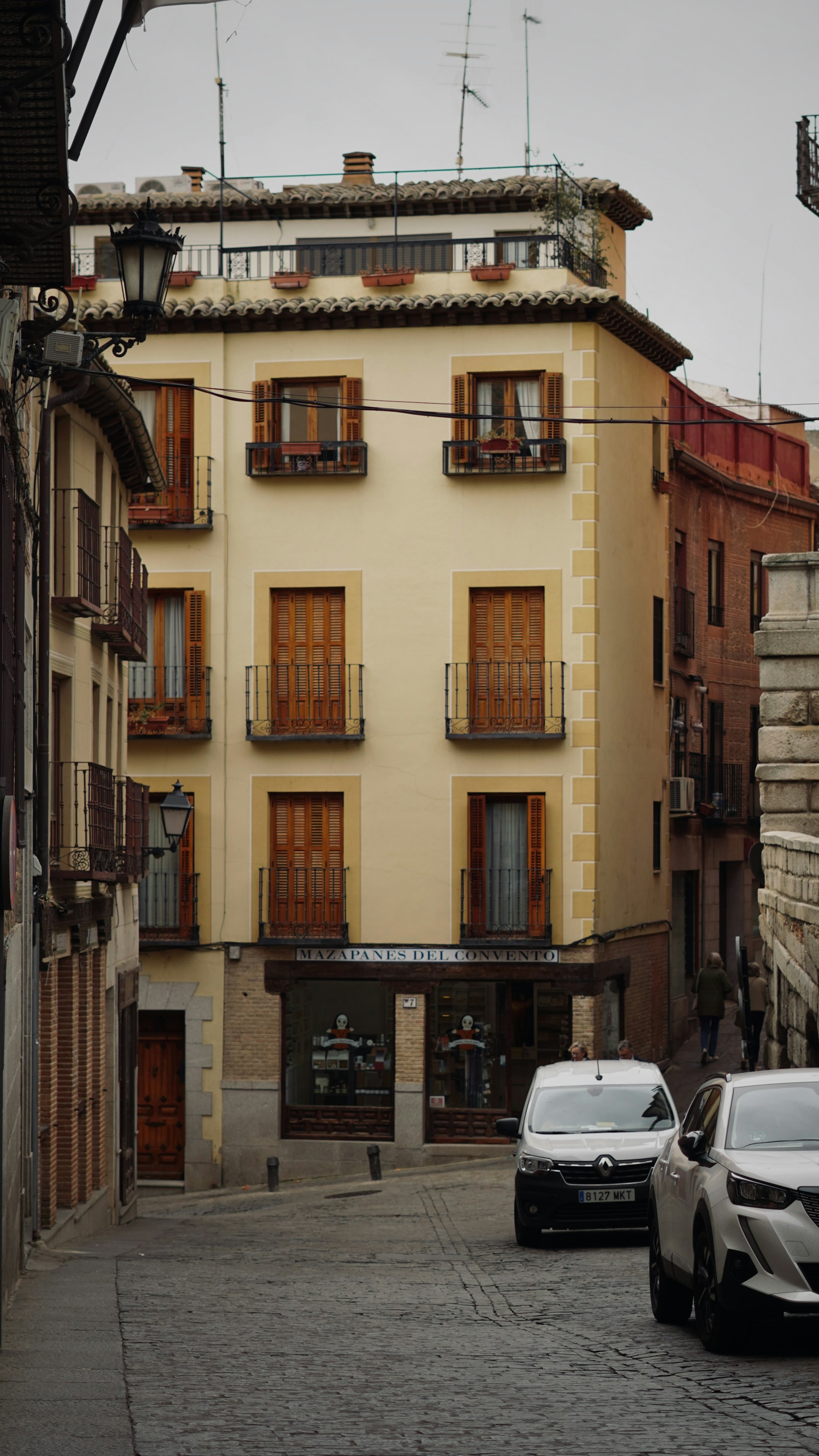
The Jewish Quarter is where Toledo becomes more intimate. Narrow streets, patios, small slopes and sober facades lead toward the Synagogue of El Tránsito and Santa María la Blanca, two essential spaces for understanding the city’s cultural complexity. They should not be read as isolated monuments, but as living remains of an urban fabric where different traditions touched, coexisted and also collided.
Walking through this part of the city means accepting detours. The streets do not always seem to lead anywhere, and that is exactly their charm. Suddenly a tiny square appears, or a river view, or a damascene workshop, or a wall showing how Toledo used every meter of rock available.
Alcázar, Zocodover and Everyday Toledo
The Alcázar imposes itself from almost every point, but its interest is not only military architecture. It also works as a constant visual reference: when you get lost in the historic center, its volume helps you regain orientation. Nearby, Plaza de Zocodover sets the everyday rhythm of Toledo, with terraces, arrivals and departures, visitors, residents and crossing routes.
From Zocodover you can descend into shopping streets, look for marzipan in traditional bakeries or continue toward quieter areas. Toledo is not comfortable in the modern sense: it has slopes, cobblestones and irregular routes. But that discomfort is part of its character. Every climb changes the perspective and every descent seems to lead to another century.
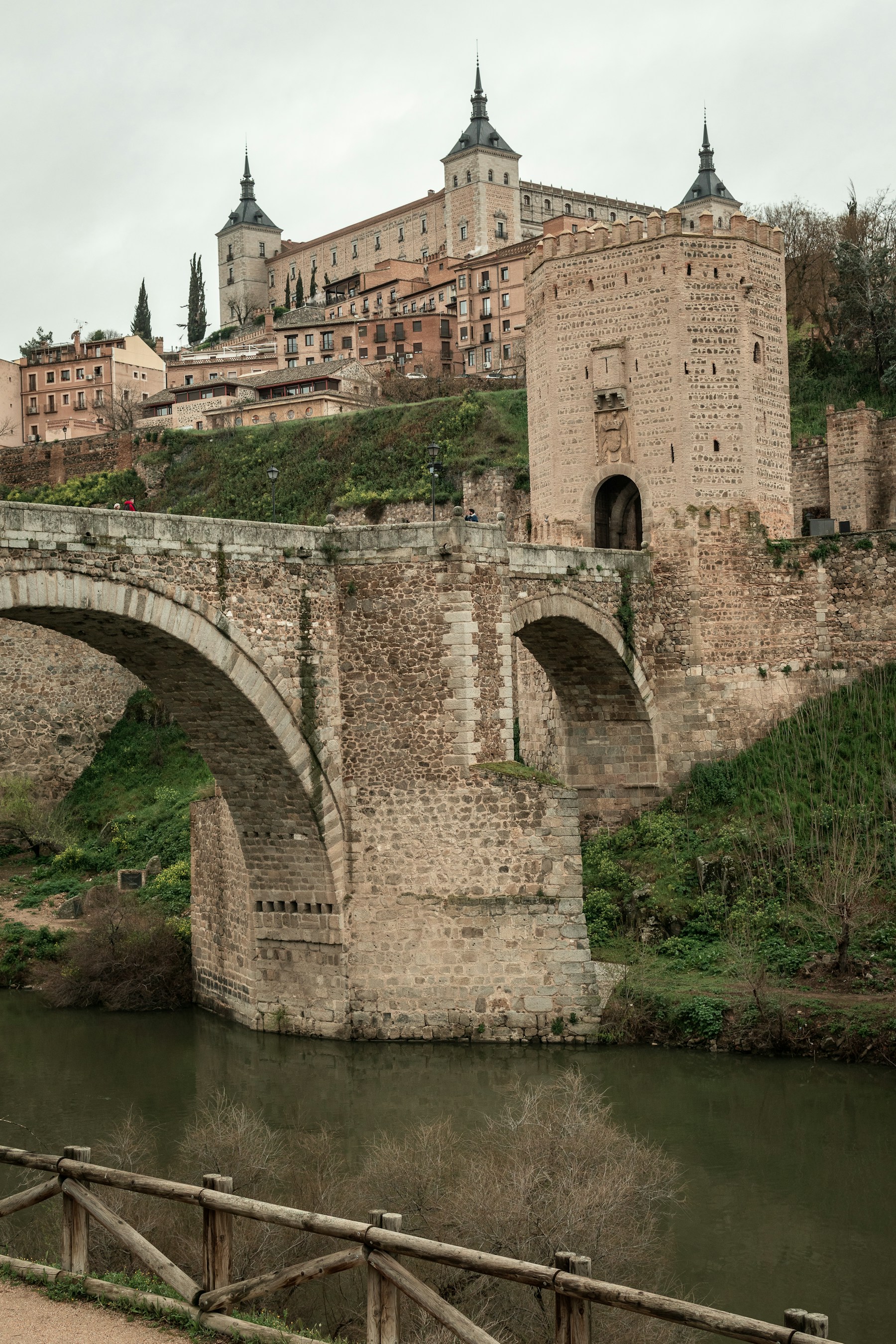
Bridges Over the Tagus and Walks with Perspective
The Tagus is not just a scenic frame: it explains Toledo’s defensive position and provides some of its most memorable walks. The San Martín and Alcántara bridges let you briefly step outside the historic center and look back from below, with walls and rock taking center stage. It is a different way to feel the city’s weight.
If there is time, combine the interior of the old town with an outer stretch by the river or toward the viewpoints. After hours inside narrow streets, the open landscape changes the rhythm of the visit. Toledo stops being only stone and appears as territory: river, slope, horizon and compact city in balance.
Castilian Flavors: Marzipan, Game and Nearby Wines
Toledo is also remembered at the table. Marzipan is the most obvious sweet symbol, linked to convents and historic bakeries, but local cuisine goes further: stewed partridge, carcamusas, Manchego cheeses, hearty dishes, nearby wines and simple bars that can solve lunch very well. The key is to avoid the most automatic tourist menus and look down side streets.
For a short visit, eat without stretching the meal too much and save energy for the afternoon. For an overnight stay, the plan changes: once the day trips leave, Toledo becomes quieter, more theatrical and easier to hear. Dinner after a night walk around the Cathedral and Jewish Quarter is one of the best ways to understand its atmosphere.
Practical Tips
Toledo can be visited in a day from Madrid, but two days allow a much calmer rhythm. Comfortable shoes matter most: the historic center has slopes, uneven stone and short distances that tire more than expected. In summer, avoid the central hours of the day; in winter, the city gains a cold, photogenic light.
If you arrive by train, the station sits outside the historic center and it is worth taking a bus or taxi up, especially with luggage. Inside the city, walking is best, and getting lost is part of the plan. Toledo is not conquered in a straight line: it is discovered in layers.
A Getaway with Deep Memory
Toledo’s power lies in its concentration. Within a few streets, religion, art, defense, trade, legends, food and landscape intersect. It is monumental without ceasing to feel human, touristy without losing mystery and close to Madrid without feeling like an extension of the capital. Anyone who walks it slowly understands that its beauty is not only in the views, but in the way history still occupies every corner.
A Smart 48-Hour Plan
A balanced day in Toledo works best like this: in the morning, enter early through Zocodover or Bisagra before the group hours; around midday, reserve the central block for the Cathedral, Santo Tomé or a synagogue depending on your interests; in the afternoon, slow down in the Jewish quarter and look for patios or side streets; at sunset, go out toward Mirador del Valle to understand the whole city; and at night, return inside the walls when the crowds thin and the stone changes tone. The point is not to fill every minute, but to avoid the most common friction points: heat, queues, long transfers and meals chosen when everyone is already tired.
How To Order The Route Without Backtracking
Think of the experience as a simple line: Bisagra or Zocodover, Cathedral, Jewish quarter, Tagus viewpoints and a night inside the walls. This mental map helps you decide what to skip if the day gets slower than expected. A good itinerary is not the one that covers the most places, but the one that keeps the route coherent and gives each stop enough time to be remembered.
Best Base For Staying Overnight
If you stay inside the old town, travel light: many streets have slopes, steps and awkward access for large luggage.
Three Choices That Can Spoil The Trip
Do not treat Toledo as a three-hour trip from Madrid; do not improvise parking inside; and avoid trying to see everything at midday in summer.
When To Go And How To Move Around
Spring, autumn and winter evenings are excellent; in summer, start very early and plan a long pause. For transport, choose the simplest connection back to your lodging before adding extra stops. For accessibility, reduce cobbled streets, steep climbs or long beach approaches when travelling with children, older guests, wheelchairs or heavy luggage.
Where To Eat Beyond The Obvious
Choose areas slightly away from the Zocodover-Cathedral axis for calmer meals, look for real Castilian cooking and book ahead if you want a seated weekend table.
Common questions before you go
Quick answers to decide whether 48 Hours In Toledo: Three Cultures, Viewpoints And Stone Streets fits your trip and how to plan it with a Destinations lens.
How much time should I set aside for 48 Hours In Toledo: Three Cultures, Viewpoints And Stone Streets?
A half day is the sensible minimum. If it is your first visit, leave time to walk slowly and add a proper meal or rest stop.
What is the best season for this experience?
It works year-round, but spring and autumn usually offer the best balance of weather, light and crowds.
What is the best way to get around?
Combine public transport with short walks. Moving a car between central stops usually costs more time than it saves.
What is your advice if I am staying nearby?
Use the proximity to split the plan in two: the main visit in the morning and a freer walk late in the day.
What mistake should I avoid?
The most common mistake is trying to see everything in one day. Choose a coherent route and leave something for another time.
Operating a Rental in this area?
Stay fully compliant with Spain's strict tourism regulations. HazCheckin automates your guest registration and legal reporting directly to Spanish authorities.