
By Inés Valls
Guide reviewed under editorial standards
This experience is structured to provide an itinerary, local context, transport, recommended season and mistakes to avoid. See how we review guides
How to make the most of this experience
Useful planning notes for Bilbao If It Rains: Guggenheim, Sheltered Estuary Walks And Pintxos with a Destinations lens, especially if you are travelling with limited time or staying nearby.
Recommended duration
Between half a day and two days, depending on your pace and the stops you add.
Best season
Summer and late spring, avoiding the middle of the day for outdoor plans.
How to get around
Prioritise public transport and walking sections; avoid moving the car between nearby stops.
Best for
First-time visitors, couples, apartment-based travellers and weekend breaks.
Accessibility
Check slopes, cobbles and real walking distances before closing the route.
Estimated budget
Medium: combine free visits with one or two well-chosen paid entries.
Keep the most demanding visit for the morning and leave the afternoon for walks from your stay.
Trying to see everything in one day and ending up jumping from photo to photo.
Bilbao is a city that reinvented itself without erasing its memory. Where shipyards, blast furnaces and industrial mist once dominated, the river now reflects titanium, bridges, museums, terraces and neighborhoods that have learned to face the water differently. But beneath the contemporary postcard beats a Basque city of strong character, long counters and direct conversation.
This experience follows Bilbao from the Guggenheim to the Old Town, along the estuary, into pintxo bars and out toward the coast when the green of the Basque Country begins to call. Bilbao is not a city to rush through: it is a city to walk, taste and let its mix of toughness and elegance work slowly.
The Guggenheim and the city that changed skin
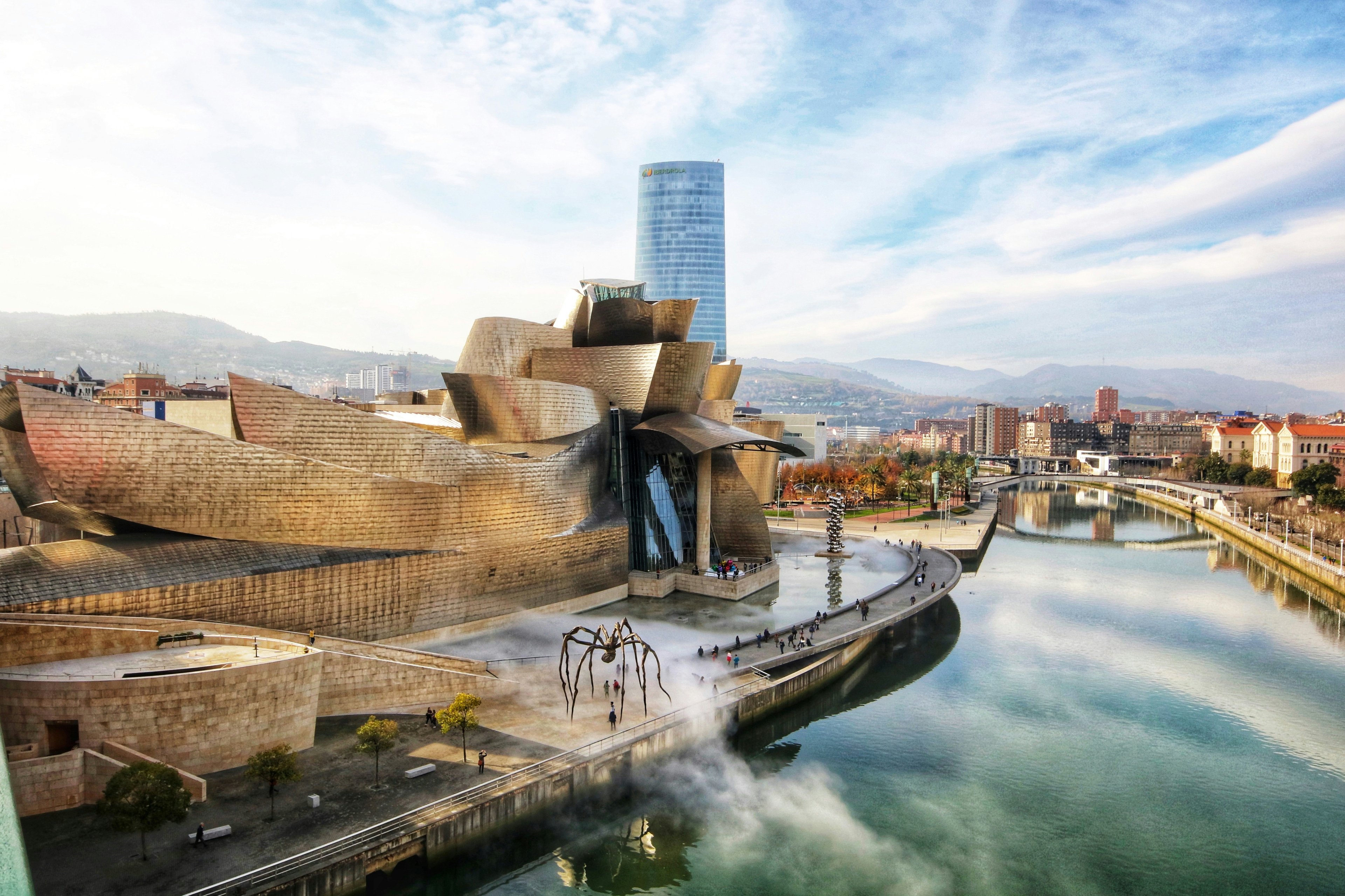
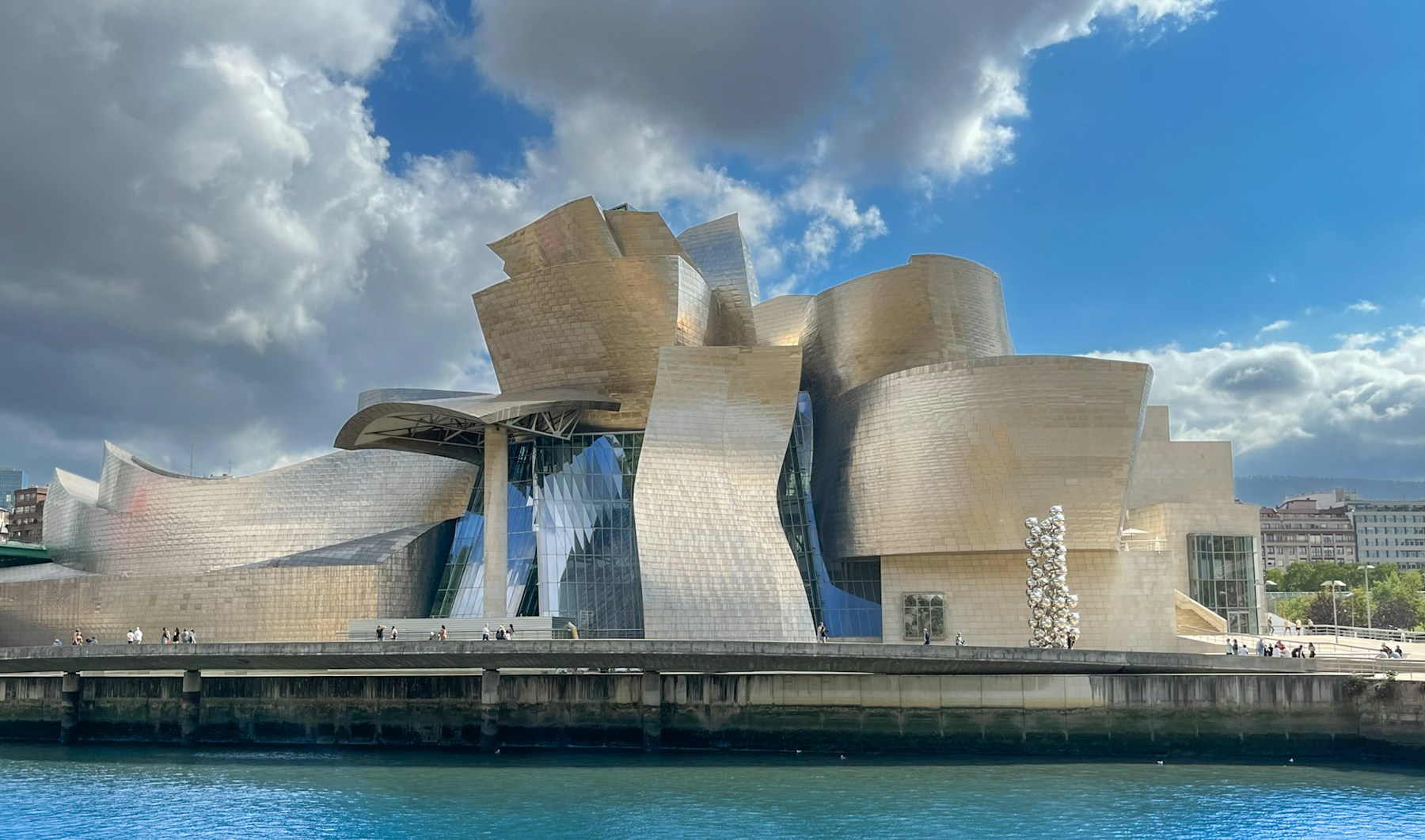
The Guggenheim Bilbao is not only a museum: it is the symbol of an urban transformation that changed how the world saw the city. Frank Gehry’s architecture, with its titanium curves and shifting reflections, seems to move depending on the light, the weather and the point from which you look.
Walk around it slowly before going inside. Puppy greets visitors with flowers, Louise Bourgeois’ Maman watches beside the river and the nearby bridges remind you that the museum did not fall from the sky: it belongs to a broader strategy that returned the waterfront to everyday life. Inside, the wide galleries ask for time and silence; outside, Bilbao keeps moving.
The estuary as backbone
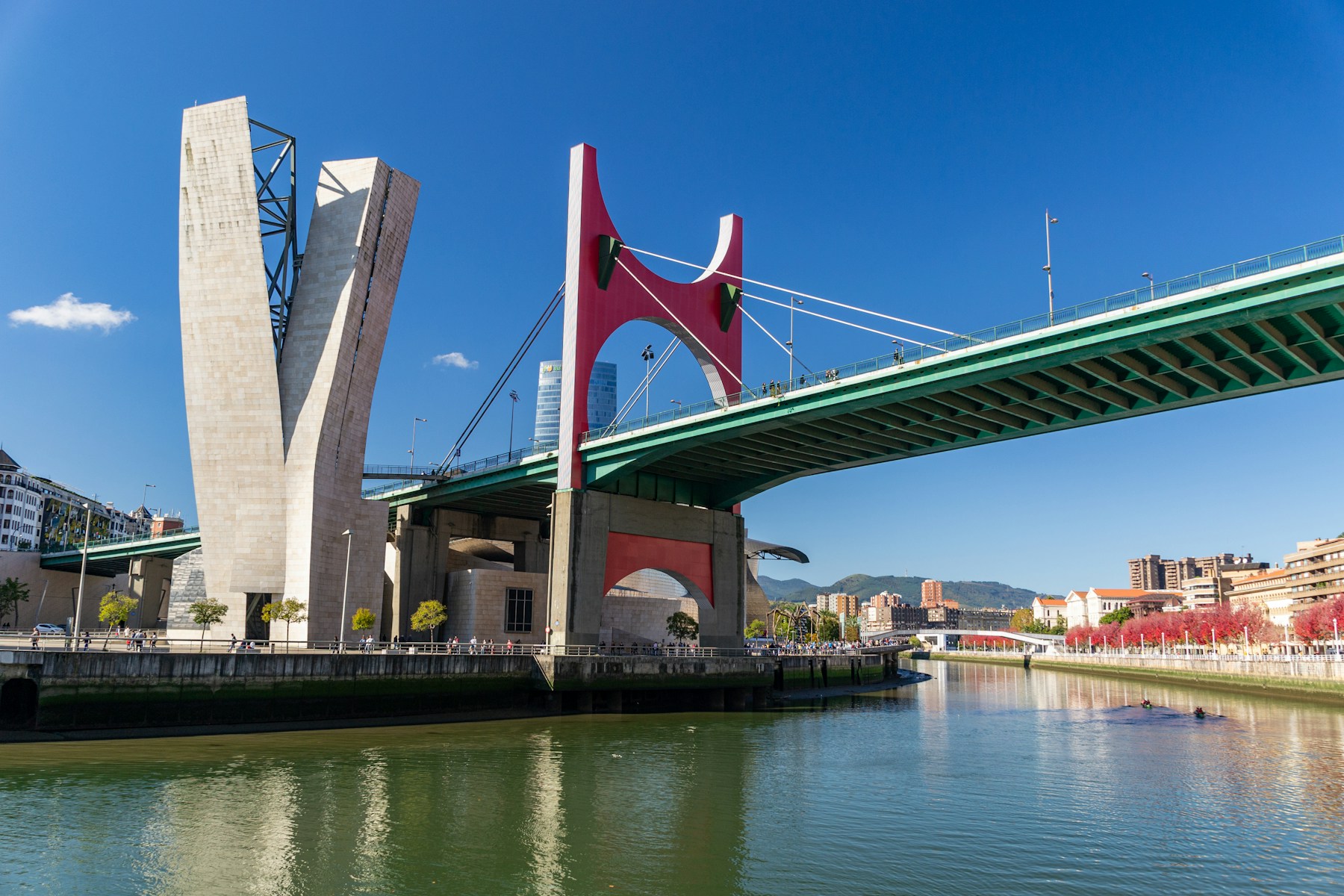
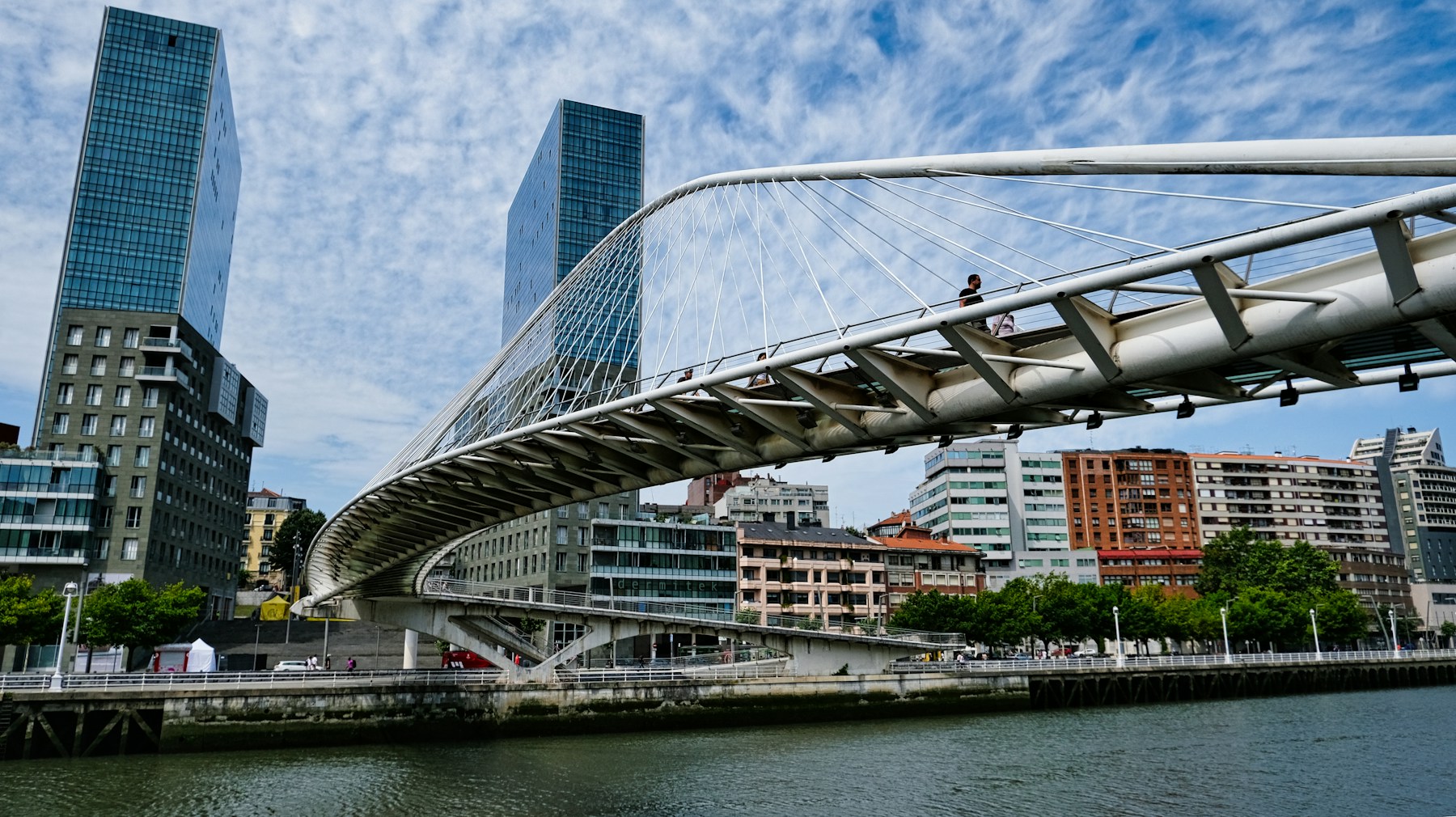
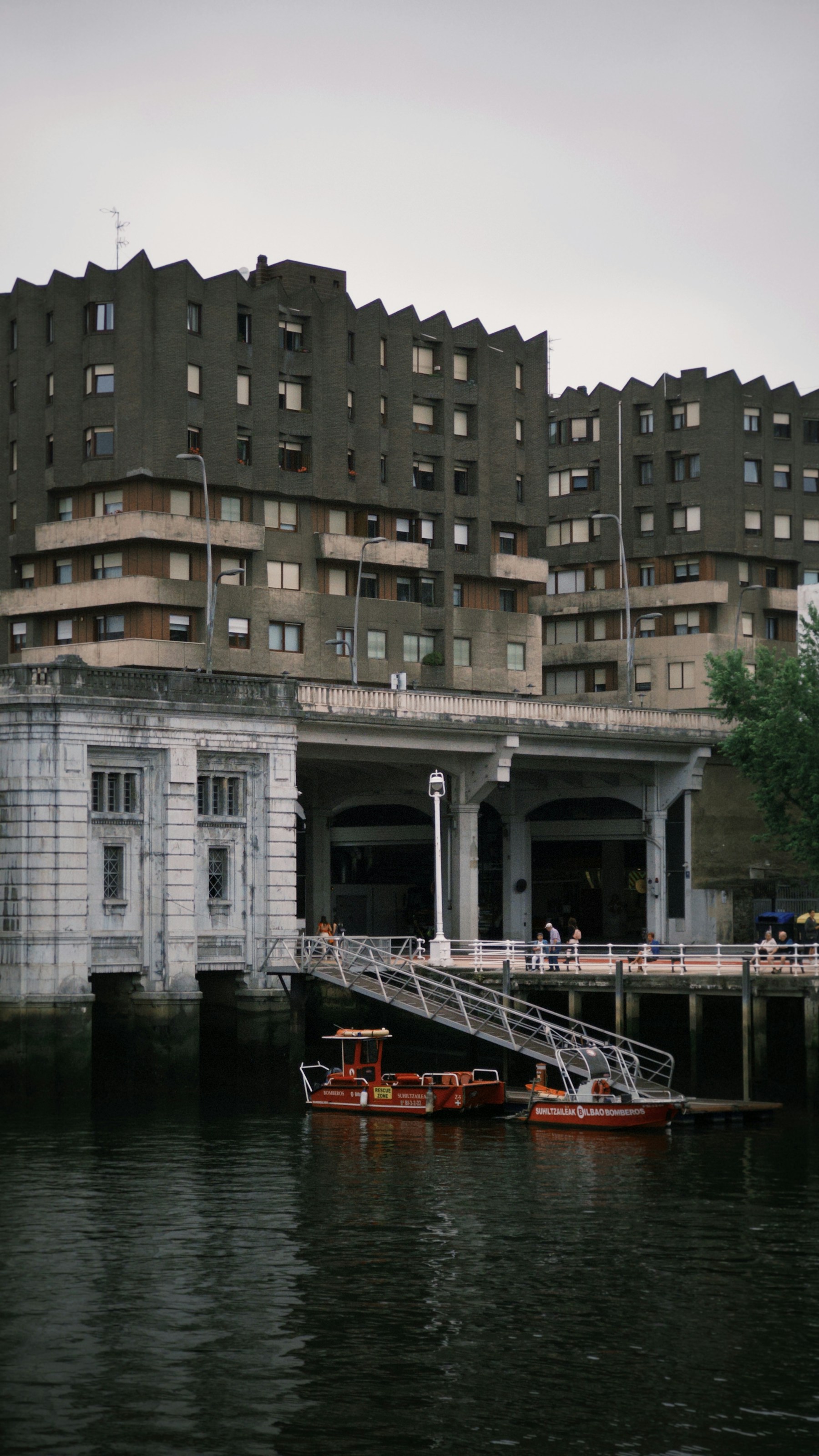
Bilbao’s estuary explains the city’s evolution better than any map. On both sides appear footbridges, parks, contemporary buildings, old docks and neighborhoods that have changed their relationship with the water. Walking from Abandoibarra toward the City Hall shows how Bilbao turned an industrial wound into an urban promenade.
The route works at any hour, but soft morning light or late afternoon gives it more depth. The estuary is not scenery: it is labor memory, neighborhood border, transport axis and mirror of new architecture. Following it is following Bilbao’s biography.
Old Town: the Seven Streets
The Old Town keeps a different energy from the Bilbao of titanium. The Seven Streets, Plaza Nueva, Santiago Cathedral, arcades and traditional shops preserve a more intimate scale, more neighborhood-based and more about meeting. Here the plan is not to tick off monuments, but to move in and out of streets, squares and counters.
Plaza Nueva is a good starting point for the ritual of pintxos. Each bar has its own language: gildas, cod, tortilla, mushrooms, anchovies, croquettes, txakoli or small beers ordered almost without sitting down. Bilbao is very well understood standing at a bar, listening to the city talk while it eats.
Ensanche, Azkuna Zentroa and urban life
Beyond the Old Town, the Ensanche shows a bourgeois, orderly and commercial Bilbao. Gran Vía, Moyua and the surrounding streets mix shops, stately buildings, cafés and offices naturally, reminding you that the city does not live only from tourism. It is an area for walking calmly and watching Bilbao at work.
Azkuna Zentroa, the former wine warehouse transformed by Philippe Starck, adds another layer: culture, elevated swimming pool, impossible columns, cinema, exhibitions and neighborhood life under one roof. It is one of those places where urban conversion becomes everyday, not just photogenic.
Pintxos, cod and txakoli
Bilbao’s food needs little introduction, but it does require appetite. Pintxos are the gateway: small, carefully made bites that can turn a bar route into a complete meal. The key is to move, order a little in each place and let the atmosphere decide the next stop.
Then come the classics: bacalao al pil-pil, bacalao a la vizcaína, marmitako, kokotxas, txuleta, cheeses, anchovies and Atlantic white wines with bright acidity. Bilbao eats with character, without too much verbal decoration. What matters is product, timing and company.
Viewpoints and green hills
Bilbao is surrounded by hills, and that changes its scale completely. Taking the funicular to Artxanda lets you see the city tucked between slopes, the estuary tracing its path and neighborhoods spreading along the valley. From above you understand that Bilbao is not only urban: it is also green, humid and mountainous.
That closeness to nature means even a short trip can include mountain air. The weather can change quickly, but that is part of the charm. Rain does not ruin Bilbao; often, it explains it.
Gaztelugatxe and the Basque coast
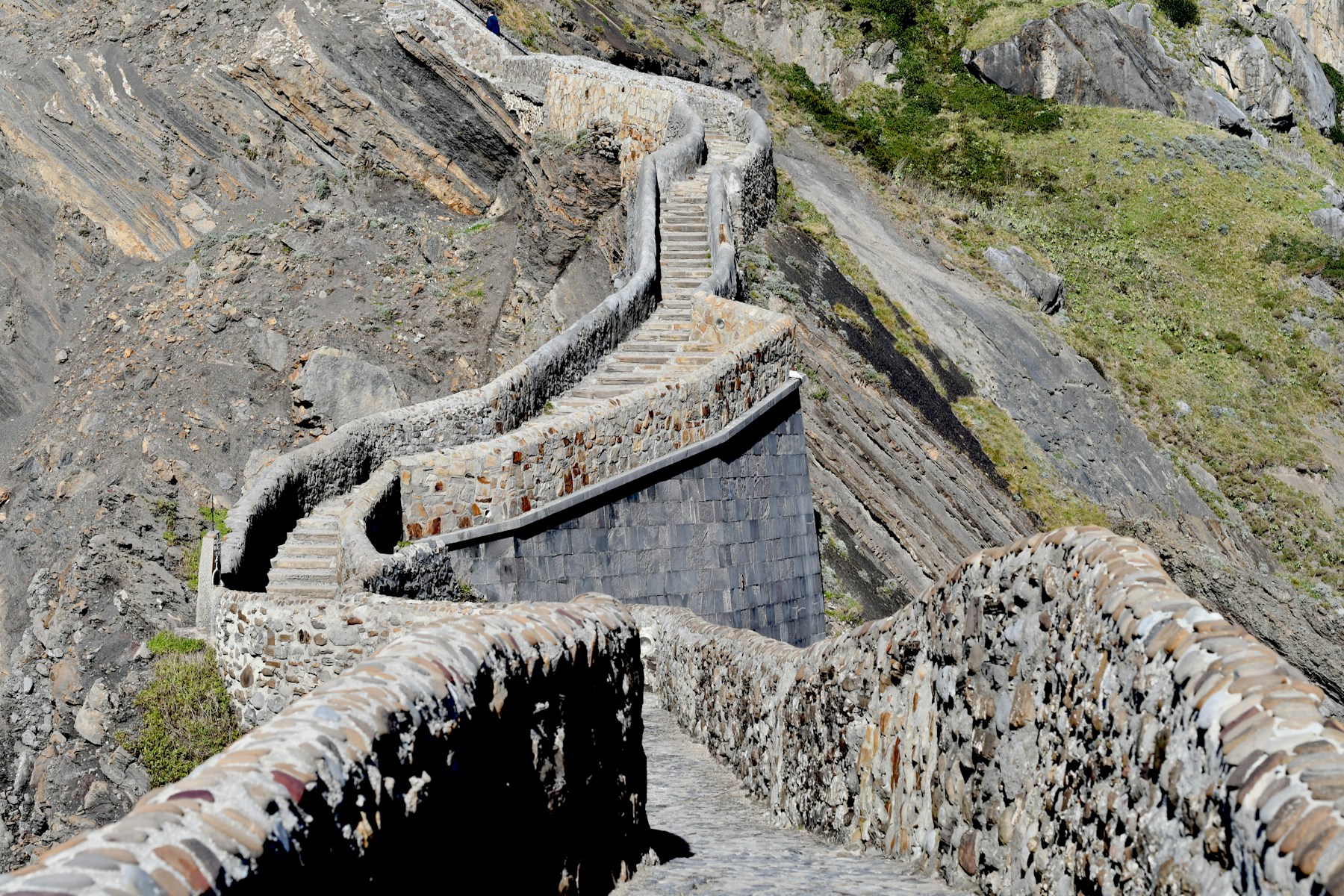
If there is time to leave the city, San Juan de Gaztelugatxe offers one of the most powerful images on the Basque coast. The hermitage on the islet, the stone bridge and the stairs rising between rock and sea create an almost legendary landscape. Book access when required and check the weather before going.
The coast near Bilbao adds another dimension to the trip: cliffs, fishing villages, small ports, salt in the air and roads opening between intense greens. After the urban density, the Cantabrian Sea brings breadth and force.
Practical tips
Bilbao is easy to explore on foot and by metro. For a first visit, two or three days let you combine the Guggenheim, estuary, Old Town, pintxos, Artxanda and a nearby escape. The tram is useful along the river, and the metro connects well with Getxo and the right bank.
The Atlantic climate requires flexibility: bring an umbrella or light jacket even if the day starts clear. Spring and autumn are very pleasant, while summer gives more daylight. In any season, Bilbao works best when museums, walks and bars are alternated without turning the trip into a race.
A city of character
Bilbao stays in memory because it does not try to seem light. It has metal, stone, rain, green, gastronomy and a sober elegance that appears without asking permission. It is a city that knew how to transform itself without becoming unrecognizable. Perhaps that is why it is so interesting: beneath the shine of titanium there is still a very clear identity, entirely its own.
What To Do If It Rains Or The Day Slows Down
A balanced day in Bilbao works best like this: in the morning, start with the Guggenheim and the riverside walk before the day spreads out; around midday, cross toward the Ensanche to eat without relying only on the museum area; in the afternoon, follow the estuary toward the Old Town; at sunset, keep Getxo or an urban viewpoint if you want a wider landscape; and at night, do pintxos through a few well-chosen stops, not a frantic bar race. The point is not to fill every minute, but to avoid the most common friction points: heat, queues, long transfers and meals chosen when everyone is already tired.
Covered Route, Short Walks And Shelters
Think of the experience as a simple line: Guggenheim, estuary, Ensanche, Old Town and, if there is time, the coast toward Getxo. This mental map helps you decide what to skip if the day gets slower than expected. A good itinerary is not the one that covers the most places, but the one that keeps the route coherent and gives each stop enough time to be remembered.
Staying Close To The Backup Plan
If you sleep in an apartment, choose the Old Town for atmosphere or Abando/Ensanche for transport comfort; Bilbao works very well with metro and tram.
Grey-Day Mistakes
Do not schedule the museum, Old Town, San Juan de Gaztelugatxe and the coast in one day; do not mistake pintxos for standing without judgement; and check museum hours.
Weather, Transport And Real Accessibility
Bilbao works year-round, but spring and autumn balance light and temperature; with rain, transport and museums keep the city easy. For transport, choose the simplest connection back to your lodging before adding extra stops. For accessibility, reduce cobbled streets, steep climbs or long beach approaches when travelling with children, older guests, wheelchairs or heavy luggage.
Where To Take Shelter And Eat Well
Eat with judgement by alternating traditional Old Town bars, less obvious Ensanche areas and seasonal produce; if one bar is packed, there is usually another good one two streets away.
Common questions before you go
Quick answers to decide whether Bilbao If It Rains: Guggenheim, Sheltered Estuary Walks And Pintxos fits your trip and how to plan it with a Destinations lens.
How much time should I set aside for Bilbao If It Rains: Guggenheim, Sheltered Estuary Walks And Pintxos?
A half day is the sensible minimum. If it is your first visit, leave time to walk slowly and add a proper meal or rest stop.
What is the best season for this experience?
It works year-round, but spring and autumn usually offer the best balance of weather, light and crowds.
What is the best way to get around?
Combine public transport with short walks. Moving a car between central stops usually costs more time than it saves.
What is your advice if I am staying nearby?
Use the proximity to split the plan in two: the main visit in the morning and a freer walk late in the day.
What mistake should I avoid?
The most common mistake is trying to see everything in one day. Choose a coherent route and leave something for another time.
Operating a Rental in this area?
Stay fully compliant with Spain's strict tourism regulations. HazCheckin automates your guest registration and legal reporting directly to Spanish authorities.