By Inés Valls
Guide reviewed under editorial standards
This experience is structured to provide an itinerary, local context, transport, recommended season and mistakes to avoid. See how we review guides
How to make the most of this experience
Useful planning notes for Formentera Without Improvising: Beaches, Lighthouses And Wind In High Season with a Destinations lens, especially if you are travelling with limited time or staying nearby.
Recommended duration
Between half a day and two days, depending on your pace and the stops you add.
Best season
Year-round, adjusting timings to avoid heat, rain or peak crowds.
How to get around
Prioritise public transport and walking sections; avoid moving the car between nearby stops.
Best for
First-time visitors, couples, apartment-based travellers and weekend breaks.
Accessibility
Check slopes, cobbles and real walking distances before closing the route.
Estimated budget
Medium: combine free visits with one or two well-chosen paid entries.
Keep the most demanding visit for the morning and leave the afternoon for walks from your stay.
Trying to see everything in one day and ending up jumping from photo to photo.
Formentera is summer reduced to its essentials: transparent water, pale sand, dusty paths, lighthouses, simple beach bars and a light that seems to clean everything it touches. It does not have the monumental scale of other islands or the rush of major Mediterranean destinations. Its charm lies in the opposite: few kilometres, low horizons and days organised around swimming, shade and sunset.
This experience follows Formentera from Ses Illetes to the La Mola lighthouse, through wooden walkways, quiet coves, small villages, artisan markets and meals by the sea. It is an island to live slowly, but not passively: you have to move, wake early, respect its fragile spaces and accept that the best plan is often the simplest one.
Ses Illetes: the Mediterranean Caribbean, with rules
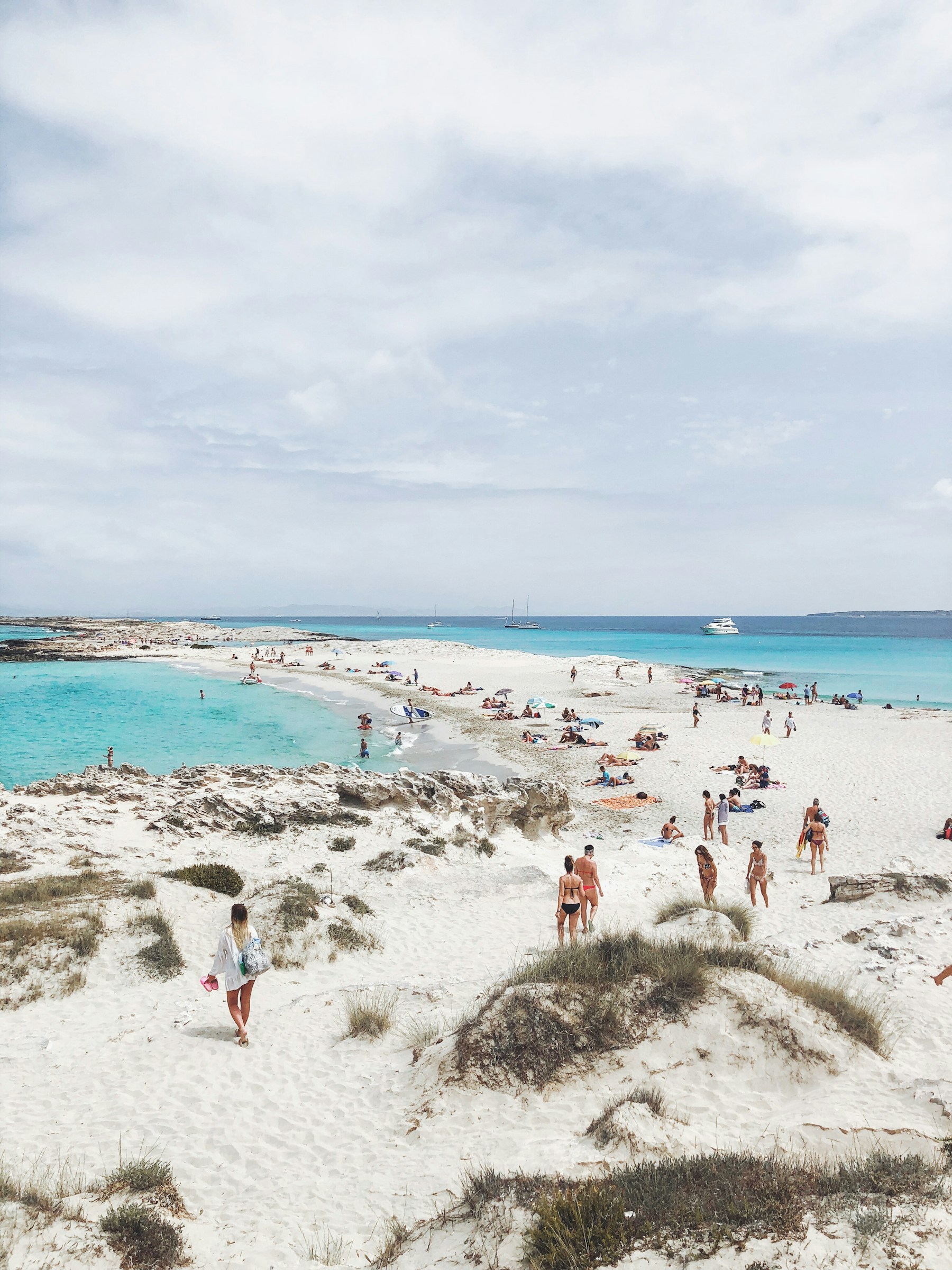
Ses Illetes is the image many travellers have in mind before reaching Formentera: turquoise water, white sand, anchored boats and a strip of beach that seems to float between two shades of blue. It is one of the most beautiful places in the Balearics, but also one of the most sensitive and sought-after in summer.
Go early, check access rules and accept that beauty needs order. In high season, vehicle controls, protected zones and natural park regulations are not an obstacle to the trip: they are the reason the landscape still has that almost unreal clarity. The experience is better when you arrive with patience and do not turn the beach into a race for the best photograph.
Walkways, dunes and unhurried swims
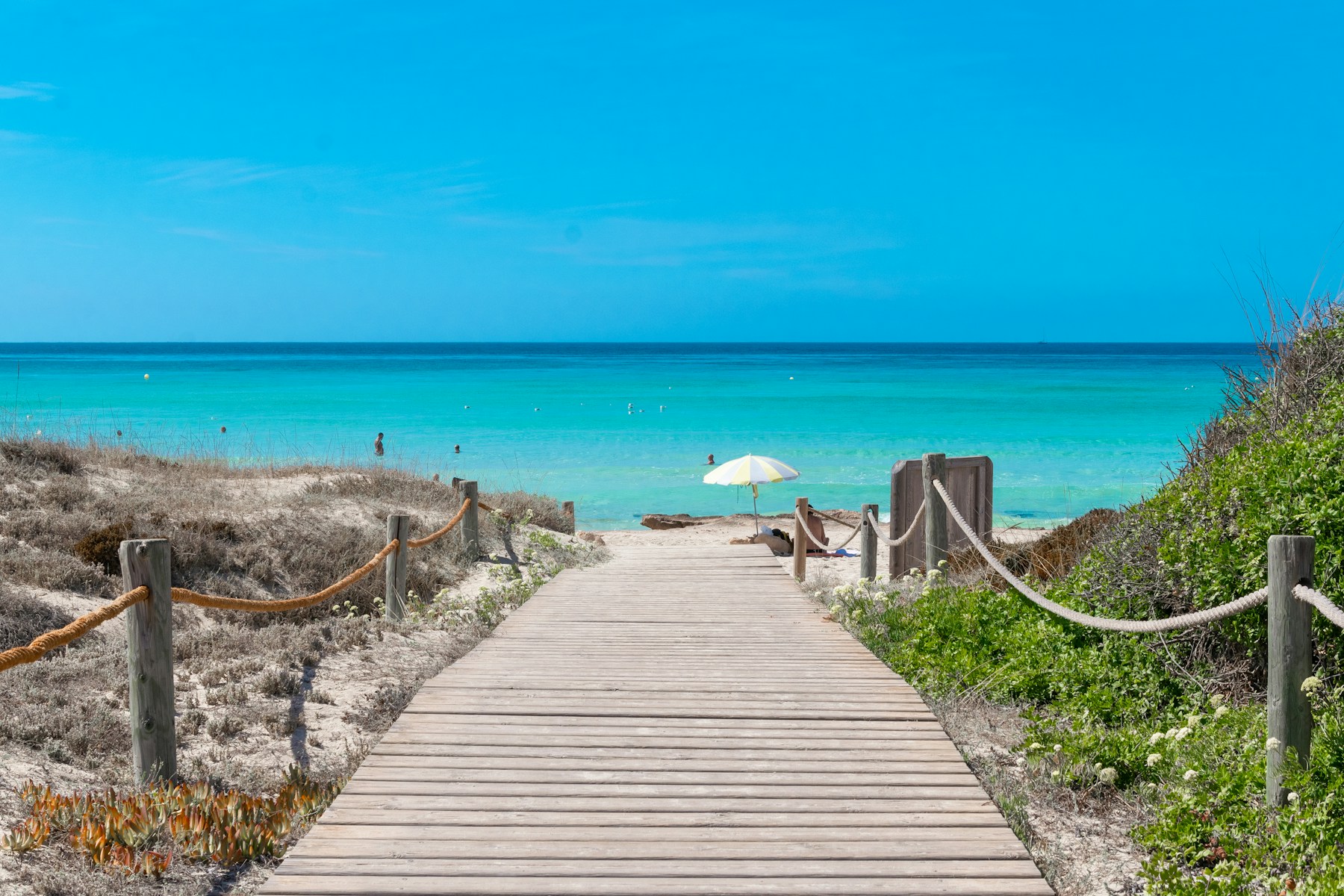
Formentera is especially enjoyable in its transitions: walking along a wooden boardwalk toward the beach, crossing dunes without leaving the marked path, leaning a bicycle somewhere and stepping into the water with nothing more than a towel. Short journeys are part of the plan, because each access reveals a different way of reaching the sea.
Beaches such as Es Arenals, Migjorn and Llevant let you alternate livelier areas with corners where the day turns quieter. The secret is not chasing the perfect cove, but reading the wind, choosing the right orientation and staying long enough for the island to take effect.
Transparent water and life below the surface
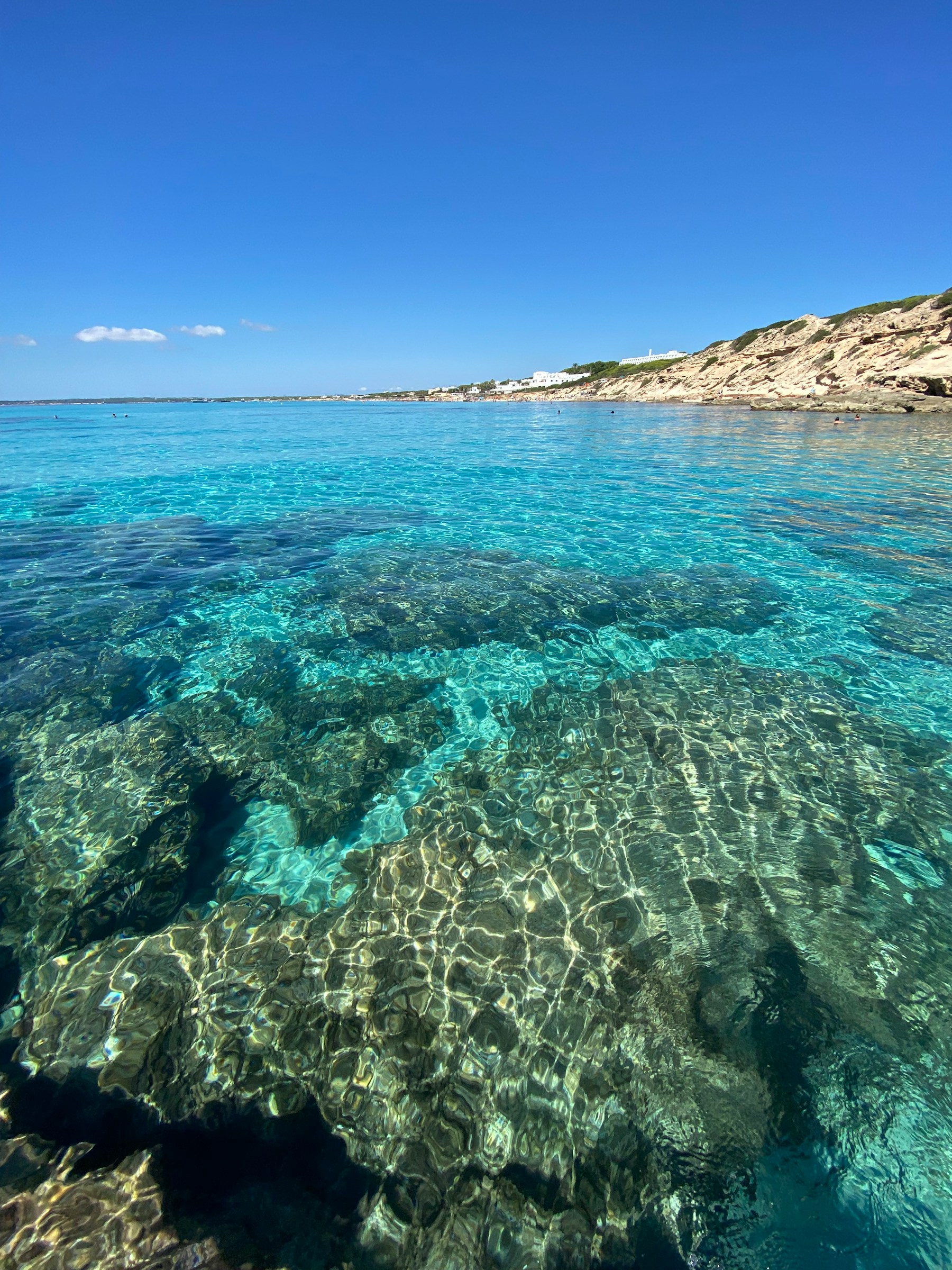
Formentera’s water is famous for a reason: protected Posidonia oceanica seagrass helps preserve that almost impossible transparency. Swimming here also means understanding that what looks beautiful from above depends on a fragile underwater life.
A pair of snorkelling goggles is enough to change your perspective. Between rocks, seagrass meadows and pale seabeds appear small fish, reflections, shadows and that feeling of weightlessness that turns a simple swim into a summer memory. The rule is simple: look a lot, touch little and take nothing away.
La Mola lighthouse and the island’s edge
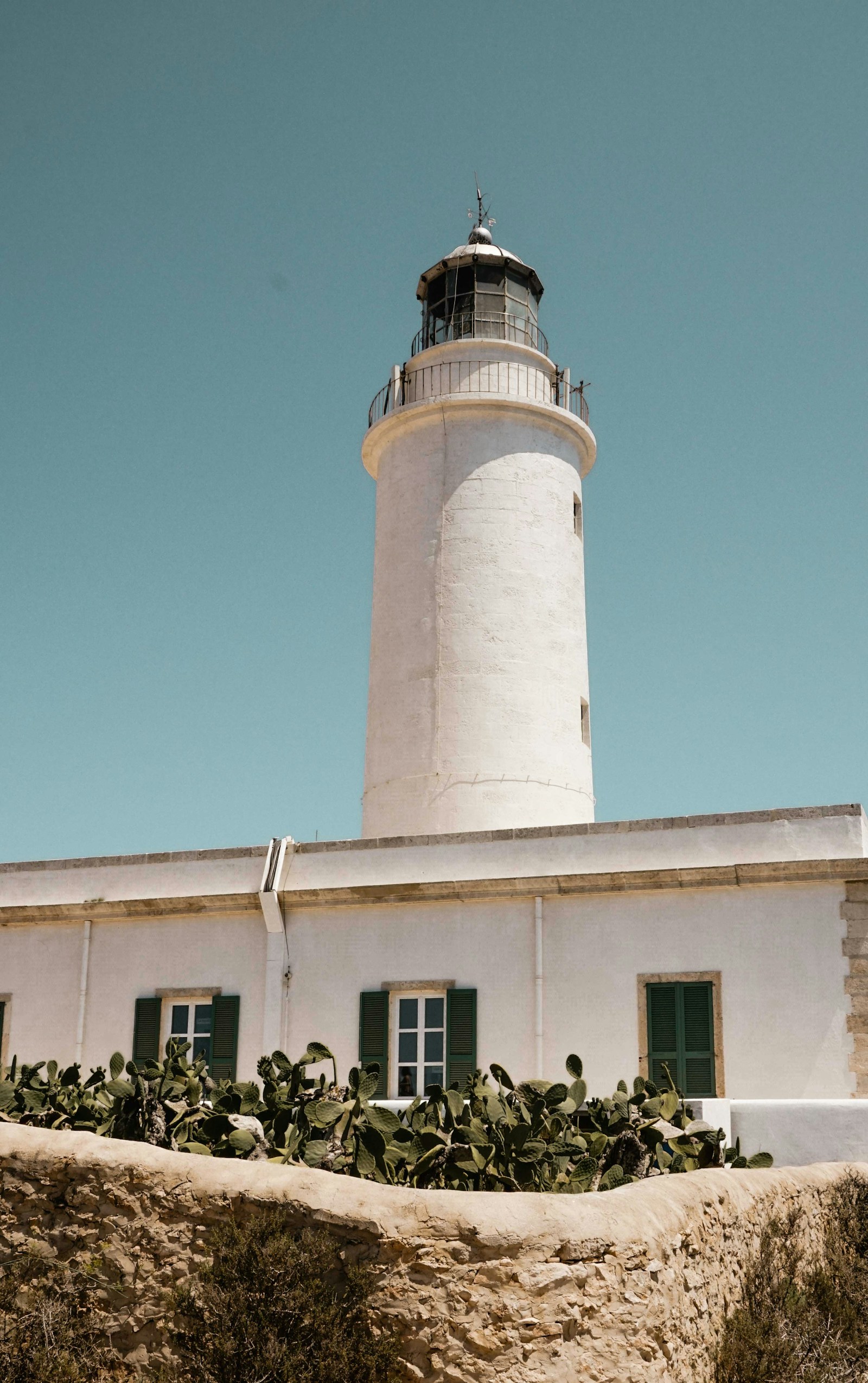
The La Mola lighthouse marks one of Formentera’s natural endings. The road rises gently toward a drier, more open landscape, where the sea appears from the cliffs with another kind of authority. Here the island stops being only beach and becomes horizon.
Going to the lighthouse at the end of the day has something ritual about it. Light falls on the stone, the wind grows stronger and silence becomes wider. Jules Verne imagined this place as an edge of the world, and although motorbikes, cars and visitors now arrive, it still keeps a sense of limit.
Sant Francesc, Sant Ferran and summer markets
Formentera’s villages are small, white and calm in scale. Sant Francesc Xavier gathers squares, shops, cafés and a fortified church that recalls how the island also had to defend itself. Sant Ferran keeps a more bohemian mood, perfect for dinner without too much ceremony.
Artisan markets add another layer to summer: jewellery, clothes, ceramics, live music and travellers looking for something beyond the beach. You do not need to buy anything to enjoy the atmosphere. Sometimes it is enough to walk at dusk, look at stalls and let the day cool slowly.
Bicycle, scooter and slow roads
Formentera invites you to move without hurry. A bicycle works very well for short stretches and outside the hottest hours; a scooter gives freedom to hop from beach to beach; a car, although comfortable, can feel excessive in high season. The island rewards lighter movements.
The green routes cross salt flats, dry fields, stone walls and paths that connect villages with beaches. This quieter inland Formentera helps balance the trip. Not everything happens at the water’s edge: there is also silence, dust, fig trees and houses that seem to have long understood how to live with summer.
Eating by the sea without complicating things
Formentera’s food tastes best when it does not try too hard to impress. Fish, rice dishes, ensalada payesa, sobrasada, cheese, bread, oil and simple products work especially well after a long swim. The setting does half the work, but it is worth choosing places that respect the product and the island’s rhythm.
There are well-known restaurants and highly sought-after beach bars, but also humbler plans: buying something to take away, sitting in the shade and eating while looking at the sea. On such a luminous island, luxury often lies in removing layers, not adding them.
When to go and how to organise summer
July and August bring the most intense atmosphere, with high prices and strong demand. June and September are kinder months: pleasant water, long days and a little more room for improvisation. If you travel in peak summer, booking accommodation, transport and key restaurants ahead makes a real difference.
Three or four days let you taste the island without exhausting it: one day for Ses Illetes and Llevant, another for Migjorn and villages, another for La Mola and lighthouses, and one free day to repeat the swim that stayed most vividly in memory. Formentera does not need a long schedule; it needs empty spaces inside the day.
The island that teaches you to do less
Formentera has an obvious, almost immediate beauty, but its real lesson is subtler: it asks you to lower expectations of activity and raise attention. Watch the water, read the wind, wait for the right light, walk slowly, eat simply, rest without guilt.
Those who arrive looking for a beautiful beach find many. Those who accept the island’s rhythm discover something rarer: a minimal and complete summer, made of salt, light, silence and well-spent time.
A Comfortable Plan For Families
A balanced day in Formentera works best like this: in the morning, go early to the main beach you have chosen and accept regulated access or capacity limits; around midday, return to shade or a village for lunch without punishing the day; in the afternoon, move to another coast according to wind, not a fixed checklist; at sunset, keep Cap de Barbaria or La Mola if distance and energy fit; and at night, dine near Sant Francesc, Es Pujols or your lodging without pushing dark roads. The point is not to fill every minute, but to avoid the most common friction points: heat, queues, long transfers and meals chosen when everyone is already tired.
A Route With Pauses, Shade And Toilets Nearby
Think of the experience as a simple line: La Savina, Ses Illetes, Sant Francesc, lighthouses and beaches chosen by wind. This mental map helps you decide what to skip if the day gets slower than expected. A good itinerary is not the one that covers the most places, but the one that keeps the route coherent and gives each stop enough time to be remembered.
Choosing Lodging Without Complicating The Day
If you sleep in an apartment, book transport carefully and buy basics on arrival. Formentera rewards autonomy but punishes improvisation in high season.
What To Avoid With Children Or A Group
Do not promise yourself every beach; do not ignore wind; and do not arrive without lodging, scooter or car bookings in peak summer.
Heat, Transport And Easy Access
June and September are ideal; August is beautiful but demanding; spring and October are slower and very pleasant. For transport, choose the simplest connection back to your lodging before adding extra stops. For accessibility, reduce cobbled streets, steep climbs or long beach approaches when travelling with children, older guests, wheelchairs or heavy luggage.
Eating Without Breaking The Group Rhythm
Eat with judgement by looking for fish, rice dishes and simple cooking outside the most saturated hours. One calm good table is worth more than chasing the most photographed beach bar.
Common questions before you go
Quick answers to decide whether Formentera Without Improvising: Beaches, Lighthouses And Wind In High Season fits your trip and how to plan it with a Destinations lens.
How much time should I set aside for Formentera Without Improvising: Beaches, Lighthouses And Wind In High Season?
A half day is the sensible minimum. If it is your first visit, leave time to walk slowly and add a proper meal or rest stop.
What is the best season for this experience?
It works year-round, but spring and autumn usually offer the best balance of weather, light and crowds.
What is the best way to get around?
Combine public transport with short walks. Moving a car between central stops usually costs more time than it saves.
What is your advice if I am staying nearby?
Use the proximity to split the plan in two: the main visit in the morning and a freer walk late in the day.
What mistake should I avoid?
The most common mistake is trying to see everything in one day. Choose a coherent route and leave something for another time.
Operating a Rental in this area?
Stay fully compliant with Spain's strict tourism regulations. HazCheckin automates your guest registration and legal reporting directly to Spanish authorities.