By Lucía Marín
Guide reviewed under editorial standards
This experience is structured to provide an itinerary, local context, transport, recommended season and mistakes to avoid. See how we review guides
How to make the most of this experience
Useful planning notes for Málaga For Eating And Walking: Alcazaba, Museums, Espetos And Sea with a Destinations lens, especially if you are travelling with limited time or staying nearby.
Recommended duration
Between half a day and two days, depending on your pace and the stops you add.
Best season
Summer and late spring, avoiding the middle of the day for outdoor plans.
How to get around
Prioritise public transport and walking sections; avoid moving the car between nearby stops.
Best for
First-time visitors, couples, apartment-based travellers and weekend breaks.
Accessibility
Check slopes, cobbles and real walking distances before closing the route.
Estimated budget
Medium: combine free visits with one or two well-chosen paid entries.
Keep the most demanding visit for the morning and leave the afternoon for walks from your stay.
Trying to see everything in one day and ending up jumping from photo to photo.
Málaga has learned to live many lives at once. It is Phoenician, Roman, Andalusian, bourgeois, port-city, beach town and museum hub; a Mediterranean capital where a fortress looks toward the sea, sardine skewers scent the afternoon and art appears in museums as well as on Soho walls.
This experience follows Málaga from its heights down to the sand, through the historic center, the Alcazaba, the Cathedral, Picasso’s legacy and the neighborhoods where the city becomes more everyday. Málaga is not understood only through sunshine: it is understood by walking, eating and watching light change over stone.
The Alcazaba: gardens, walls and Andalusian memory
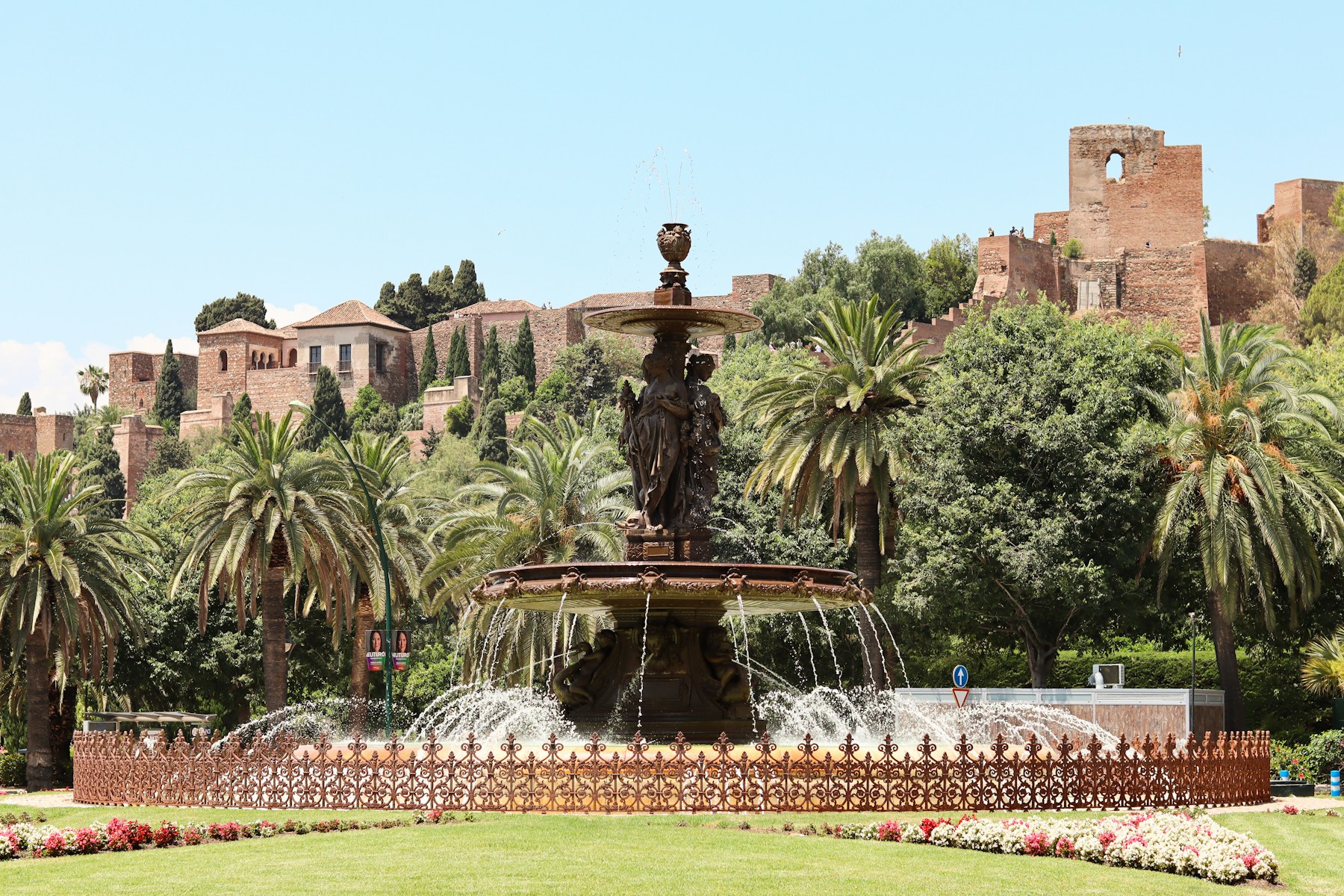
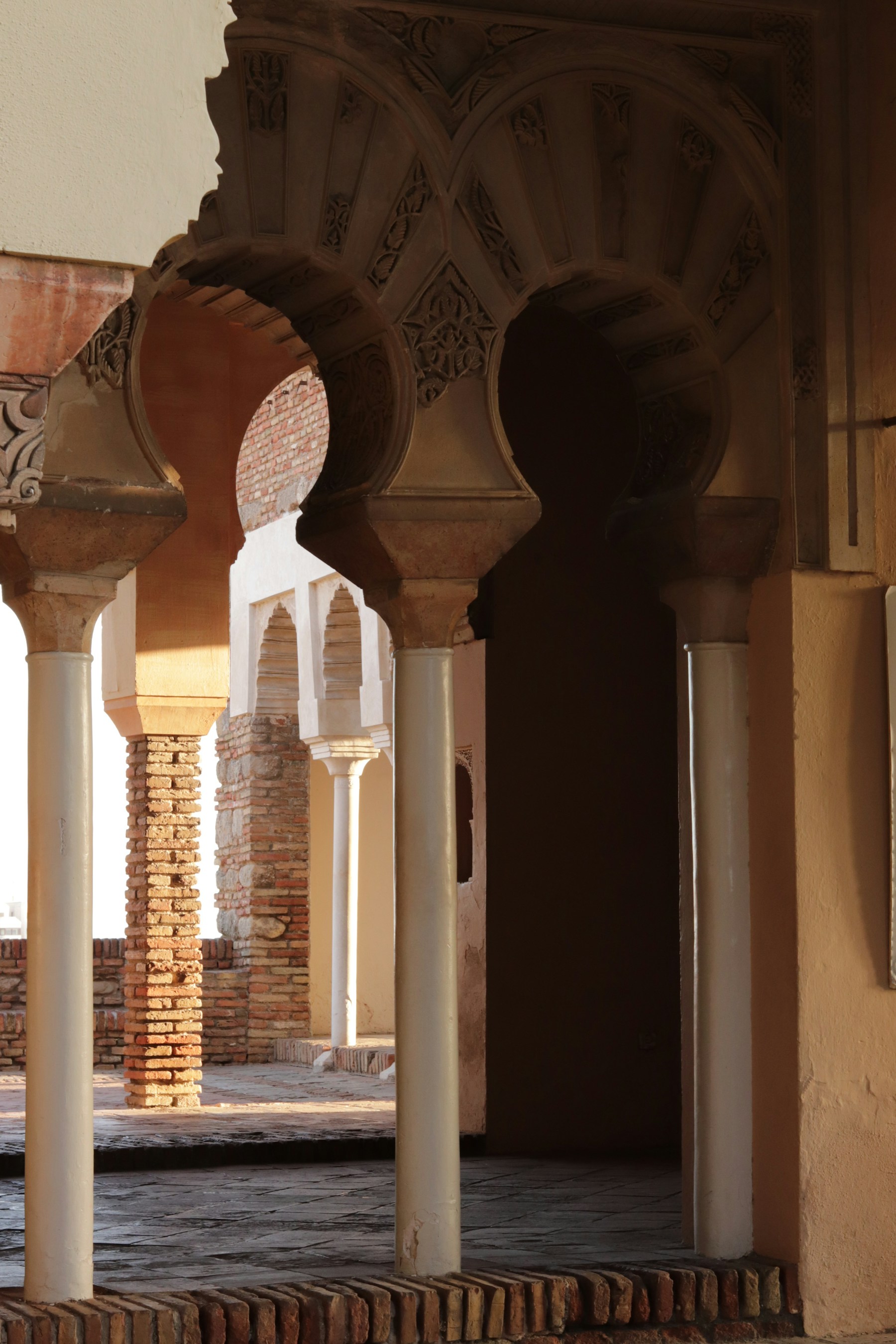
Málaga’s Alcazaba is one of the city’s great pleasures. Built in the Muslim period on a hillside overlooking the port, it combines defensive purpose with palatial delicacy: walls, patios, arches, fountains and gardens that slowly prepare the eye before the higher sections appear.
Climbing slowly is part of the plan. At every turn there is a new view: the Roman Theatre below, the Cathedral between rooftops, the port shining in the distance and the Mediterranean marking the horizon. It is not only a monument; it is the place where Málaga shows that its history has always faced the sea.
Gibralfaro and the city from above
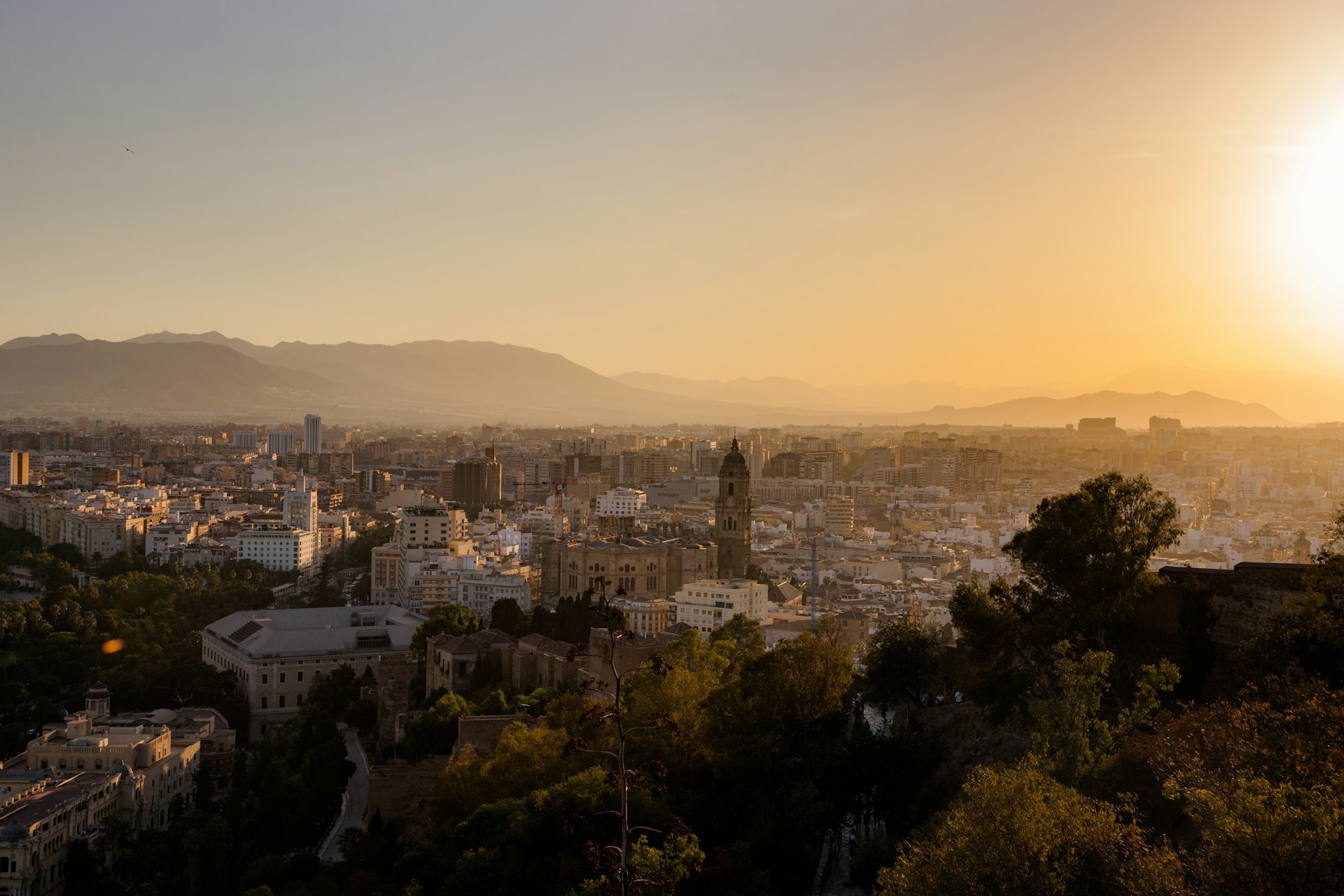
Above the Alcazaba, Gibralfaro Castle offers Málaga’s clearest panorama. The walk up is rewarding if the heat allows it, though early morning or sunset is best. From the walls you understand the city’s shape: the port, the bullring, Malagueta beach, the mountains and the center gathered around the Cathedral.
As the sun sets, the city changes color. Rooftops warm, the sea darkens slowly and the port lights begin to glow. It is one of those viewpoints that needs little explanation: staying a while is enough.
The Cathedral and the historic center
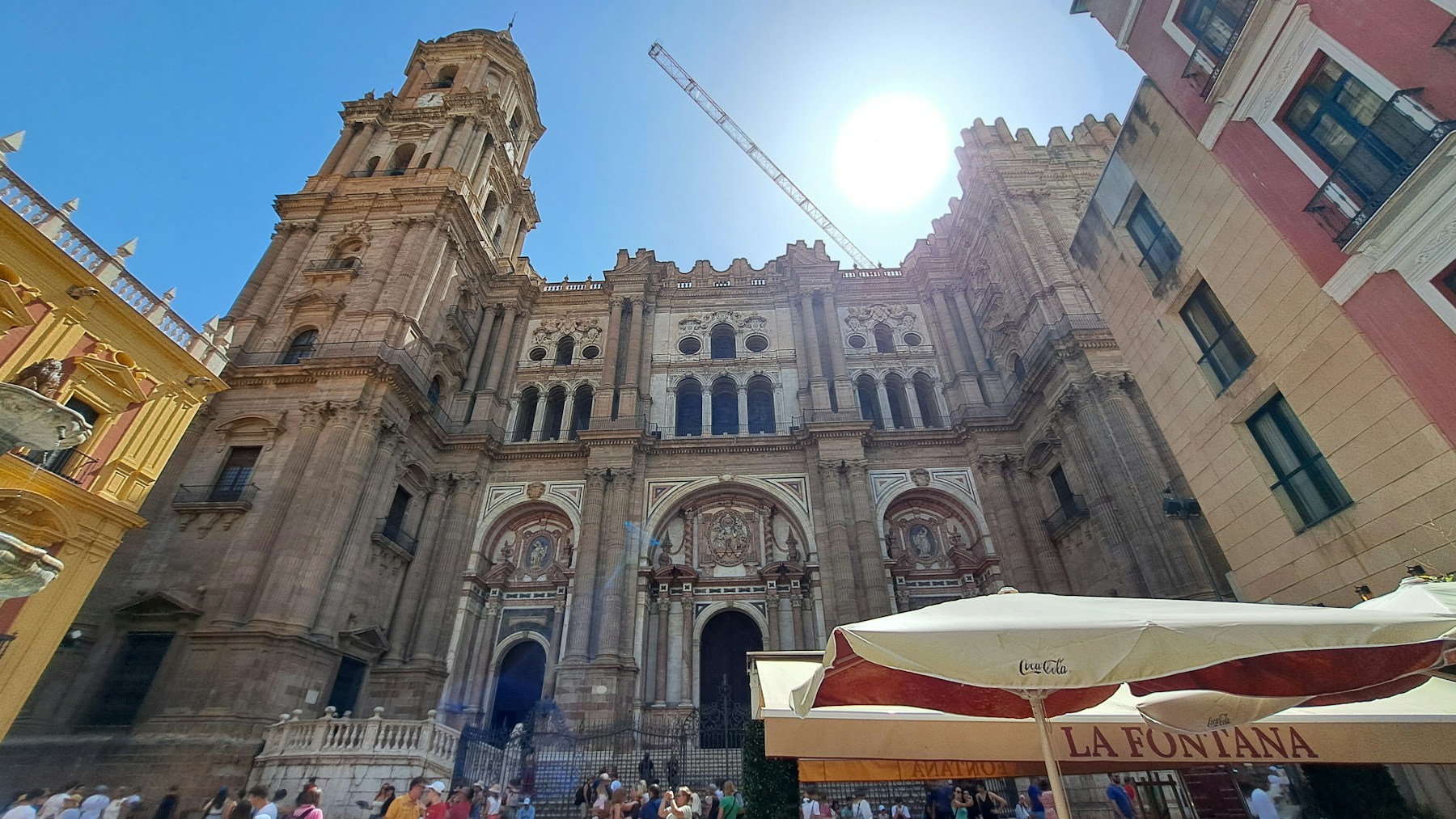
Málaga Cathedral, known as “La Manquita” because of its unfinished tower, dominates the center with a very particular elegance. Its Renaissance and Baroque façade appears among shopping streets, lively squares and bars where daily life is not intimidated by monumentality.
The historic center is best explored without a rigid map: Calle Larios, Plaza de la Constitución, narrow passages, churches, traditional shops and restored façades. Málaga has a friendly scale; it lets you alternate monuments, cafés, museums and improvised stops without leaving the same urban story.
Picasso, museums and cultural pulse
Málaga is Picasso’s birthplace and has turned that legacy into a doorway to a broader cultural life. The Picasso Museum and the Birthplace Museum are natural stops, but the cultural map extends to the Centre Pompidou, the Carmen Thyssen Museum, the CAC and small galleries that give the center another tone.
What makes this cultural Málaga interesting is that it never feels separate from the street. You leave a museum and within minutes you are in a tavern, facing the port or walking toward a beach. That proximity between art, food and sea explains much of the city’s current charm.
Soho and the port: another Málaga
Málaga’s Soho, around the CAC and the streets near the Guadalmedina river, shows a more contemporary city. Murals, studios, cafés and cultural spaces have transformed an area that was once a passageway into a neighborhood with its own identity.
From there, the port is a short walk away. Muelle Uno is more polished and tourist-oriented, but it works well for walking by the water, browsing, having a drink at sunset and returning toward the center through the Palmeral de las Sorpresas, with the Cathedral appearing between palm trees.
Malagueta and Pedregalejo
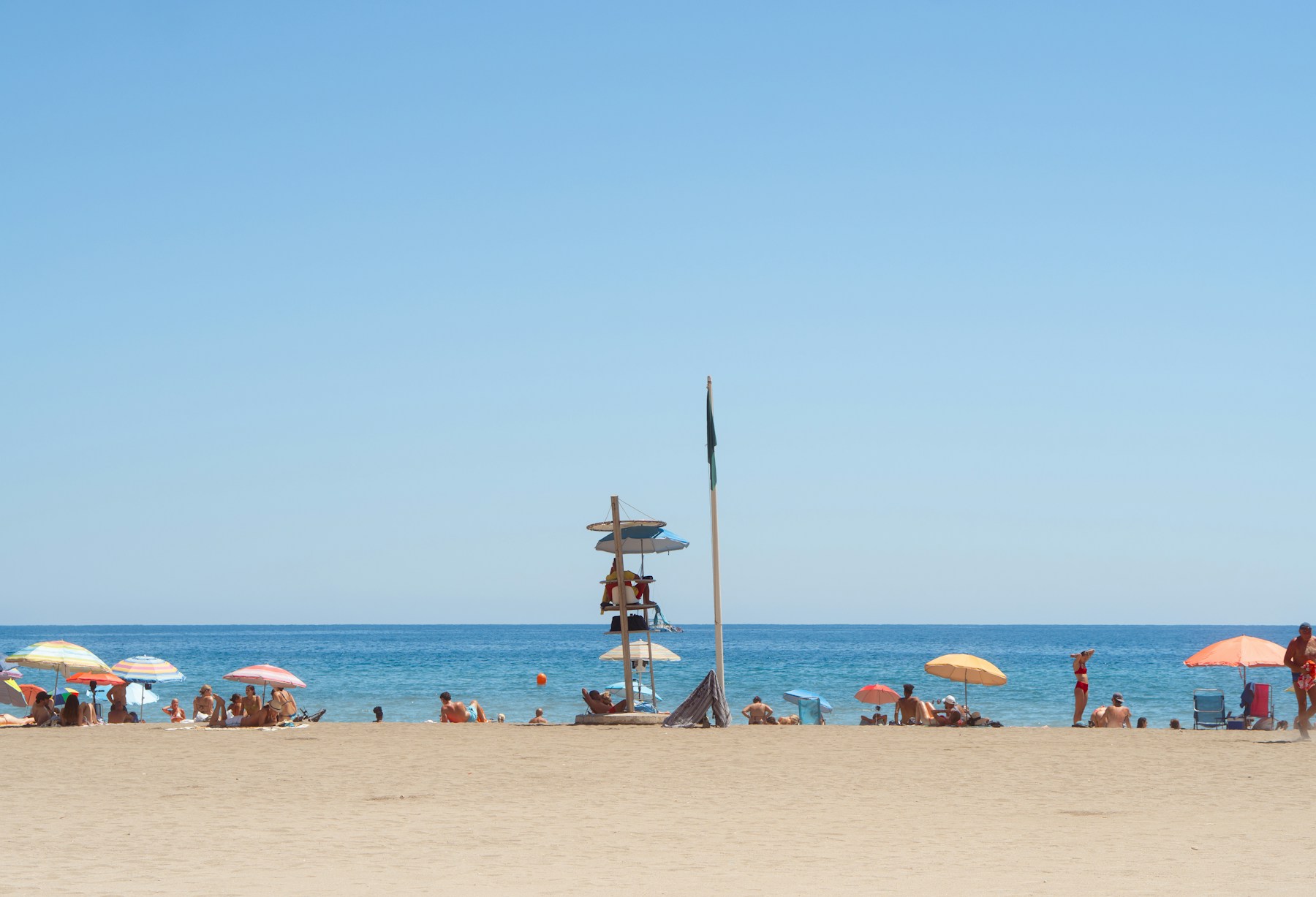
Malagueta is the most immediate urban beach: sand, umbrellas, beach bars, families and travelers coming down from the center in search of sea without complications. It does not need to be planned as an excursion; simply walk from the port and let the city open up.
For a more flavorful experience, Pedregalejo and El Palo are essential. There, sardine espetos are grilled in boats filled with embers, the promenade fills with tables and the Mediterranean becomes part of a long lunch conversation. Few plans explain Málaga better than eating fish by the sea without watching the clock too closely.
Málaga flavors
Málaga has coastal cooking, inland cooking and bar cooking. Espetos are the icon, but there is also ajoblanco, porra antequerana, fried fish, roasted pepper salad, conchas finas and sweet wines with a history of their own. In the center, a glass of moscatel in an old tavern can be as memorable as lunch by the sea.
Atarazanas Market is worth visiting for its architecture and the color of its stalls. There you understand Málaga’s mixture: fish, tropical fruit from Axarquía, olives, almonds, citrus and that market noise that remains one of the best ways to know a city.
Practical tips
Málaga can be visited in two intense days, but three allow a calmer rhythm: Alcazaba and center on day one, museums and Soho on day two, beach, Pedregalejo or Gibralfaro at sunset on day three. The center is very walkable, and the commuter train connects with the airport and the Costa del Sol.
Spring and autumn are ideal. In summer, heat and crowds make early visits wise, leaving the middle of the day for beach, museums or long meals. In winter, Málaga keeps plenty of light and mild temperatures, making it a very generous city break.
A city with sun, but not only sun
Málaga is easy to love because it does not force you to choose between culture and rest. You can climb to a fortress, see an exhibition, eat fish by the sea and end the day looking down from Gibralfaro. Its secret lies in that mixture: historic and light, bright and hard-working, elegant without losing its warmth.
A Food Route With Real Stops
A balanced day in Málaga works best like this: in the morning, climb the Alcazaba and Gibralfaro before the heat, or start with a museum if it rains; around midday, eat between the centre and market without falling for the first terrace; in the afternoon, move down toward the port or beach at an easy pace; at sunset, watch from Gibralfaro or from the seafront; and at night, return to the centre for tapas or choose Pedregalejo if you want espetos. The point is not to fill every minute, but to avoid the most common friction points: heat, queues, long transfers and meals chosen when everyone is already tired.
Areas Where Eating Makes Sense
Think of the experience as a simple line: Alcazaba, centre, museums, port, Malagueta and Gibralfaro. This mental map helps you decide what to skip if the day gets slower than expected. A good itinerary is not the one that covers the most places, but the one that keeps the route coherent and gives each stop enough time to be remembered.
If You Eat Near Your Lodging
If you sleep in an apartment, choose between the centre for culture and nightlife or a beach area for rest. Getting around is easy, but the atmosphere changes a lot.
Signs That Help You Avoid Bad Choices
Do not reduce Málaga to beach; do not climb Gibralfaro at midday in August; and do not expect good food just because it is beside the sea.
Timings, Bookings And Accessibility
Spring and autumn are very balanced; summer works by alternating museum, shade and late beach; winter is mild and cultural. For transport, choose the simplest connection back to your lodging before adding extra stops. For accessibility, reduce cobbled streets, steep climbs or long beach approaches when travelling with children, older guests, wheelchairs or heavy luggage.
Our Criteria For Choosing A Table
Eat with judgement by separating espetos in Pedregalejo or El Palo, centre and market tapas, and museum/port restaurants chosen for short menus and clear produce.
Common questions before you go
Quick answers to decide whether Málaga For Eating And Walking: Alcazaba, Museums, Espetos And Sea fits your trip and how to plan it with a Destinations lens.
How much time should I set aside for Málaga For Eating And Walking: Alcazaba, Museums, Espetos And Sea?
A half day is the sensible minimum. If it is your first visit, leave time to walk slowly and add a proper meal or rest stop.
What is the best season for this experience?
It works year-round, but spring and autumn usually offer the best balance of weather, light and crowds.
What is the best way to get around?
Combine public transport with short walks. Moving a car between central stops usually costs more time than it saves.
What is your advice if I am staying nearby?
Use the proximity to split the plan in two: the main visit in the morning and a freer walk late in the day.
What mistake should I avoid?
The most common mistake is trying to see everything in one day. Choose a coherent route and leave something for another time.
Operating a Rental in this area?
Stay fully compliant with Spain's strict tourism regulations. HazCheckin automates your guest registration and legal reporting directly to Spanish authorities.