
By Inés Valls
Guide reviewed under editorial standards
This experience is structured to provide an itinerary, local context, transport, recommended season and mistakes to avoid. See how we review guides
How to make the most of this experience
Useful planning notes for A Pintxo Route In San Sebastián: La Concha, Gros And The Old Town with a Destinations lens, especially if you are travelling with limited time or staying nearby.
Recommended duration
Between half a day and two days, depending on your pace and the stops you add.
Best season
Summer and late spring, avoiding the middle of the day for outdoor plans.
How to get around
Prioritise public transport and walking sections; avoid moving the car between nearby stops.
Best for
First-time visitors, couples, apartment-based travellers and weekend breaks.
Accessibility
Check slopes, cobbles and real walking distances before closing the route.
Estimated budget
Medium: combine free visits with one or two well-chosen paid entries.
Keep the most demanding visit for the morning and leave the afternoon for walks from your stay.
Trying to see everything in one day and ending up jumping from photo to photo.
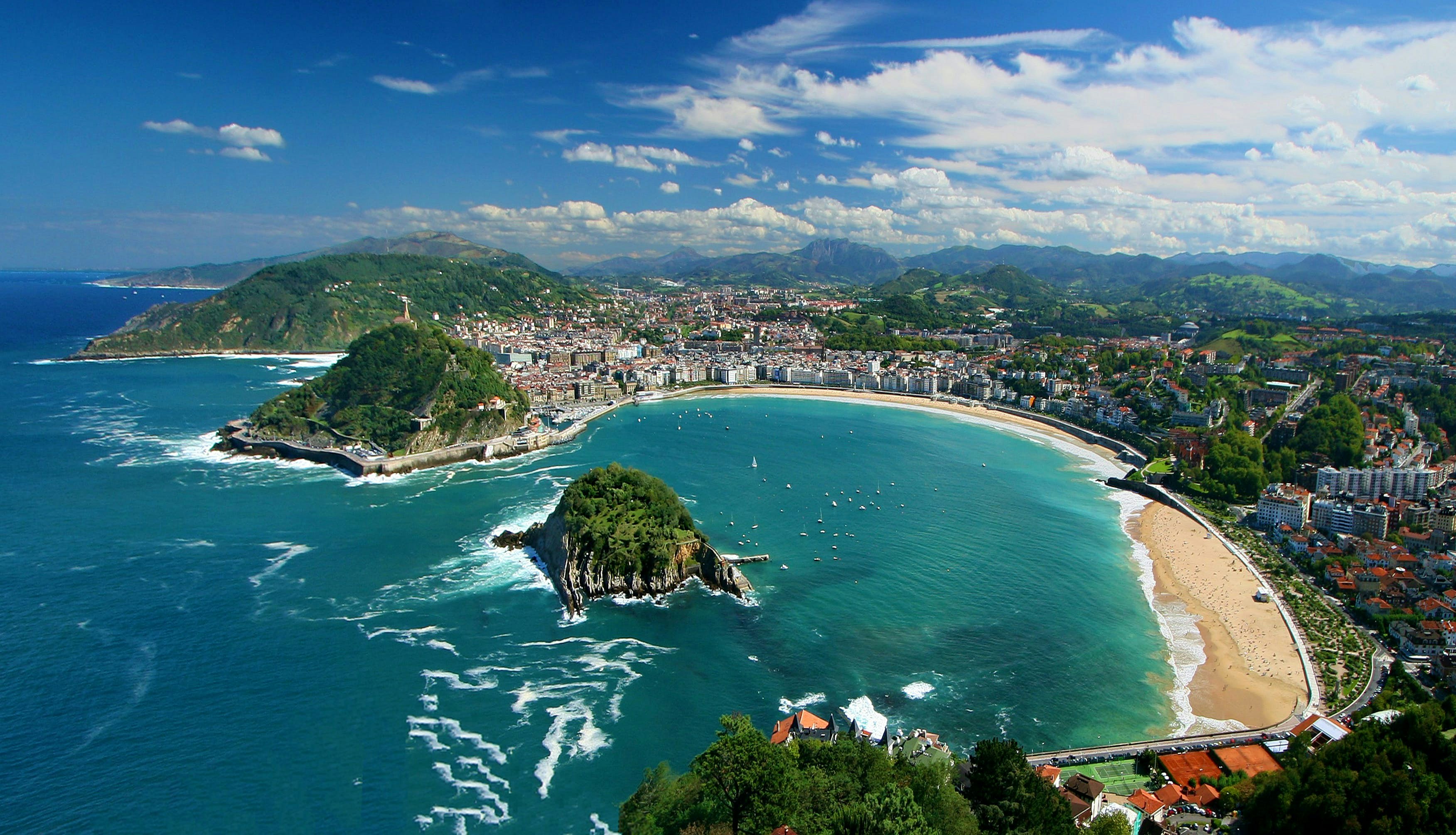
San Sebastián, or Donostia, has an elegance that never seems to try too hard. La Concha bay looks drawn with a compass, the hills embrace the city, pintxo counters work like small gastronomic theaters and the Cantabrian Sea sets a rhythm of calm, rain, foam and light.
This experience follows the city from La Concha to the Old Town, up to its viewpoints, across to Zurriola and into the counter culture where eating is not only nourishment, but a local form of conversation. San Sebastián is enjoyed facing the sea, but understood in its bars.
La Concha: an almost perfect bay
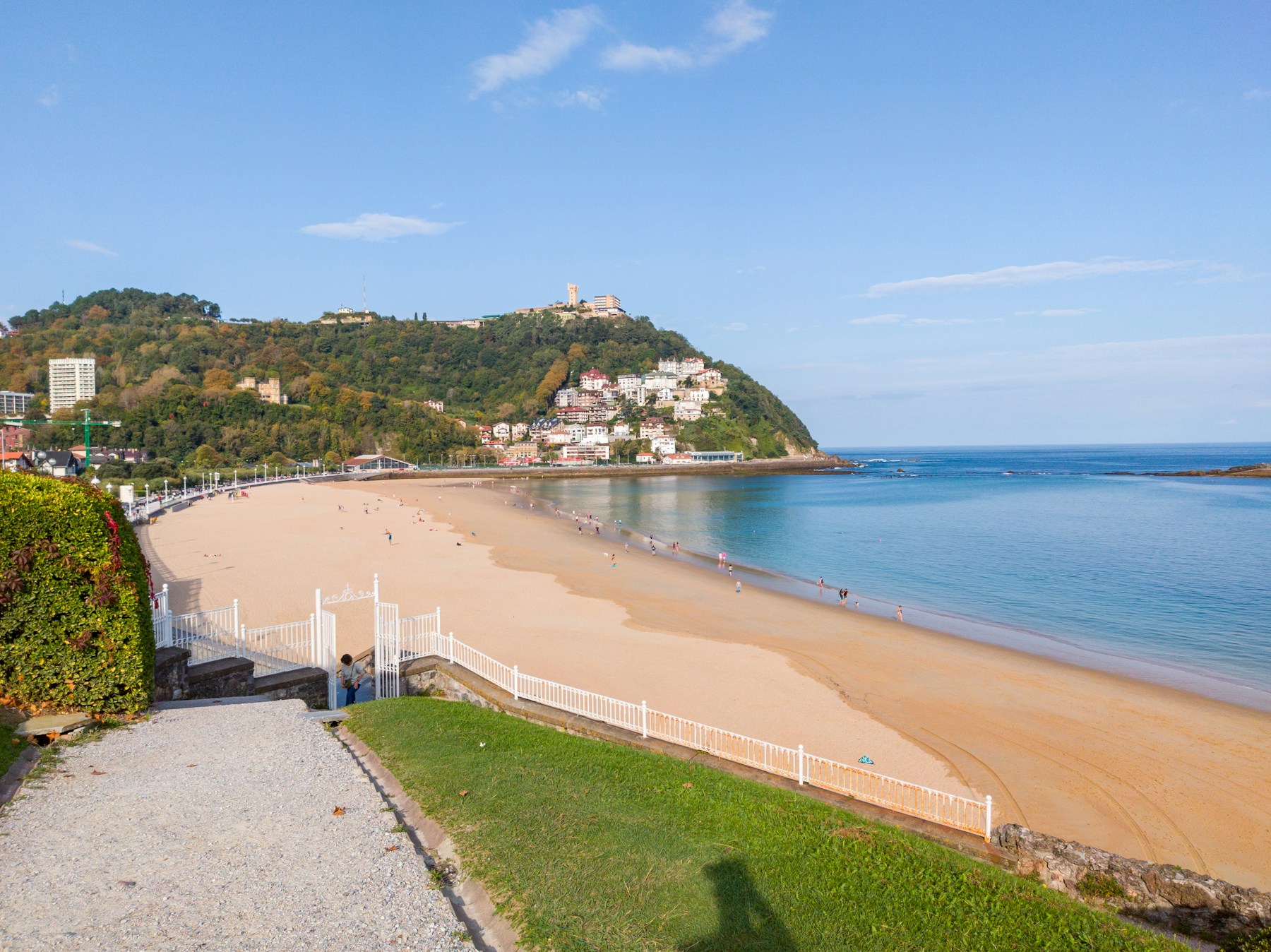
La Concha beach is one of northern Spain’s most recognizable images. Its clean curve, Santa Clara island, Mount Igueldo on one side and Urgull on the other create a scene that changes with every tide. On sunny days it looks like a classic postcard; under clouds, it becomes more Atlantic, more dramatic and more itself.
The promenade deserves to be walked slowly, from the City Hall to the Peine del Viento. Benches, white railings, families, swimmers, runners and people simply looking at the water form an everyday choreography. La Concha is not only a beach: it is an urban salon, viewpoint and emotional thermometer of the city.
Old Town: pintxos and streets with pulse
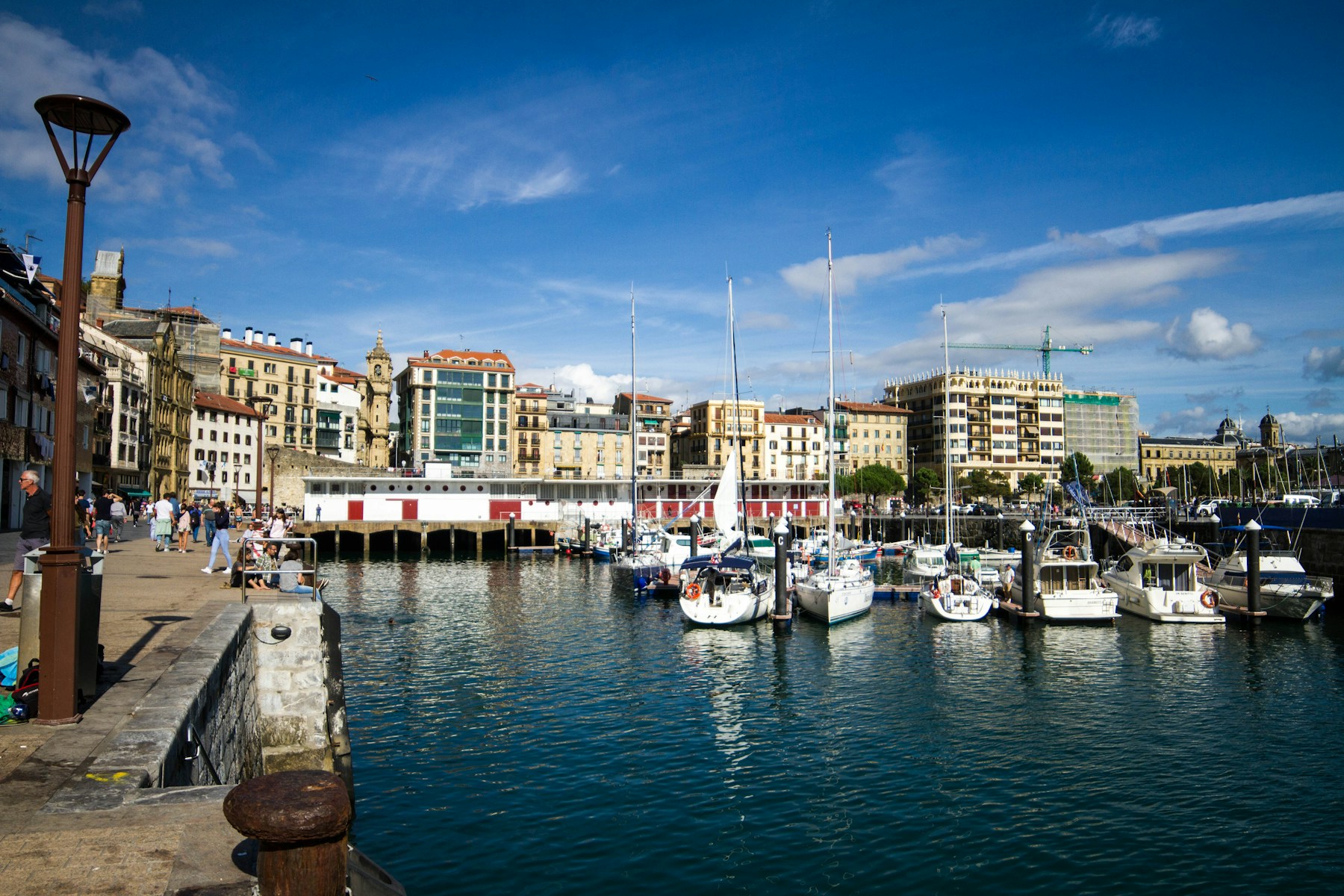
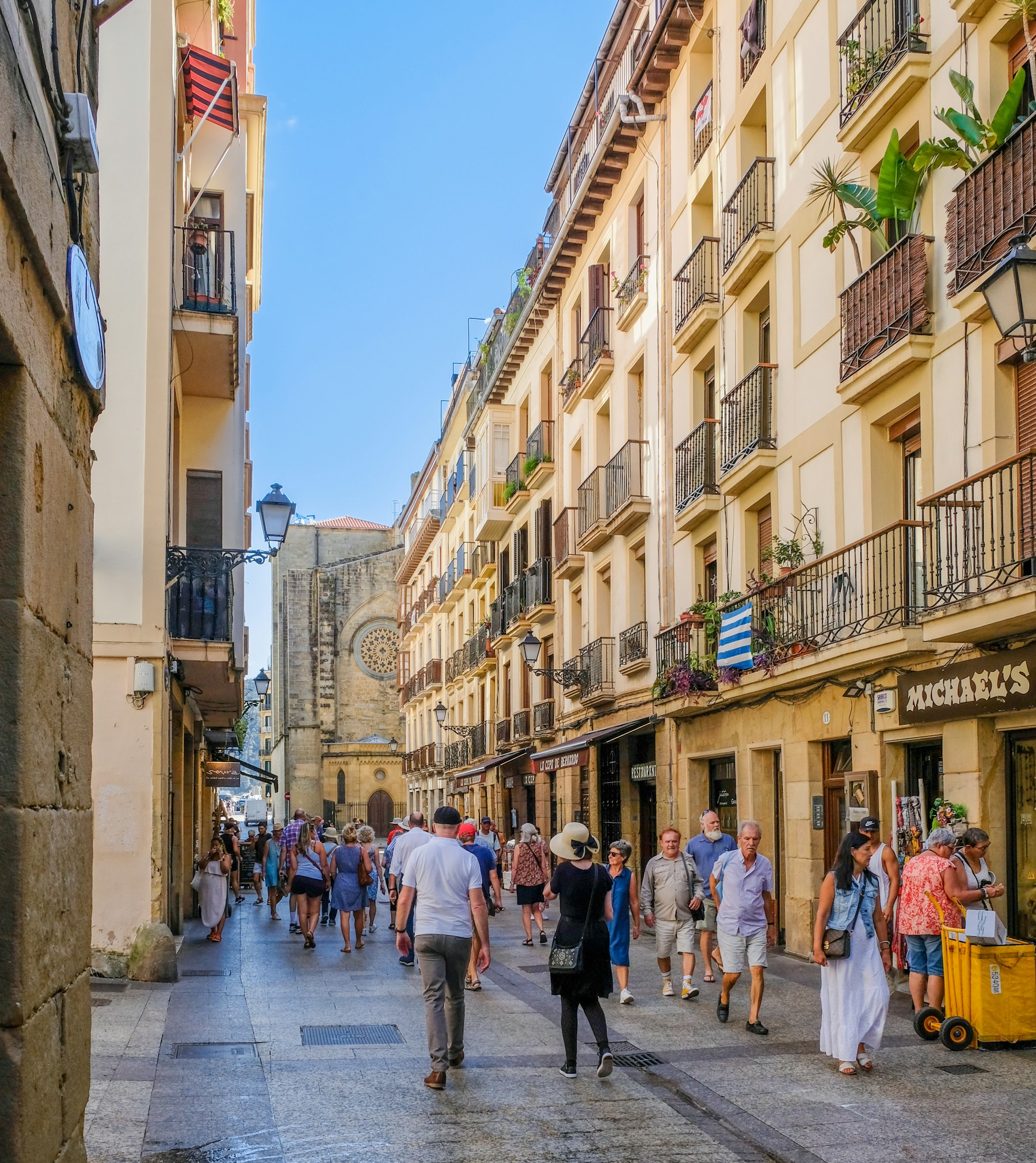
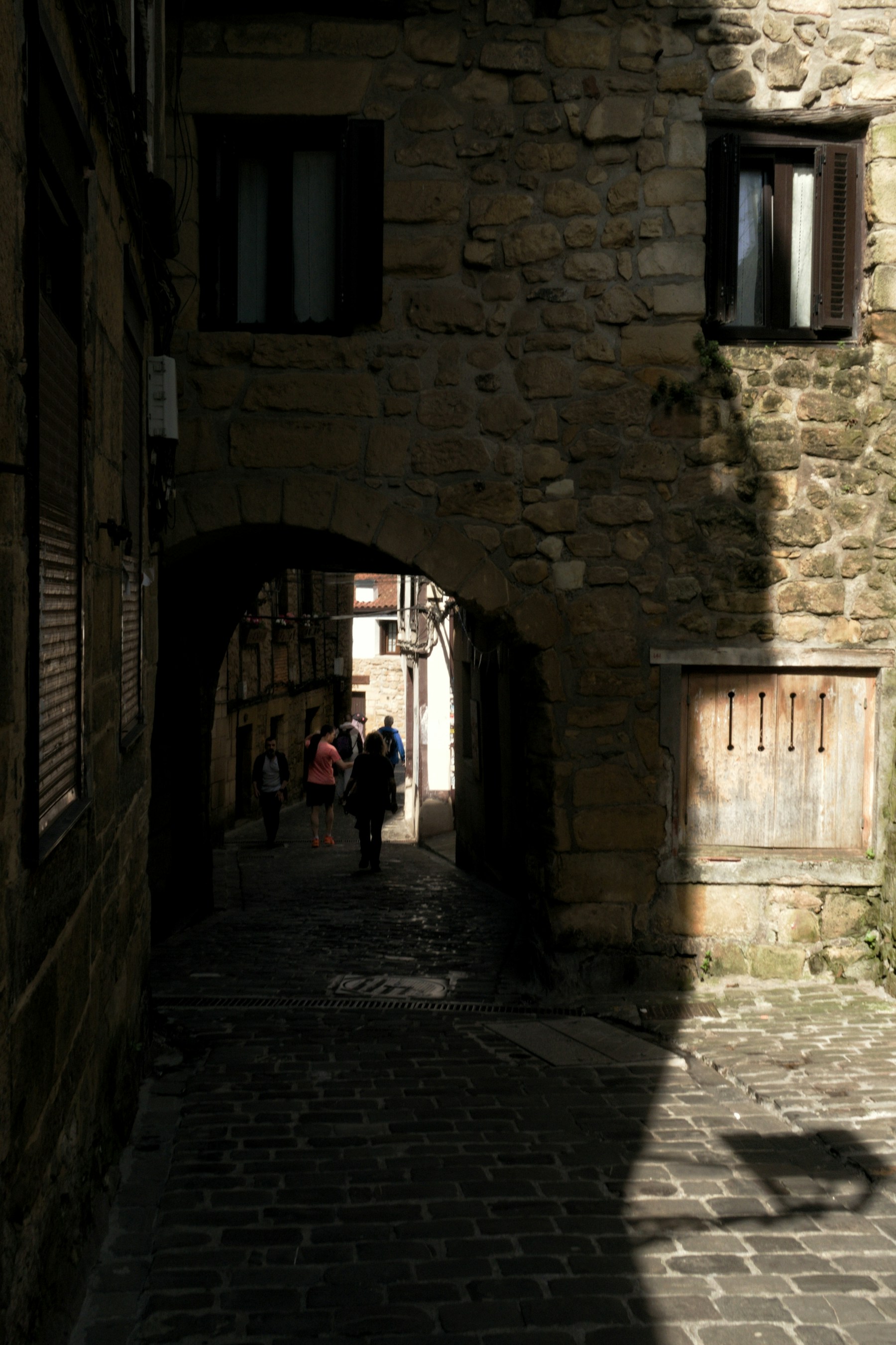
The Old Town holds much of Donostia’s character. Narrow streets, balcony façades, traditional shops, packed bars and Plaza de la Constitución as a great urban courtyard. Here, a walk almost always ends at a counter, and the counter rarely disappoints.
A pintxo route does not need solemnity, but it does need some strategy: order one or two per bar, move around, watch what comes out of the kitchen and alternate classics with small surprises. Gilda, spider crab, anchovy, tortilla, cod, mushrooms, croquettes, foie, txakoli or a small beer: each stop adds a nuance.
Pintxo culture
In San Sebastián, a pintxo is not just any tapa. It is a carefully thought-out bite, often tiny, condensing technique, product and social rhythm. Counters are showcases, but also maps of trust: what locals order is often as useful a clue as any guide.
Go hungry and without a rigid plan. Some bars work better at midday, others in the evening. The important thing is to understand the movement: enter, order, eat standing, comment, leave, repeat. Few cities turn informal eating into such a precise experience.
Mount Igueldo and the Peine del Viento
At the end of the bay, Eduardo Chillida’s Peine del Viento marks the meeting point between city, sculpture and sea. The steel pieces seem to speak with the rocks and waves, especially when the Cantabrian is rough. It is a place to stay and listen, not just photograph.
From there, Mount Igueldo gives you the full postcard: La Concha, Santa Clara, Urgull, rooftops and open sea. The old funicular adds a nostalgic touch, and the viewpoint explains why San Sebastián has long been a city of summer stays, contemplation and desire.
Zurriola and the younger side
Crossing into Gros, Zurriola changes the tone. The beach is more open, more surf-driven, more shaped by wind. Here the city becomes less classical and more informal: boards, wetsuits, terraces, cafés, bookshops and a neighborhood energy that balances La Concha’s elegance.
It is perfect for an active morning or an unstructured afternoon. Watching surfers enter the water, walking beside the Kursaal and ending with pintxos in Gros reveals a less monumental but very alive Donostia.
Urgull, history and views
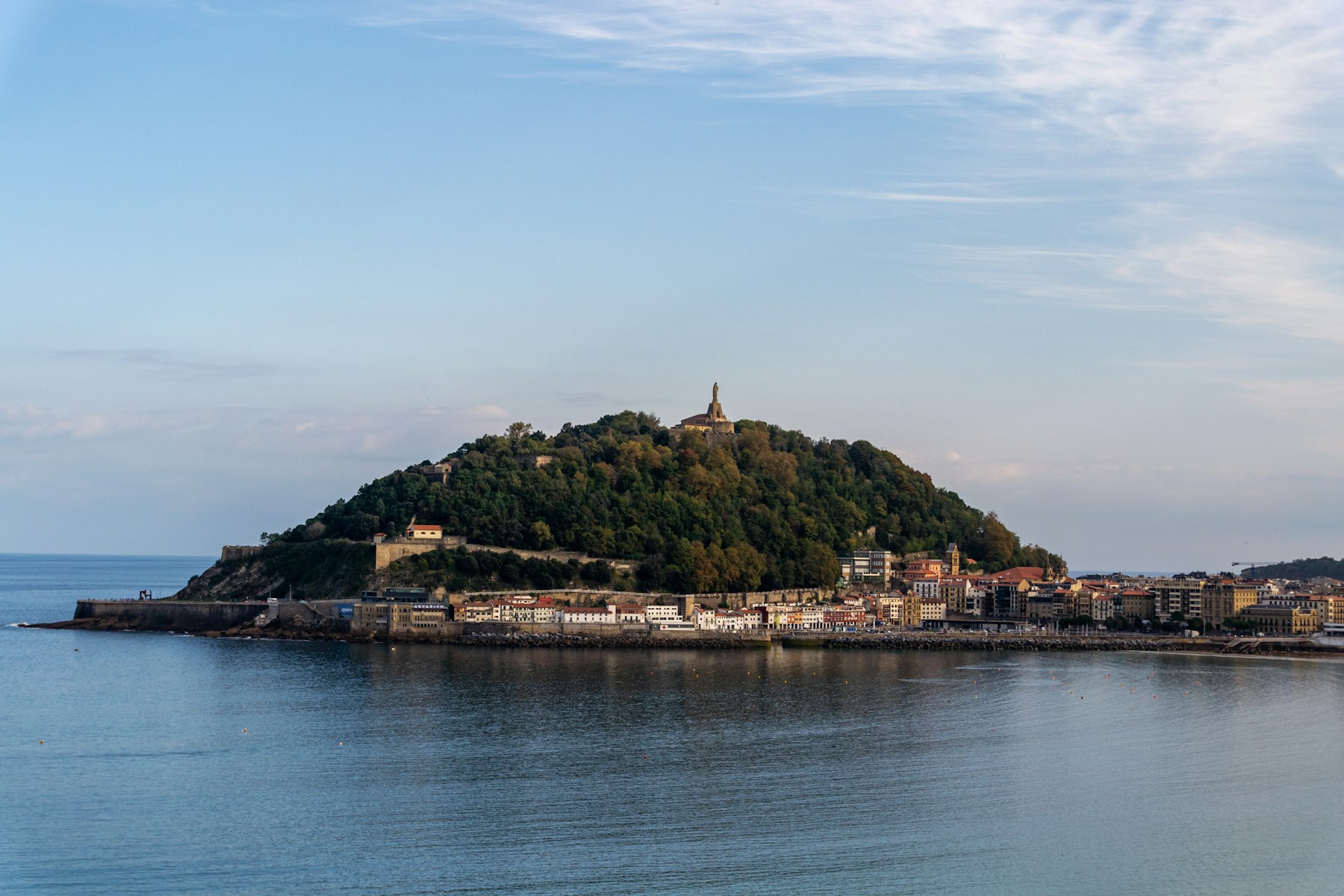
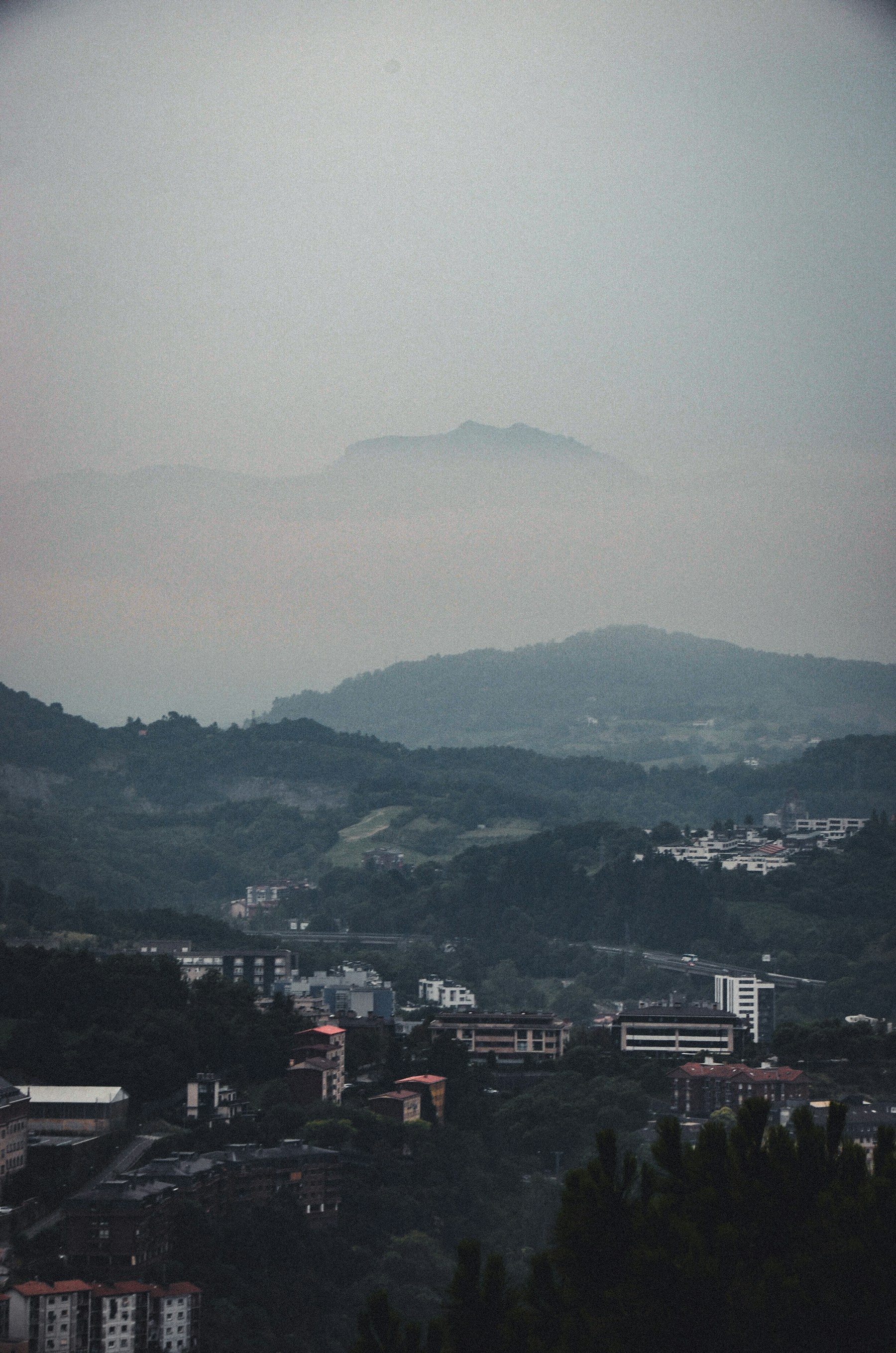
Mount Urgull rises between La Concha and the Old Town as a reminder of the city’s defensive history. Its wooded paths climb toward the Castillo de la Mota, past walls, viewpoints and quiet corners where the noise of the bars falls below.
From its viewpoints, San Sebastián’s strategic position becomes clear: protected bay, port, Urumea river mouth and open coast. It is a walk that combines green, history and perspective, ideal for balancing so much counter time with a little climb.
Markets, produce and haute cuisine
San Sebastián has an intense relationship with produce. La Bretxa and San Martín markets remind you that behind the city’s gastronomic fame there are fish, vegetables, cheeses, meats and seasonality. Donostia’s haute cuisine did not appear from nowhere: it rests on an extraordinary pantry and on a local culture that values eating well even in the everyday.
Those seeking a more ambitious experience can look toward the great restaurants in and around the city, but you do not need Michelin stars to eat memorably. Sometimes a hot pintxo, a perfect anchovy, cheesecake and a cold glass of txakoli are enough.
Practical tips
San Sebastián is very walkable. For a first visit, two or three days let you combine La Concha, Old Town, Igueldo, Urgull, Zurriola and a good pintxo route without rushing. The weather changes quickly, so bring a light jacket even if the day starts clear.
Spring and autumn are excellent for light, temperature and fewer crowds. In summer the city is livelier and the beach becomes central. In any season, booking accommodation ahead helps: San Sebastián is small, desired and not always cheap.
A city to savor slowly
Donostia stays in memory because of its balance: classical beauty, rough sea, walkable scale and a food culture that turns everyday life into celebration. You do not need to do too much. Walk the bay, enter the Old Town hungry and let the city decide the next pintxo.
A Food Route With Real Stops
A balanced day in San Sebastián works best like this: in the morning, walk La Concha before the beach sets the pace of the day; around midday, enter the Old Town for pintxos with appetite, but without trying everything; in the afternoon, climb Urgull or cross toward Gros depending on weather and energy; at sunset, watch the bay from Igueldo or simply from the promenade; and at night, dine early or book: the city is unforgiving in high season. The point is not to fill every minute, but to avoid the most common friction points: heat, queues, long transfers and meals chosen when everyone is already tired.
Areas Where Eating Makes Sense
Think of the experience as a simple line: La Concha, Old Town, Mount Urgull or Igueldo, Zurriola and Gros. This mental map helps you decide what to skip if the day gets slower than expected. A good itinerary is not the one that covers the most places, but the one that keeps the route coherent and gives each stop enough time to be remembered.
If You Eat Near Your Lodging
If you sleep in an apartment, Gros is comfortable for beach and a less obvious atmosphere; the Centre and Old Town are practical but can be noisy.
Signs That Help You Avoid Bad Choices
Do not turn pintxos into a viral checklist; do not arrive without a booking in August; and remember Cantabrian weather can change a beach plan in an hour.
Timings, Bookings And Accessibility
Summer is lively and expensive; spring and September balance sea, light and less pressure; winter has its own damp elegance. For transport, choose the simplest connection back to your lodging before adding extra stops. For accessibility, reduce cobbled streets, steep climbs or long beach approaches when travelling with children, older guests, wheelchairs or heavy luggage.
Our Criteria For Choosing A Table
A few bars with clear produce are better than too many stops. Alternate Old Town classics, Gros for a more local mood and one seated meal if you want Basque cooking with a pause.
Common questions before you go
Quick answers to decide whether A Pintxo Route In San Sebastián: La Concha, Gros And The Old Town fits your trip and how to plan it with a Destinations lens.
How much time should I set aside for A Pintxo Route In San Sebastián: La Concha, Gros And The Old Town?
A half day is the sensible minimum. If it is your first visit, leave time to walk slowly and add a proper meal or rest stop.
What is the best season for this experience?
It works year-round, but spring and autumn usually offer the best balance of weather, light and crowds.
What is the best way to get around?
Combine public transport with short walks. Moving a car between central stops usually costs more time than it saves.
What is your advice if I am staying nearby?
Use the proximity to split the plan in two: the main visit in the morning and a freer walk late in the day.
What mistake should I avoid?
The most common mistake is trying to see everything in one day. Choose a coherent route and leave something for another time.
Operating a Rental in this area?
Stay fully compliant with Spain's strict tourism regulations. HazCheckin automates your guest registration and legal reporting directly to Spanish authorities.