By Lucía Marín
Guide reviewed under editorial standards
This experience is structured to provide an itinerary, local context, transport, recommended season and mistakes to avoid. See how we review guides
How to make the most of this experience
Useful planning notes for Zaragoza In Cold Weather Or Cierzo Wind: Pilar, Aljafería And Tapas with a Destinations lens, especially if you are travelling with limited time or staying nearby.
Recommended duration
Between half a day and two days, depending on your pace and the stops you add.
Best season
Winter and cooler days, with layers and shorter daylight hours in mind.
How to get around
Prioritise public transport and walking sections; avoid moving the car between nearby stops.
Best for
First-time visitors, couples, apartment-based travellers and weekend breaks.
Accessibility
Check slopes, cobbles and real walking distances before closing the route.
Estimated budget
Medium: combine free visits with one or two well-chosen paid entries.
Keep the most demanding visit for the morning and leave the afternoon for walks from your stay.
Trying to see everything in one day and ending up jumping from photo to photo.
Zaragoza often sits between two major tourist magnets, Madrid and Barcelona, but those who stop discover a city with a character of its own: Roman, Mudéjar, Baroque, popular and crossed by the Ebro. It does not show off too much, and perhaps that is why it surprises more. Beneath its broad squares and discreet avenues lies a mix of history, devotion, art and tapas worth more than a passing stop.
This experience follows Zaragoza from the Basilica del Pilar to the Aljafería, through La Seo, the Stone Bridge, El Tubo, Goya’s traces and sunsets beside the river. It is a city of contrasts: monumental without becoming rigid, calm yet full of lively bars, ancient and modern at once.
El Pilar and the square that organises the city
The Basilica of Our Lady of the Pillar is Zaragoza’s great icon, but also its emotional compass. Its towers and domes are visible from many parts of the city, and the wide square around it works as an open stage where pilgrims, families, travellers, students and locals cross paths on their way elsewhere.
Go inside without rushing, look at Goya’s frescoes, climb one of the towers if the day allows, and then step back into the square to see how the building changes scale with the light. El Pilar is not only a religious or artistic visit: it is a constant urban presence, almost a way of orienting yourself.
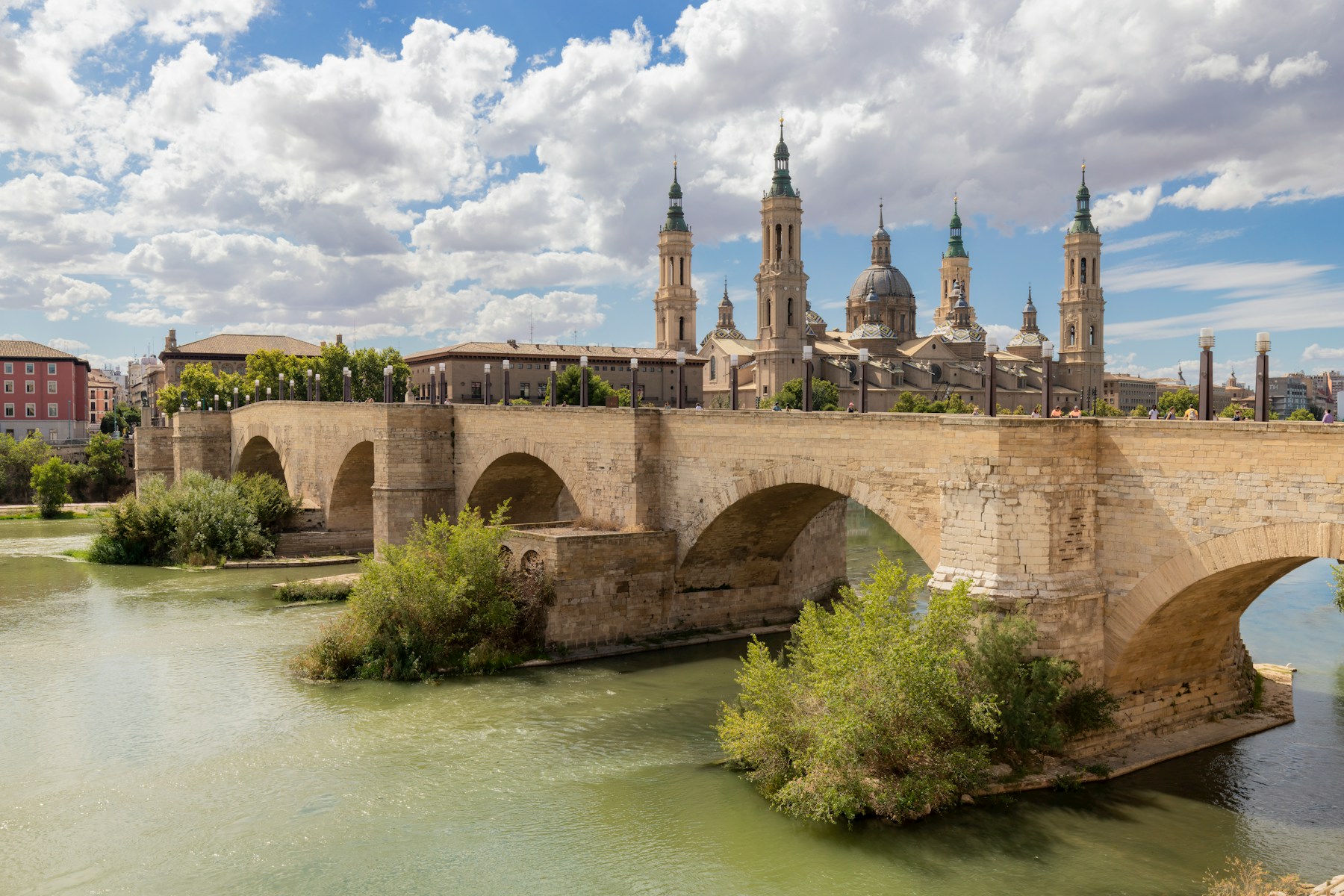
The Ebro and the Stone Bridge
The Ebro gives Zaragoza a depth that is not always obvious from the centre. Walking along its banks lets you see the city from a distance: El Pilar reflected in the water, the Stone Bridge marking a historic entrance and riverside paths offering air after the density of monuments.
At sunset, the river becomes one of the best viewpoints. Light drops over the towers, facades change tone and the city takes on an unexpected calm. Zaragoza is not an instant postcard city; it needs these side moments to reveal its beauty.
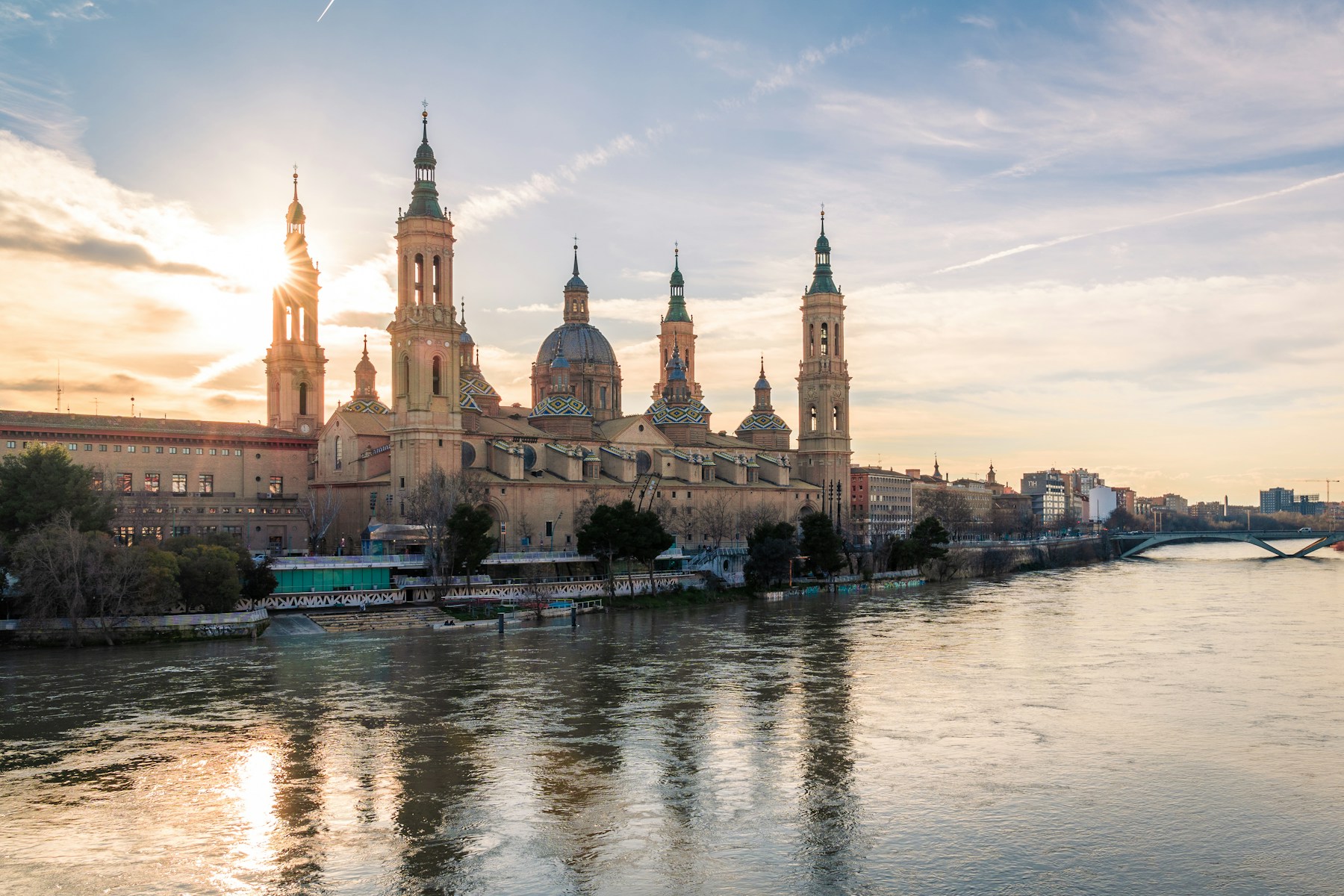
La Seo and Aragonese Mudéjar
A few steps from El Pilar, the Cathedral of the Savior, known as La Seo, shows another side of Zaragoza. Its exterior mixes periods and styles, but its Mudéjar wall is one of the most delicate jewels of the historic centre. Ceramics, brick, geometry and colour recall how Aragón developed its own powerful and refined language.
La Seo asks for a slower gaze than El Pilar. It is less expansive, more concentrated, and for that reason it completes the visit. Between the two cathedrals, Zaragoza shows that its history does not move in a straight line, but through superimposed layers: Roman, Islamic, Christian, Renaissance and contemporary.

The Aljafería: a palace between cultures
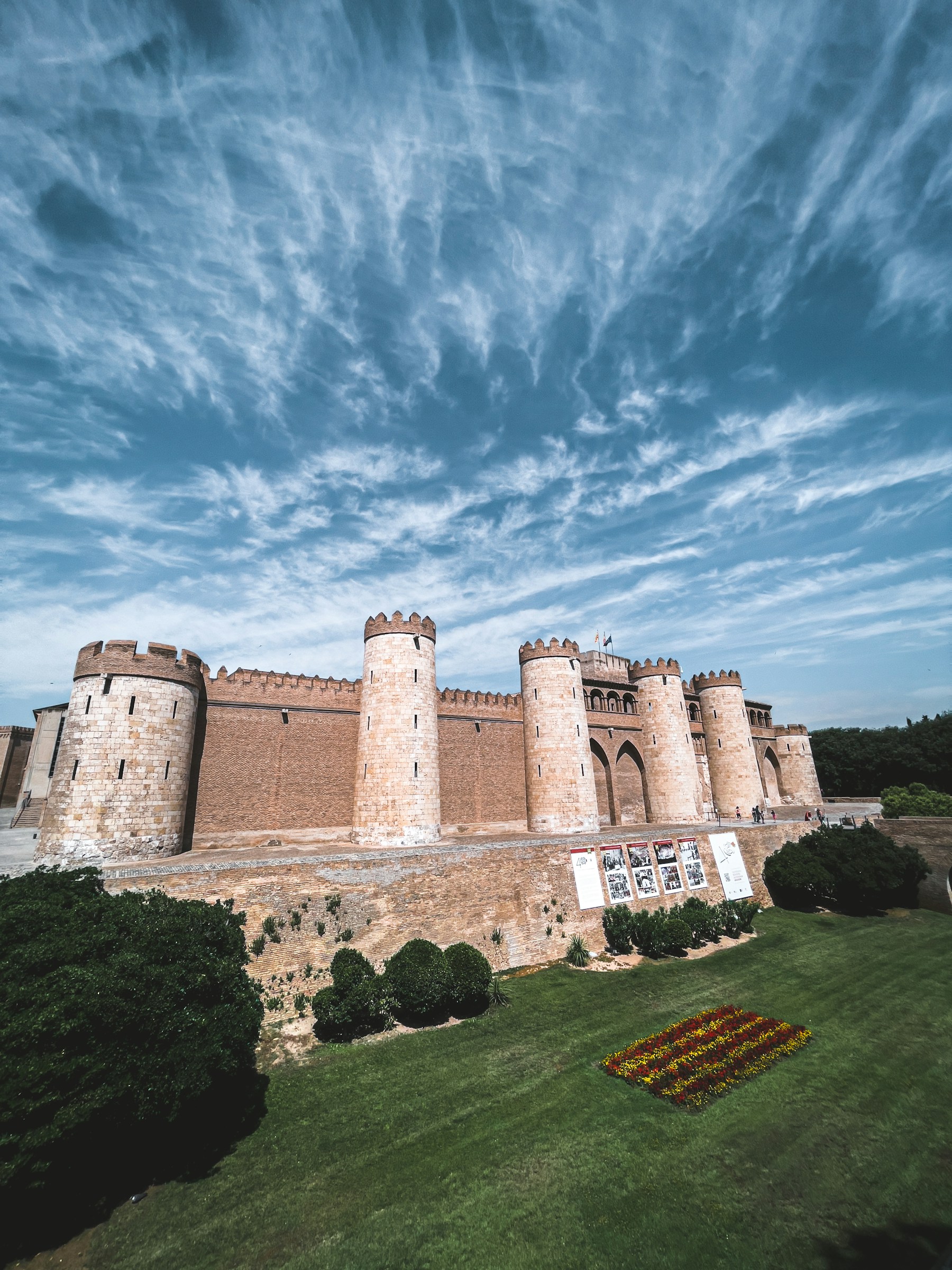
The Aljafería is one of Zaragoza’s great surprises. From outside it may look like a sober fortress, but once through its gates an Islamic palace appears, with courtyards, interlaced arches and details that connect the city with the history of Al-Andalus. Later it became a residence of the Catholic Monarchs and today houses the Parliament of Aragón.
That continuity of uses turns the visit into more than architecture. The Aljafería neatly sums up Zaragoza’s identity: a city of crossings, adaptations and continuities. Book ahead when needed and give it time, because each room tells a different transition.
El Tubo and the bar culture
Zaragoza is very easy to understand while eating standing up. El Tubo, its most famous tapas area, gathers bars, narrow lanes and an energy that rises especially in the evening. The route is not about finding a single perfect place, but about moving: one tapa here, one glass there, another recommendation appearing in conversation.
Migas, ternasco lamb, borage, croquettes, anchovies, mushrooms, madejas and creative tapas coexist without too much ceremony. The city has a solid, direct Aragonese cuisine, but also a younger scene that knows how to play with the small-plate format. The important thing is to follow the atmosphere.
Goya, Caesaraugusta and urban memory
Zaragoza preserves many layers beneath the surface. The remains of Caesaraugusta allow you to follow the Roman footprint through the forum, river port, baths and theatre. They are not isolated ruins, but pieces that help you imagine an ancient city organised around the river and trade.
Goya adds another dimension. His frescoes in El Pilar and his presence in museums and urban routes remind you that Zaragoza did not only preserve heritage: it produced an artistic gaze capable of changing the history of painting. Following his traces links the religious, the popular and the modern.
Parque Grande and green pauses
When you feel like leaving the monumental axis, Parque Grande José Antonio Labordeta offers shade, avenues, fountains, viewpoints and a more local Zaragoza. It is a good break for families, morning runners or anyone who wants to swap stone and brick for trees.
The city also has a comfortable scale for combining long walks with public transport. Not everything is side by side, but nothing feels too far if the day is organised logically: historic centre, Aljafería, the Ebro banks and a few food stops make for a very complete route.
When to go and how to experience Zaragoza
Spring and autumn are the best seasons for walking Zaragoza calmly. In summer the heat can be intense, so reserve the middle hours for museums, long meals or rests. In October, the Fiestas del Pilar transform the city completely, with popular atmosphere, flowers, music and a lot of street life.
Two days are enough to see the essentials without rushing: one for the El Pilar area, La Seo, the Ebro and El Tubo; another for the Aljafería, Goya, Caesaraugusta and a green walk. Zaragoza does not ask for an exhausting schedule. It asks for attention, appetite and a willingness to look beyond the obvious.
A city that rewards the stop
Zaragoza may not have the tourist fame of other Spanish capitals, but that discretion works in its favour. You can walk without being swept along by crowds, enter major monuments, eat well, look at the river and discover a city with its own voice.
Those who arrive in transit often leave feeling they underestimated the destination. Because Zaragoza does not compete to dazzle in one minute: it builds its charm through stone, water, brick, tapas, history and a calm way of being on the map.
What To Do If It Rains Or The Day Slows Down
A balanced day in Zaragoza works best like this: in the morning, start with Plaza del Pilar and La Seo before widening the map too much; around midday, eat in El Tubo or nearby through a few well-chosen stops; in the afternoon, reserve Aljafería or Goya-related museums depending on your interests; at sunset, cross the Ebro to see the Pilar skyline; and at night, return to the centre for tapas and an illuminated walk. The point is not to fill every minute, but to avoid the most common friction points: heat, queues, long transfers and meals chosen when everyone is already tired.
Covered Route, Short Walks And Shelters
Think of the experience as a simple line: Pilar, La Seo, Ebro, Aljafería, El Tubo and traces of Goya. This mental map helps you decide what to skip if the day gets slower than expected. A good itinerary is not the one that covers the most places, but the one that keeps the route coherent and gives each stop enough time to be remembered.
Staying Close To The Backup Plan
If you sleep in an apartment, the centre and Coso area simplify everything; near the station can be practical but less emotional for a first visit.
Grey-Day Mistakes
Do not use Zaragoza only as a transit city; do not do El Tubo without appetite or patience; and do not leave Aljafería unbooked in busy periods.
Weather, Transport And Real Accessibility
Spring and autumn are very comfortable; summer can be dry and hot; winter asks for a coat because of the cierzo wind. For transport, choose the simplest connection back to your lodging before adding extra stops. For accessibility, reduce cobbled streets, steep climbs or long beach approaches when travelling with children, older guests, wheelchairs or heavy luggage.
Where To Take Shelter And Eat Well
Eat with judgement by alternating El Tubo tapas, Aragonese produce and one seated meal if you want ternasco, borage or local cooking without hurry.
Common questions before you go
Quick answers to decide whether Zaragoza In Cold Weather Or Cierzo Wind: Pilar, Aljafería And Tapas fits your trip and how to plan it with a Destinations lens.
How much time should I set aside for Zaragoza In Cold Weather Or Cierzo Wind: Pilar, Aljafería And Tapas?
A half day is the sensible minimum. If it is your first visit, leave time to walk slowly and add a proper meal or rest stop.
What is the best season for this experience?
It works year-round, but spring and autumn usually offer the best balance of weather, light and crowds.
What is the best way to get around?
Combine public transport with short walks. Moving a car between central stops usually costs more time than it saves.
What is your advice if I am staying nearby?
Use the proximity to split the plan in two: the main visit in the morning and a freer walk late in the day.
What mistake should I avoid?
The most common mistake is trying to see everything in one day. Choose a coherent route and leave something for another time.
Operating a Rental in this area?
Stay fully compliant with Spain's strict tourism regulations. HazCheckin automates your guest registration and legal reporting directly to Spanish authorities.