
By Lucía Marín
Guide reviewed under editorial standards
This experience is structured to provide an itinerary, local context, transport, recommended season and mistakes to avoid. See how we review guides
How to make the most of this experience
Useful planning notes for Santiago In The Rain: Cathedral, Market And Arcaded Streets with a Destinations lens, especially if you are travelling with limited time or staying nearby.
Recommended duration
Between half a day and two days, depending on your pace and the stops you add.
Best season
Summer and late spring, avoiding the middle of the day for outdoor plans.
How to get around
Prioritise public transport and walking sections; avoid moving the car between nearby stops.
Best for
First-time visitors, couples, apartment-based travellers and weekend breaks.
Accessibility
Check slopes, cobbles and real walking distances before closing the route.
Estimated budget
Medium: combine free visits with one or two well-chosen paid entries.
Keep the most demanding visit for the morning and leave the afternoon for walks from your stay.
Trying to see everything in one day and ending up jumping from photo to photo.
Santiago de Compostela is not visited like any other city. You arrive. Even those who come by train, car or plane sense something of an ending: wet stone, bells, arcades, backpacks resting on the ground and that mixture of tiredness and emotion crossing Praza do Obradoiro at any hour.
This experience follows Santiago from its cathedral into the streets of the historic center, through markets, taverns, quiet squares and the green Galicia that begins just beyond the city. Santiago is monumental, yes, but also intimate: a city best understood by walking slowly and accepting that rain is part of the story.
The Cathedral and arrival at Obradoiro
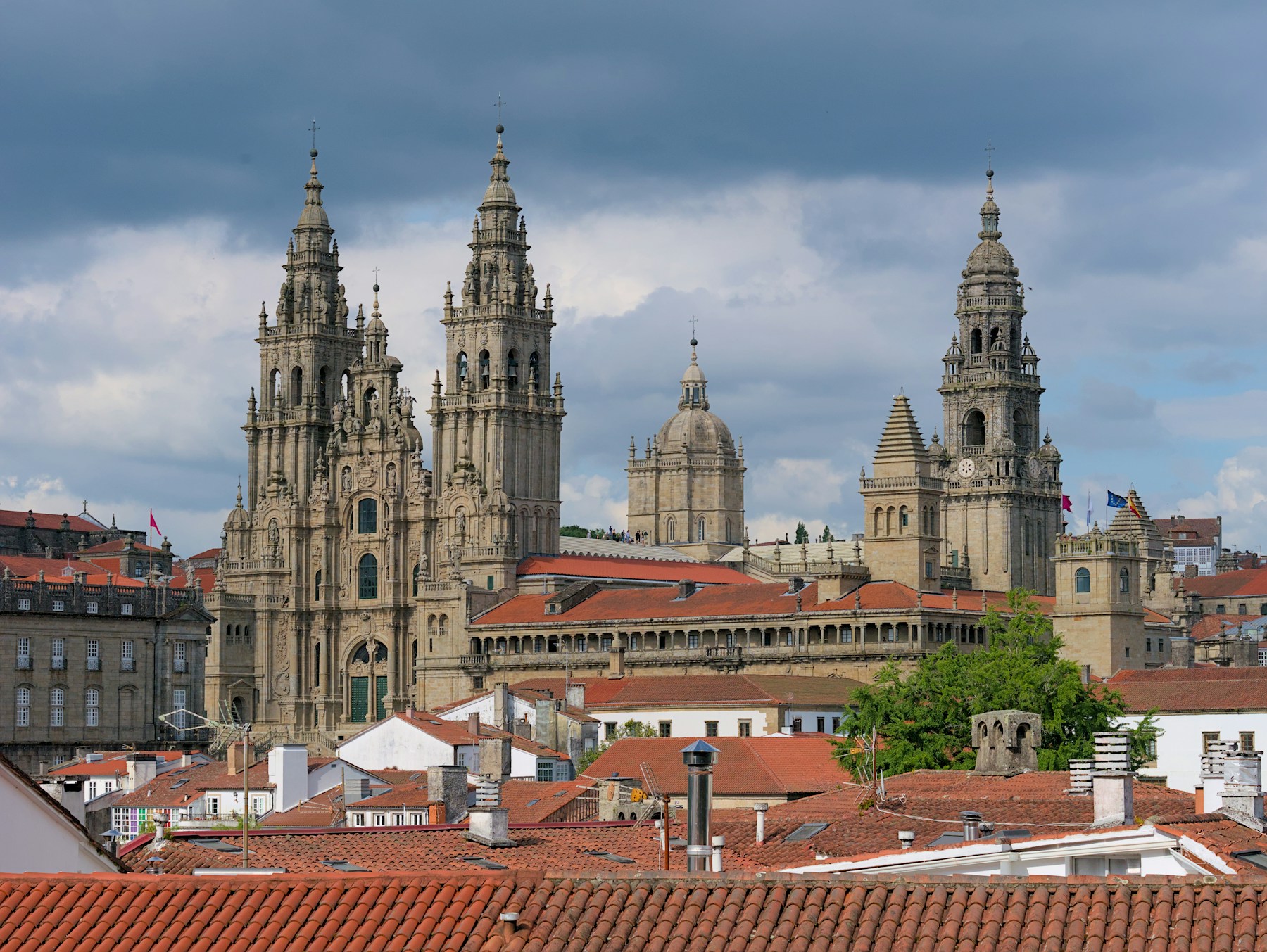
The Cathedral of Santiago is the symbolic heart of the city and one of Europe’s great journey endings. Its Baroque façade dominates Praza do Obradoiro with restrained theatricality: towers, stairways, stone warmed by moisture and pilgrims pausing in silence before taking a photo.
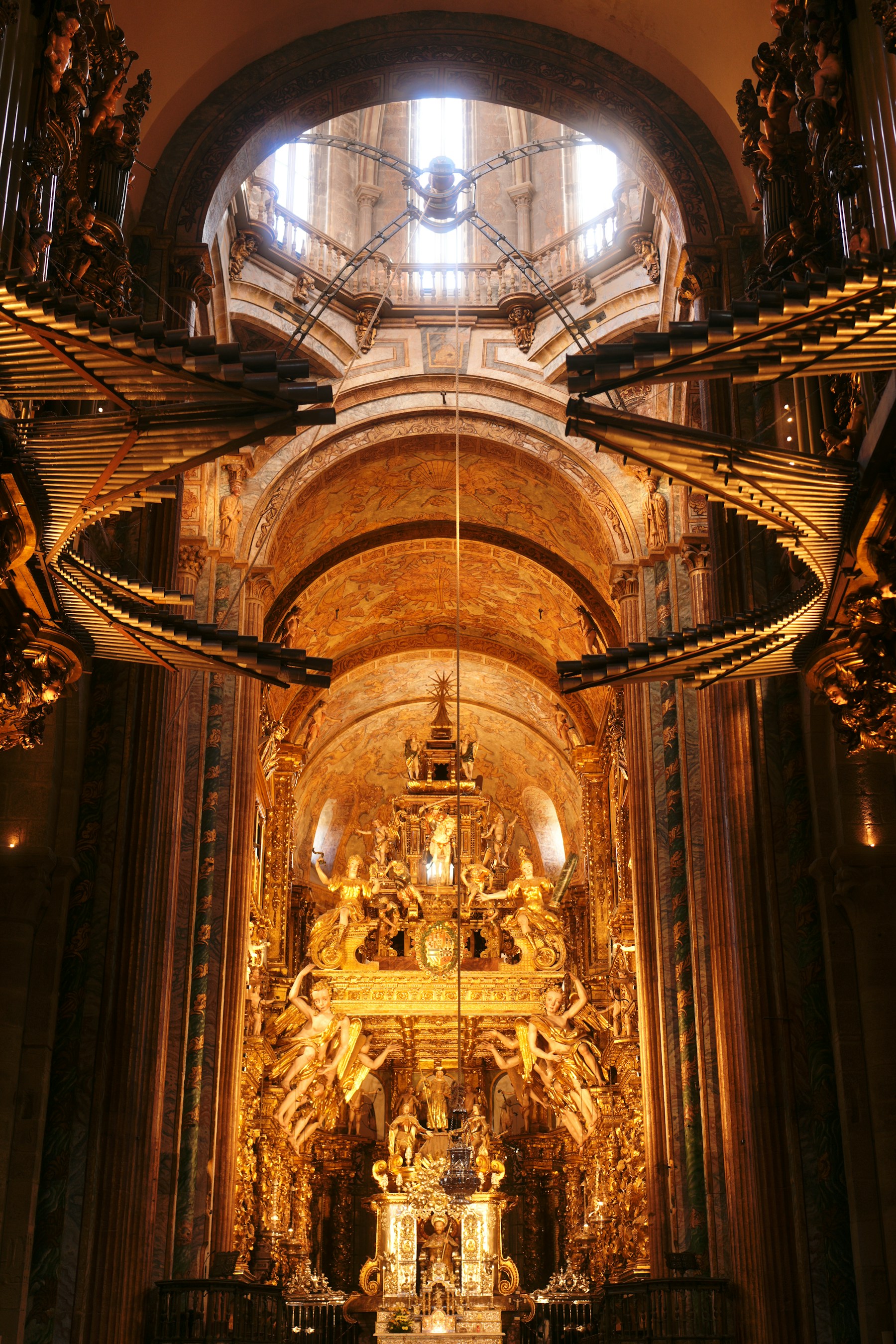
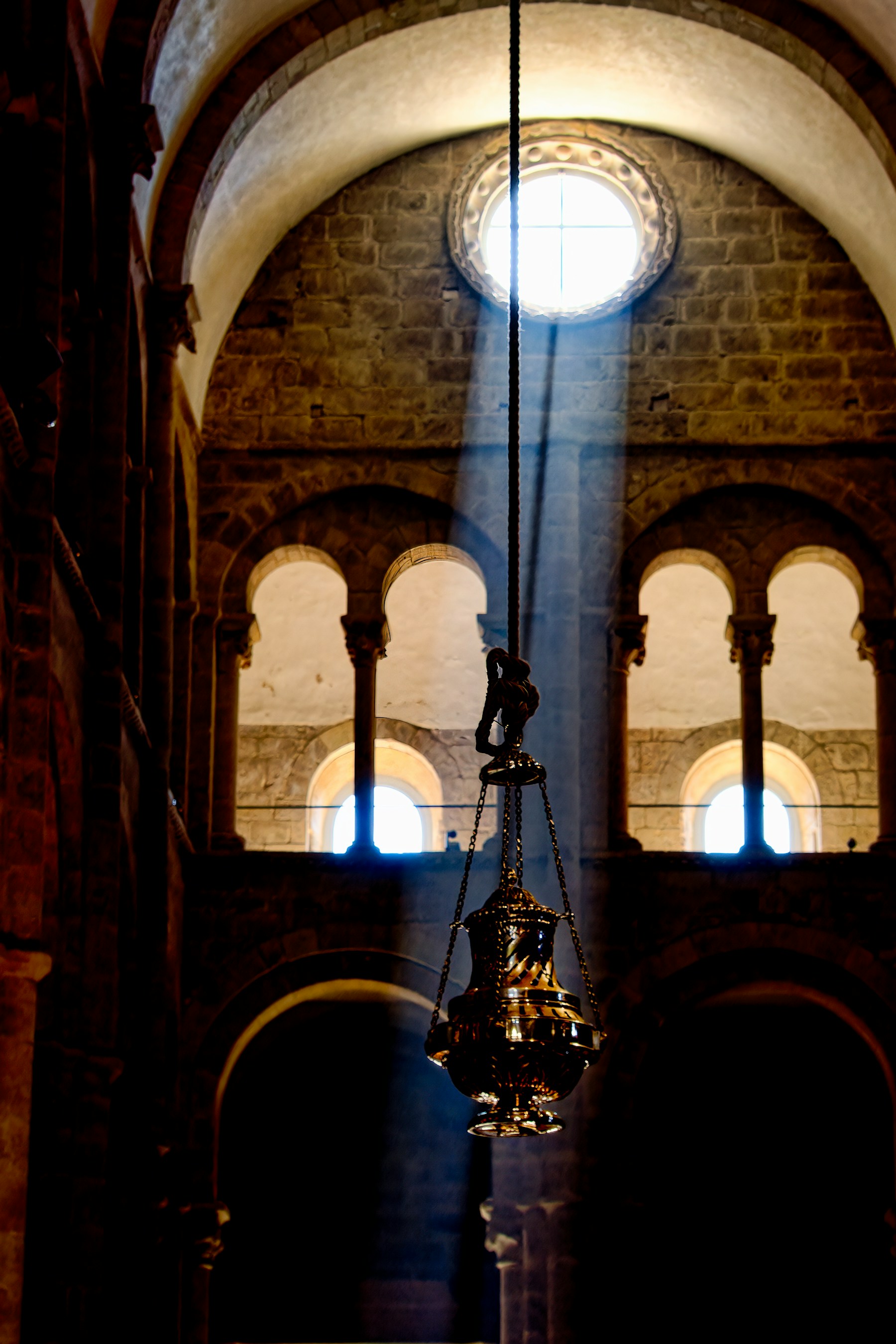
Inside the cathedral, the rhythm changes. The interior invites you to look upward, toward the altar, organs, naves and details that gather centuries of devotion, politics and art. If the botafumeiro swings during your visit, the experience becomes almost hypnotic, but even without it the cathedral holds a hard-to-explain intensity.
Streets, arcades and wet stone
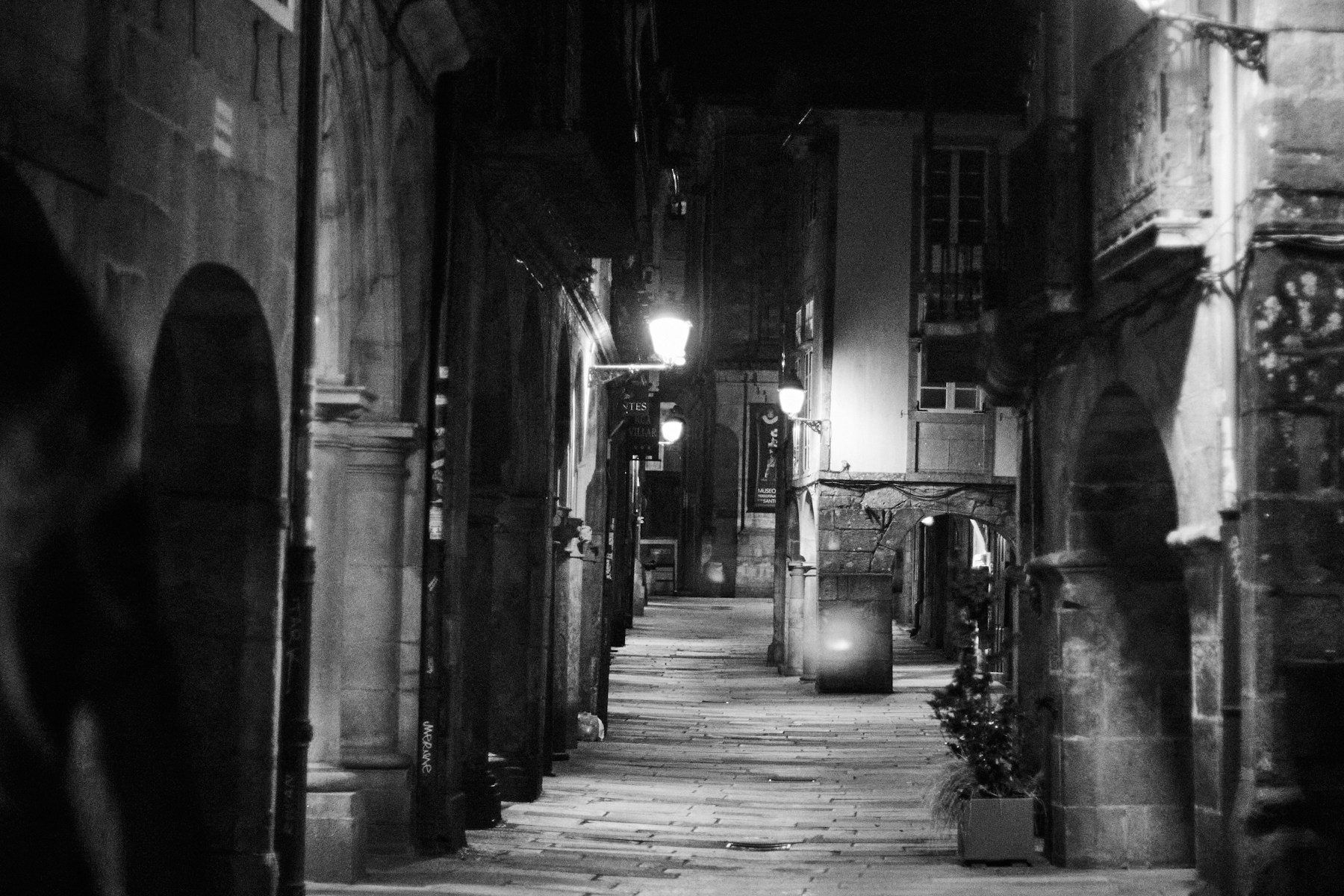
Santiago’s historic center is a gentle maze of narrow streets, arcades and squares that seem designed for walking in the rain. Rúa do Franco, Rúa do Vilar, Rúa Nova and the streets around them mix pilgrims, students, traditional shops, cafés and taverns where there always seems to be room for a long conversation.
Stone is the absolute protagonist. It changes color with the light, shines when it rains and softens even the sternest façades. Getting lost here is not a metaphor: it is the best way to find courtyards, passageways, small churches and corners where the city steps away from the main flow.
The food market and Galician cooking
The Mercado de Abastos is essential for understanding Santiago through its produce. Fish, seafood, cheeses, turnip greens, empanadas, breads, vegetables and flowers fill a space where Galicia appears without too much decoration. It is a real market, not only a gastronomic postcard.
Compostela cooking moves between sea and land: octopus, scallops, zamburiñas, caldo gallego, lacón con grelos, Padrón peppers, soft tortilla, empanada and tarta de Santiago. The ideal plan is to alternate a seated meal with small counter stops, because the city is deeply enjoyable in that space between aperitif, lunch and sobremesa.
Squares that breathe history
Around the cathedral, each square has a different character. Obradoiro is the great final scene; Praterías looks toward the medieval past; Quintana alternates solemnity and daily life; Azabachería recalls crafts and the entrance of the French Way. Circling the cathedral outside is almost as important as visiting it inside.
Do it at different hours. In the morning, the squares wake with visitors and newly arrived pilgrims; at sunset, the stone turns warmer; at night, when voices drop, Santiago becomes almost theatrical. The city needs very little distance to change atmosphere.
The Camino inside the city
Santiago is the end of the route, but the Camino does not stop suddenly. You notice it in shells, boots drying by doors, pilgrim credentials, arrival hugs and conversations between strangers who share a kind of common language. Even if you have not walked for weeks, the city transmits that accumulated emotion.
To feel it, approach the historic entrances, follow the last meters of pilgrims toward Obradoiro or sit in the square for a while and watch. Santiago teaches that travel is not always about adding places, but about arriving attentively at one.
Alameda Park and the best view
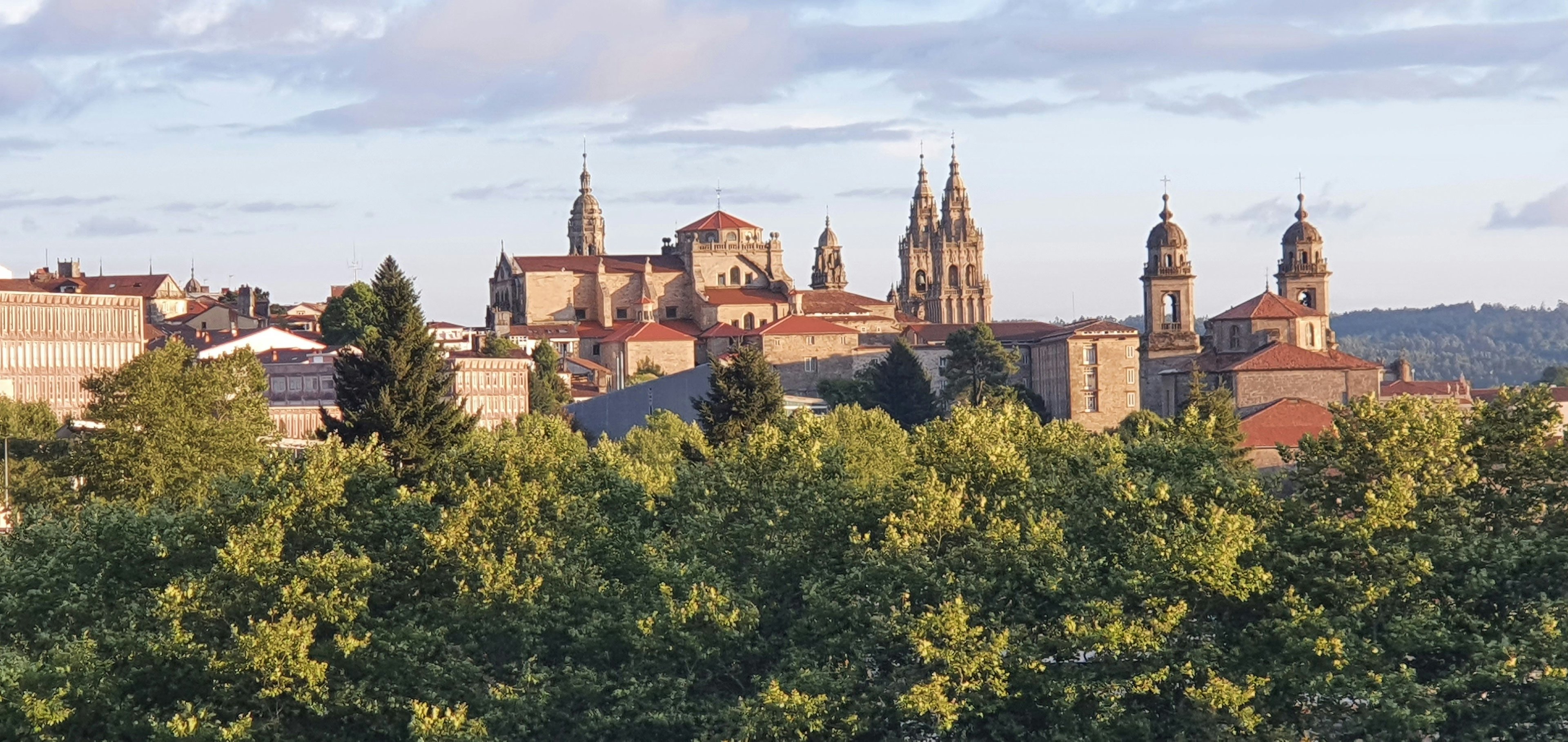
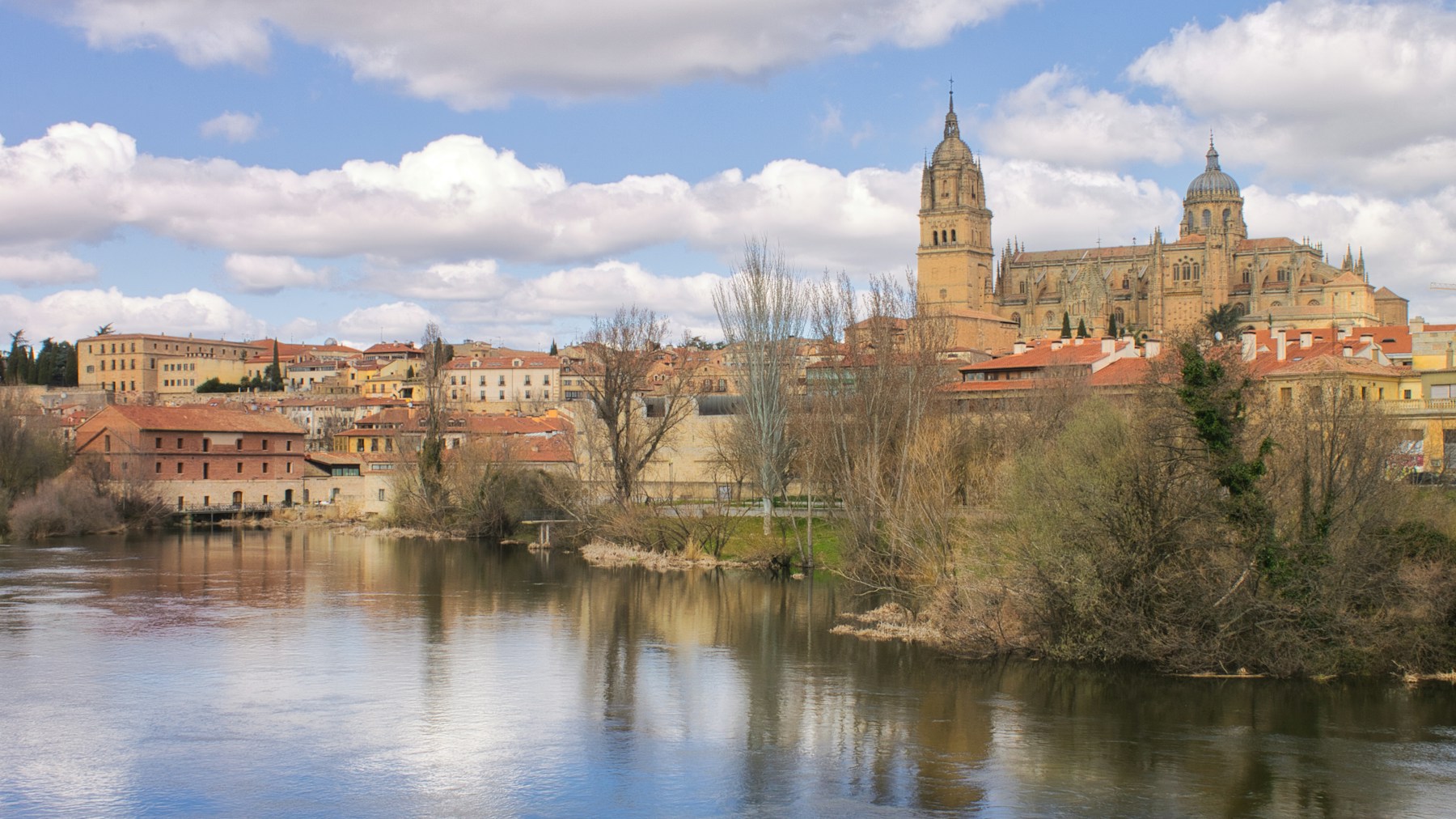
Parque da Alameda offers one of Santiago’s most beautiful views: the cathedral towers rising above rooftops, with green in the foreground. It is a perfect walk for stepping out of the historic center without leaving the emotional city. Benches, oaks, camellias and paths allow you to breathe after so much stone.
From there, Santiago’s true scale becomes clear: compact, humid, university-driven, monumental and surrounded by landscape. The famous Marías statue at the entrance adds a note of popular memory to a place used by locals as much as visitors.
Galicia around Santiago
Santiago also works as a base for looking at Galicia. Nearby are manor houses, monasteries, villages, forests and roads disappearing into intense greens. Those with more time can continue toward the coast, the Rías Baixas, Noia, Muros or even Fisterra, that other symbolic ending where the Camino faces the Atlantic.
The escape does not have to be ambitious. Sometimes an afternoon of landscape, a viewpoint, a meal by the sea or a secondary road is enough to understand that Santiago is not isolated: it is a gateway to a broader, slower and deeply sensory Galicia.
Practical tips
Santiago is made for walking. The historic center is compact and rewards an unhurried pace, though the stone paving asks for comfortable shoes. Rain is common even when unexpected, so bring a light jacket or umbrella. Rather than avoiding it, it is best to fold it into the trip.
Two days allow you to see the cathedral, squares, market, Alameda and enjoy the food. Three or four days open the door to trips around Galicia. Spring and autumn are especially beautiful; summer brings more pilgrim atmosphere, and winter, if you accept the weather, reveals a more inward city.
A city of arrival
Santiago stays in memory because it combines destination and pause. Some cities push you to move; Santiago invites you to stop. Beneath its arcades, among bells and wet stone, you understand that arriving can also be a way of traveling.
What To Do If It Rains Or The Day Slows Down
A balanced day in Santiago de Compostela works best like this: in the morning, enter Praza do Obradoiro early and circle the Cathedral slowly; around midday, link the food market, arcaded streets and simple Galician cooking; in the afternoon, walk up to Alameda to see the towers from a distance; at sunset, wander toward San Pedro or Bonaval for a less postcard-like city; and at night, return to the old town when groups fade and locals, students and pilgrims remain. The point is not to fill every minute, but to avoid the most common friction points: heat, queues, long transfers and meals chosen when everyone is already tired.
Covered Route, Short Walks And Shelters
Think of the experience as a simple line: Cathedral, old-town streets, market, Alameda and university neighbourhoods. This mental map helps you decide what to skip if the day gets slower than expected. A good itinerary is not the one that covers the most places, but the one that keeps the route coherent and gives each stop enough time to be remembered.
Staying Close To The Backup Plan
If you stay in an apartment, check whether it sits inside a pedestrian area and how luggage access works; sleeping near San Pedro or the Ensanche can simplify things.
Grey-Day Mistakes
Do not confuse the Cathedral with the whole city; do not schedule a heavy lunch before walking steep streets; and do not fight the rain: it is part of the trip.
Weather, Transport And Real Accessibility
Spring and autumn are very good; summer concentrates pilgrims and groups; winter offers a more intimate Santiago if you accept damp weather. For transport, choose the simplest connection back to your lodging before adding extra stops. For accessibility, reduce cobbled streets, steep climbs or long beach approaches when travelling with children, older guests, wheelchairs or heavy luggage.
Where To Take Shelter And Eat Well
You will eat better by looking at the market, produce-led taverns and streets slightly away from Obradoiro; avoid menus trying to sell all Galicia on one laminated page.
Common questions before you go
Quick answers to decide whether Santiago In The Rain: Cathedral, Market And Arcaded Streets fits your trip and how to plan it with a Destinations lens.
How much time should I set aside for Santiago In The Rain: Cathedral, Market And Arcaded Streets?
A half day is the sensible minimum. If it is your first visit, leave time to walk slowly and add a proper meal or rest stop.
What is the best season for this experience?
It works year-round, but spring and autumn usually offer the best balance of weather, light and crowds.
What is the best way to get around?
Combine public transport with short walks. Moving a car between central stops usually costs more time than it saves.
What is your advice if I am staying nearby?
Use the proximity to split the plan in two: the main visit in the morning and a freer walk late in the day.
What mistake should I avoid?
The most common mistake is trying to see everything in one day. Choose a coherent route and leave something for another time.
Operating a Rental in this area?
Stay fully compliant with Spain's strict tourism regulations. HazCheckin automates your guest registration and legal reporting directly to Spanish authorities.