
By Marcos Riera
Guide reviewed under editorial standards
This experience is structured to provide an itinerary, local context, transport, recommended season and mistakes to avoid. See how we review guides
How to make the most of this experience
Useful planning notes for 48 Hours In Granada: Alhambra, Albaicín And Viewpoints Without Rushing with a Destinations lens, especially if you are travelling with limited time or staying nearby.
Recommended duration
Between half a day and two days, depending on your pace and the stops you add.
Best season
Winter and cooler days, with layers and shorter daylight hours in mind.
How to get around
Prioritise public transport and walking sections; avoid moving the car between nearby stops.
Best for
First-time visitors, couples, apartment-based travellers and weekend breaks.
Accessibility
Check slopes, cobbles and real walking distances before closing the route.
Estimated budget
Medium: combine free visits with one or two well-chosen paid entries.
Keep the most demanding visit for the morning and leave the afternoon for walks from your stay.
Trying to see everything in one day and ending up jumping from photo to photo.
Granada has something that cannot be fully explained. Perhaps it is the way the light glides over the reddish walls of the Alhambra at the end of the afternoon, or that improbable contrast between its Andalusian heritage, the snow-capped peaks of Sierra Nevada, and the student life that fills its squares with conversation long into the night. Granada does not impose itself: it reveals itself gradually, invites you to move through it slowly, and somehow ends up staying within you.
Many travelers arrive drawn by the Alhambra and discover, almost without meaning to, a city that is far more complex and far more alive. Granada lives in its viewpoints, in the sound of a guitar that suddenly appears on a slope in the Albaicín, in a generous tapa served with a cold beer, in hidden courtyards, in plaster, stone, cypress, and water. This is not a guide for ticking off monuments, but an invitation to feel one of the most fascinating cities in Spain.
The Alhambra: the heart of Andalusian memory
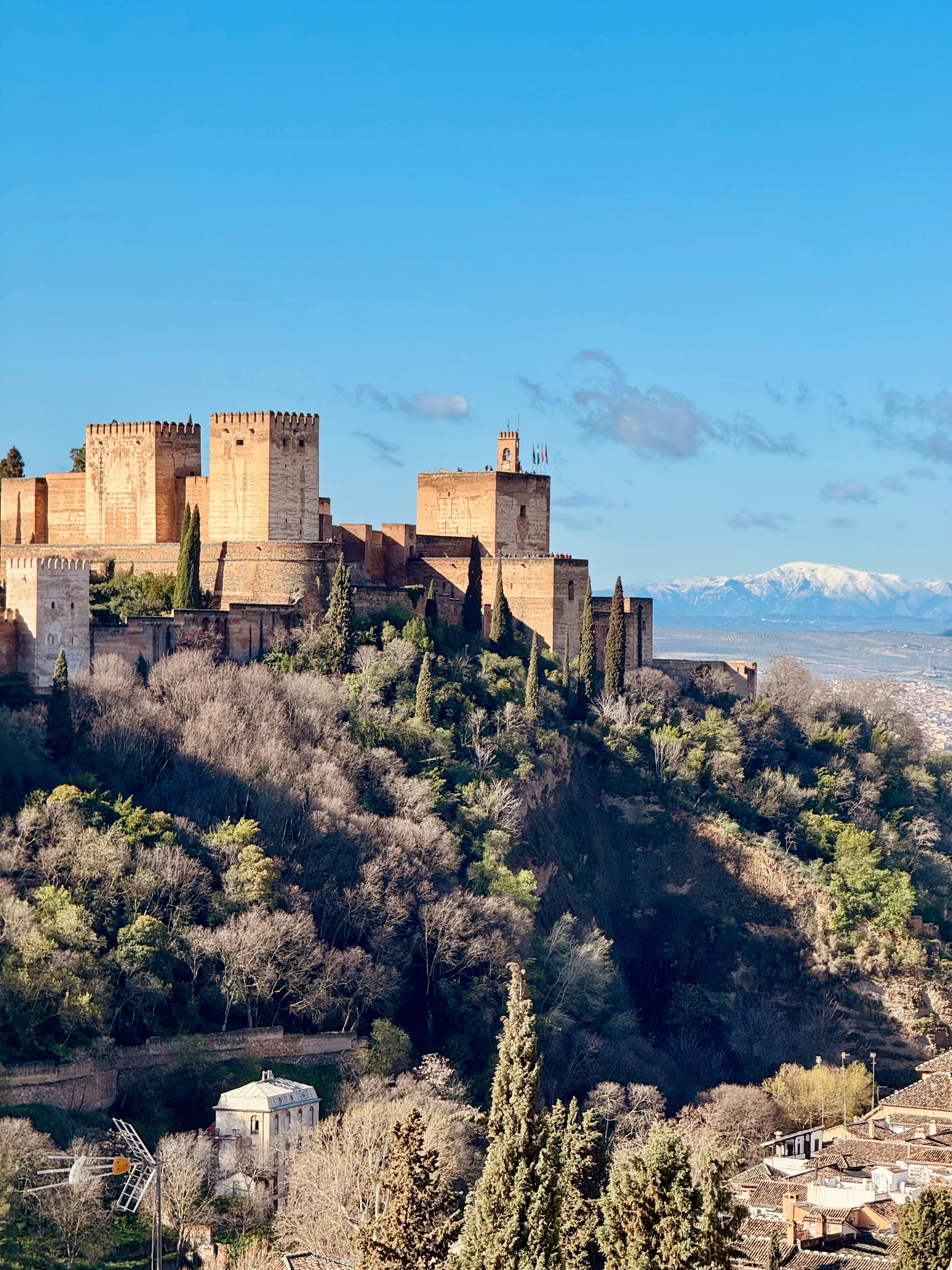
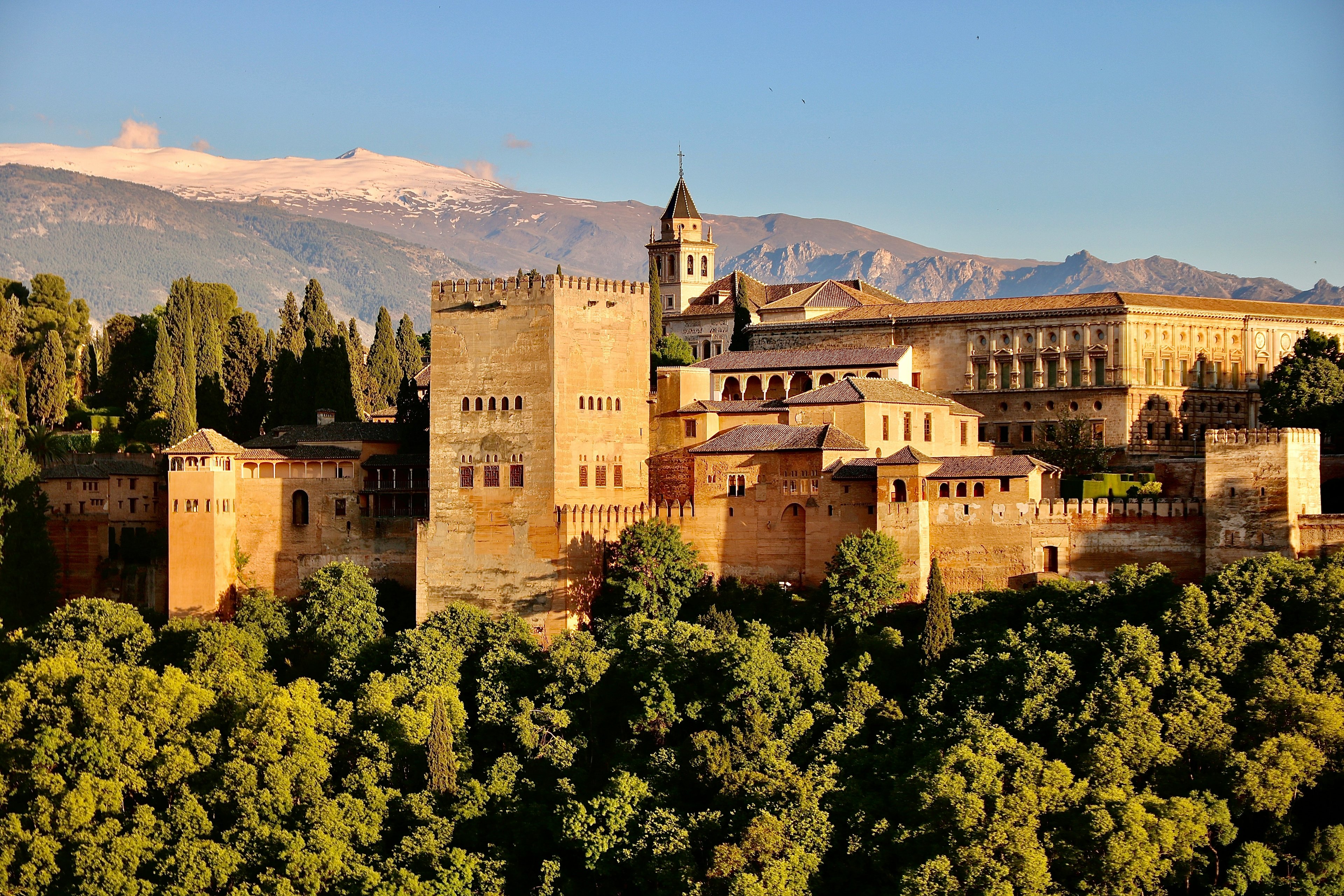
There are places that justify a journey on their own, and the Alhambra is one of them. More than a monument, it is a palatine city suspended between history and imagination. Built on the Sabika hill, it dominates Granada like a constant presence: visible from many points, silent, powerful, almost unreal when the sun goes down and its walls take on a coppery tone.
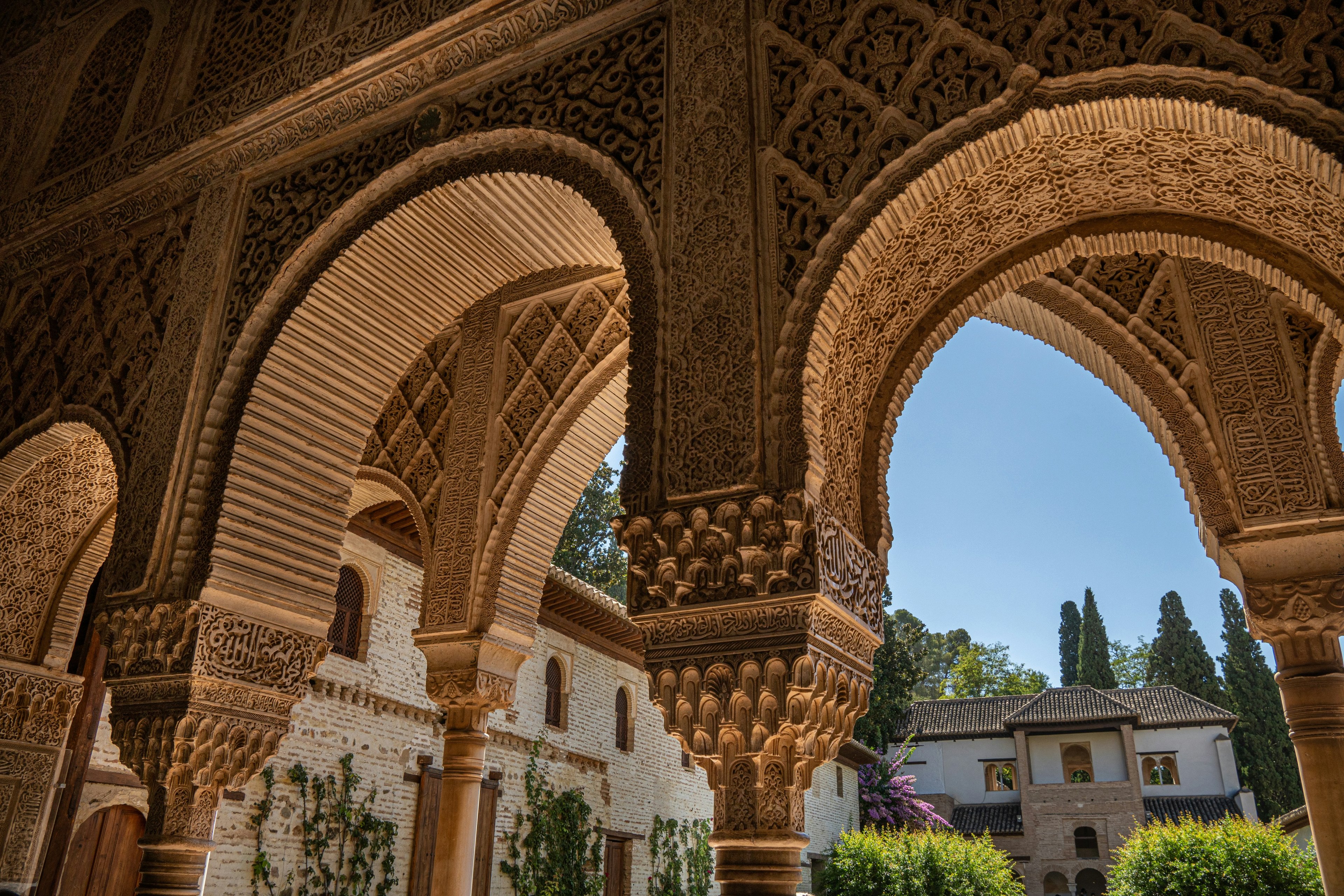
Walking through its Nasrid palaces means entering an architecture designed to move without excess. Here, grandeur does not rule; proportion does, detail, calligraphy, the murmur of water, and the delicacy of light filtering through the arches. The Court of the Myrtles, the Court of the Lions, and the muqarnas-covered halls still leave an impression that is difficult to describe, even in an age saturated with images.
It is wise to book well in advance, especially in spring and autumn. And it is wise to go without rushing. The Alhambra is not understood in a race for photographs; it is understood by walking slowly, allowing yourself to be carried as well by the Generalife, its gardens, its water channels, and that deeply Andalusian idea of paradise as an ordered, cool, and serene garden.
Albaicín: the white quarter that looks toward the Alhambra
Facing the Alhambra, on the other side of the valley, the Albaicín preserves Granada’s most intimate texture. This former Muslim quarter is a labyrinth of narrow streets, white houses, hidden cármenes, and steep lanes that force you to change your rhythm. You do not stroll quickly here. Here you climb, breathe, turn a corner, and suddenly a view appears that is worth an entire journey.
The San Nicolás viewpoint is the best known, and rightly so: few scenes in Europe have the power of the Alhambra with Sierra Nevada in the background. But the Albaicín does not end there. It is worth getting lost in quiet little squares, wandering through the area around San Miguel Bajo, descending toward the Carrera del Darro, or stopping in any of those corners where the city seems to speak in a low voice.
One of the keys to the neighborhood is walking through it at different times of day. In the morning it has something of a suspended village; at sunset it turns golden and contemplative; at night, when the bustle fades, it feels almost outside time. Granada knows a great deal about that: about letting the past continue to breathe within the present.
Carrera del Darro and Paseo de los Tristes: beauty at river level
Few streets possess the melancholic elegance of the Carrera del Darro. Following the course of the river, between stone bridges, old façades, and the long shadow of the Alhambra cast over the hill, this stretch gathers an essential part of Granada’s enchantment. There is no need to do anything special here: it is enough simply to walk.
Paseo de los Tristes, despite its name, is one of the most beautiful places to simply sit and take it all in. The terraces, the street musicians, the golden stone, the silhouette of the fortress above, and the feeling of being at the exact point where all the layers of Granada converge make it one of those scenes travelers remember long afterwards.
It is especially pleasant early in the morning or at the end of the afternoon. In summer, the proximity of the river also offers a slight respite from the heat. And in any season, it serves as a reminder that Granada is not only visited from within its monuments: it is also discovered in its transitions, in its routes, in its silences.
Sacromonte: caves, flamenco, and a character of its own
If the Albaicín looks toward the Alhambra, Sacromonte looks at Granada from somewhere else: more popular, rougher, freer. This hillside neighborhood of cave houses belongs to the city’s deepest imagination. Here resonate Romani history, flamenco in its most visceral form, and a way of inhabiting the landscape unlike any other.
Climbing up to Sacromonte means glimpsing a Granada that is less monumental and more lived-in. The views open up, the air changes, and the city seems to spread out beneath your feet. For years, this has been one of Andalusia’s most singular cultural territories, and even today it retains an extraordinarily strong identity, despite the pressure of tourism.
At night, attending a zambra in a cave can be an intense experience if you choose the place well. More than spectacle, what matters here is authenticity, closeness, a sense of truth. Granada, in this as in almost everything, rewards those who avoid the surface.
Granada’s tapas culture: eating well without ceremony
Granada remains one of the Spanish cities where the tradition of tapas best preserves its popular spirit. Here, a tapa is not a symbolic gesture: it still forms a real part of everyday life. You order a drink and food appears. Sometimes simple, sometimes surprisingly generous, almost always woven into a style of socializing that makes the hours stretch on without you noticing.
There are classic bars in the center, taverns with a more traditional air, modern corners, and streets where one stop easily leads to another. What matters is not only what is eaten, but how it is eaten: standing at the bar, in the sun, linking conversation and wandering. Among the things worth trying are broad beans with ham, fried aubergines with honey, dishes with Moorish influences, piononos on a detour to Santa Fe, or simply a good platter accompanied by local wine.
Granada also blends its Andalusian heritage with an unpretentious popular cuisine. That combination of spices, sweetness, light frying, produce from the fertile plain, and bar culture makes it especially rewarding for travelers with appetite and curiosity.
Realejo: the Granada you experience without a map
Beyond its obvious monumentality, Realejo offers another face of Granada. Once the Jewish quarter, today it is a mix of local life, street art, small squares, and quiet slopes, making it an ideal place to walk without a rigid itinerary. It has less solemnity than the Albaicín and less scenic weight than the surroundings of the Alhambra, but precisely because of that it feels deeply livable.
Here you find façades marked by murals from El Niño de las Pinturas, bars where the city seems to speak to itself, and corners where a contemporary, university-shaped, neighborhood Granada can be felt. It is a district to walk without a fixed goal, to have breakfast slowly, to improvise lunch, or to take refuge from the city’s most touristed routes.
In many cities, these intermediate neighborhoods are the places that truly allow you to understand how everyday life beats. In Granada, that is true as well.
When to go: spring, autumn, and the privilege of light
Granada has several good seasons, but not all of them offer the same experience. Spring is probably its gentlest moment: mild temperatures, gardens in full bloom, Sierra Nevada still visible with snow, and an especially clear light. Autumn, meanwhile, brings a quieter beauty, less overcrowding, and long afternoons that are especially pleasant for walking.
Summer can be harsh in the middle of the day, although the proximity of the mountains and the city’s nightlife make up for some of the fatigue caused by the heat. Winter, on the other hand, gives the city a particular character: cold air, clear skies, the possibility of combining urban heritage with escapes to Sierra Nevada, and an atmosphere that feels more inward-looking, less expansive, but also deeply attractive.
If you are looking for the best balance between climate, beauty, and urban enjoyment, April, May, October, and early November are usually excellent choices.
Practical tips for enjoying Granada properly
Granada is a city made for walking, but also for pacing yourself. The slopes of the Albaicín and Sacromonte are part of the experience, so it is worth wearing comfortable shoes and avoiding overly rigid daily plans. The historic center is easy to explore on foot, although taxis and urban buses help when the hills begin to take their toll.
Booking the Alhambra in advance is not just advisable: it is almost essential. And it is worth planning the trip for at least three days, ideally four, so the city does not turn into a sequence of photographs without pause. Granada becomes much richer when monumental landmarks are alternated with moments that have no fixed purpose.
It is also helpful to distinguish between “seeing” and “being.” Seeing the Alhambra is necessary. Being in Granada also means sitting in a square, letting the afternoon pass, looking at the city from a secondary viewpoint, listening to what is happening around you. That is where the most valuable part of the journey begins.
A city that never quite ends
Granada has the rare ability to feel immense without ever ceasing to feel close. It is a city made of layers: Muslim, Christian, Jewish, popular, student, poetic. A city where history is not enclosed in display cases, but embedded in the streets, in the water, in the slopes, in the names, in the very way of looking.
Many travelers arrive thinking about the Alhambra and leave remembering something else: a dusk view from the Albaicín, a conversation at a bar, a distant guitar, snow on the mountains, the color of a whitewashed wall at the end of the day. Granada cannot be exhausted by a monument, however extraordinary it may be. It opens itself little by little, and the more slowly you move through it, the more it stays with you.
It is never fully visited in a single trip. And perhaps that is part of its greatness.
A Smart 48-Hour Plan
A balanced day in Granada works best like this: in the morning, book the Alhambra for the first slot if possible; around midday, descend toward Realejo or the centre for lunch away from tourist pressure; in the afternoon, climb the Albaicín through shaded streets and real pauses; at sunset, choose one viewpoint rather than trying them all; and at night, dine near your lodging or in an area you can walk back from. The point is not to fill every minute, but to avoid the most common friction points: heat, queues, long transfers and meals chosen when everyone is already tired.
How To Order The Route Without Backtracking
Think of the experience as a simple line: Alhambra, Realejo, Albaicín, viewpoints and an unhurried dinner. This mental map helps you decide what to skip if the day gets slower than expected. A good itinerary is not the one that covers the most places, but the one that keeps the route coherent and gives each stop enough time to be remembered.
Best Base For Staying Overnight
If you sleep in an Albaicín apartment, ask about access, taxis and stairs before booking. Views can be magnificent, but luggage logistics change everything.
Three Choices That Can Spoil The Trip
Do not visit the Alhambra without a secured ticket; do not climb to Sacromonte at the hottest hour; and do not assume a free tapa automatically means good food.
When To Go And How To Move Around
Spring and autumn are excellent; summer requires early starts and long pauses; winter brings Sierra Nevada close and a calmer city. For transport, choose the simplest connection back to your lodging before adding extra stops. For accessibility, reduce cobbled streets, steep climbs or long beach approaches when travelling with children, older guests, wheelchairs or heavy luggage.
Where To Eat Beyond The Obvious
For eating well, separate informal tapas from a seated meal. Realejo, the centre and less saturated parts of the Albaicín often balance quality and comfort better than the most obvious viewpoint terraces.
Common questions before you go
Quick answers to decide whether 48 Hours In Granada: Alhambra, Albaicín And Viewpoints Without Rushing fits your trip and how to plan it with a Destinations lens.
How much time should I set aside for 48 Hours In Granada: Alhambra, Albaicín And Viewpoints Without Rushing?
A half day is the sensible minimum. If it is your first visit, leave time to walk slowly and add a proper meal or rest stop.
What is the best season for this experience?
It works year-round, but spring and autumn usually offer the best balance of weather, light and crowds.
What is the best way to get around?
Combine public transport with short walks. Moving a car between central stops usually costs more time than it saves.
What is your advice if I am staying nearby?
Use the proximity to split the plan in two: the main visit in the morning and a freer walk late in the day.
What mistake should I avoid?
The most common mistake is trying to see everything in one day. Choose a coherent route and leave something for another time.
Operating a Rental in this area?
Stay fully compliant with Spain's strict tourism regulations. HazCheckin automates your guest registration and legal reporting directly to Spanish authorities.