
By Marcos Riera
Guide reviewed under editorial standards
This experience is structured to provide an itinerary, local context, transport, recommended season and mistakes to avoid. See how we review guides
How to make the most of this experience
Useful planning notes for Córdoba Through Patios And Taverns: Mosque, Jewish Quarter And Salmorejo with a Destinations lens, especially if you are travelling with limited time or staying nearby.
Recommended duration
Between half a day and two days, depending on your pace and the stops you add.
Best season
Winter and cooler days, with layers and shorter daylight hours in mind.
How to get around
Prioritise public transport and walking sections; avoid moving the car between nearby stops.
Best for
First-time visitors, couples, apartment-based travellers and weekend breaks.
Accessibility
Check slopes, cobbles and real walking distances before closing the route.
Estimated budget
Medium: combine free visits with one or two well-chosen paid entries.
Keep the most demanding visit for the morning and leave the afternoon for walks from your stay.
Trying to see everything in one day and ending up jumping from photo to photo.
Córdoba feels like a city that speaks softly. It does not need to impose itself: cross a whitewashed street, hear a fountain behind a door or step into the half-light of the Mosque-Cathedral and you understand that history here is not locked inside museums, but woven into daily life.
This experience explores Córdoba at the pace it deserves: slowly, following the shade, stepping into patios, crossing the river and leaving space for the blend of cultures, aromas and silences that made the city one of the great centers of the medieval Mediterranean.
The Mosque-Cathedral: a forest of arches
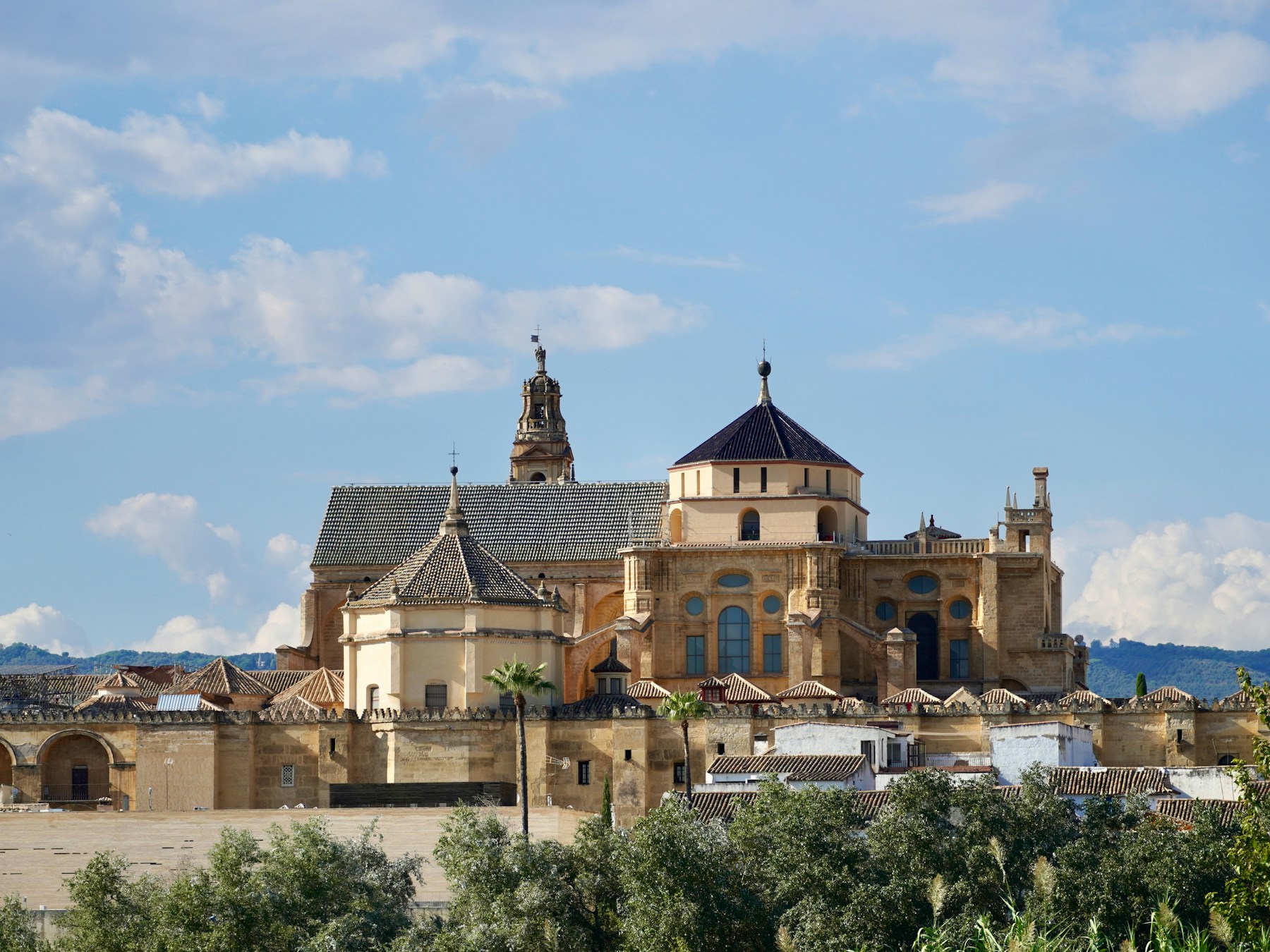
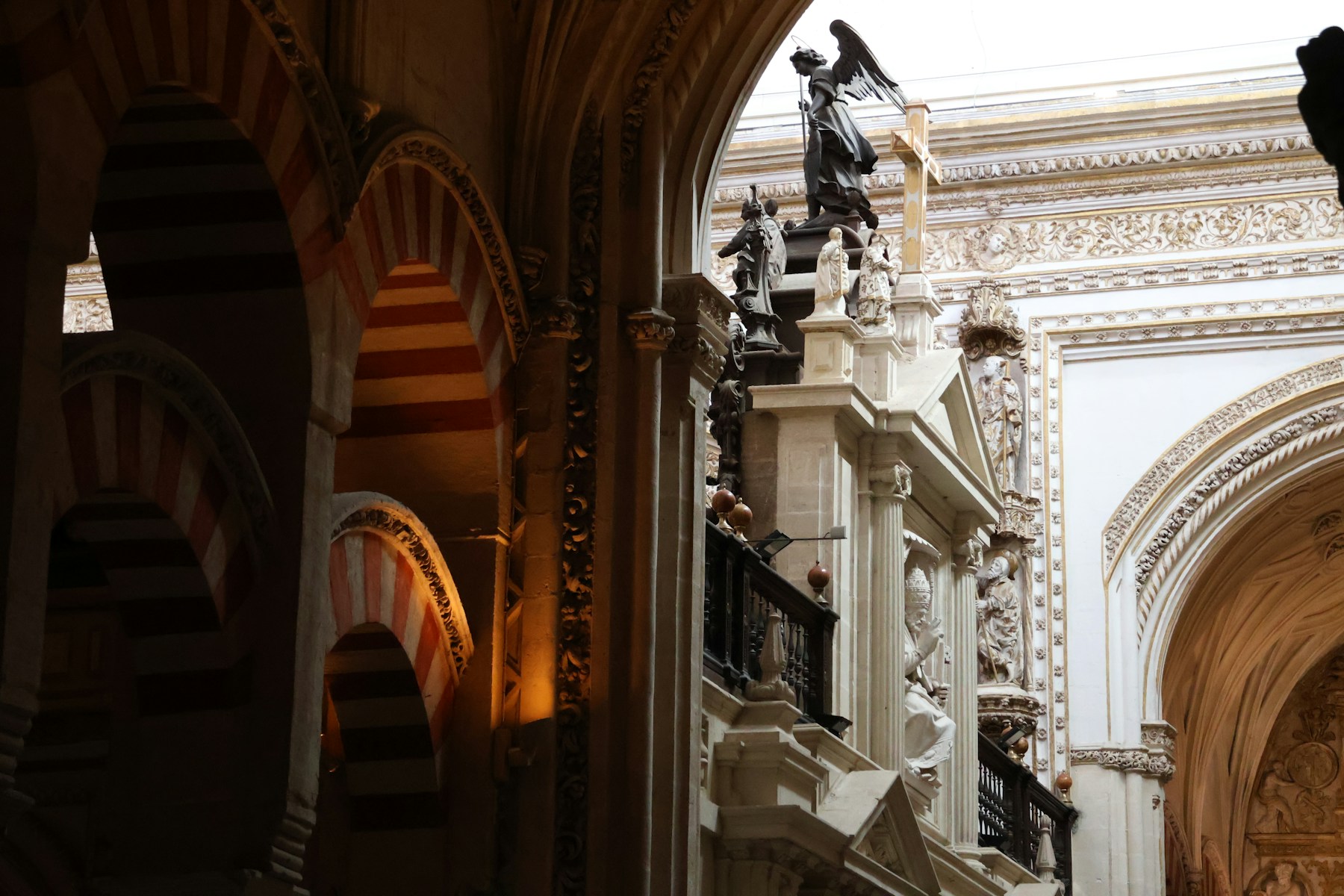
The Mosque-Cathedral of Córdoba is one of those places that exceeds any photograph. From the outside, it combines fortress, bell tower and Islamic memory; inside, visitors enter a forest of columns where red-and-white arches seem to repeat into infinity. It is architecture, but also rhythm.
The building’s greatness lies in its complexity. It was an Umayyad mosque, expanded over centuries and later converted into a Christian cathedral. That dialogue, sometimes harmonious and sometimes tense, can be felt at every step: the caliphal maqsura, the mihrab, the hypostyle halls and the Main Chapel breathe within the same historical body.
The Jewish Quarter and cooling streets
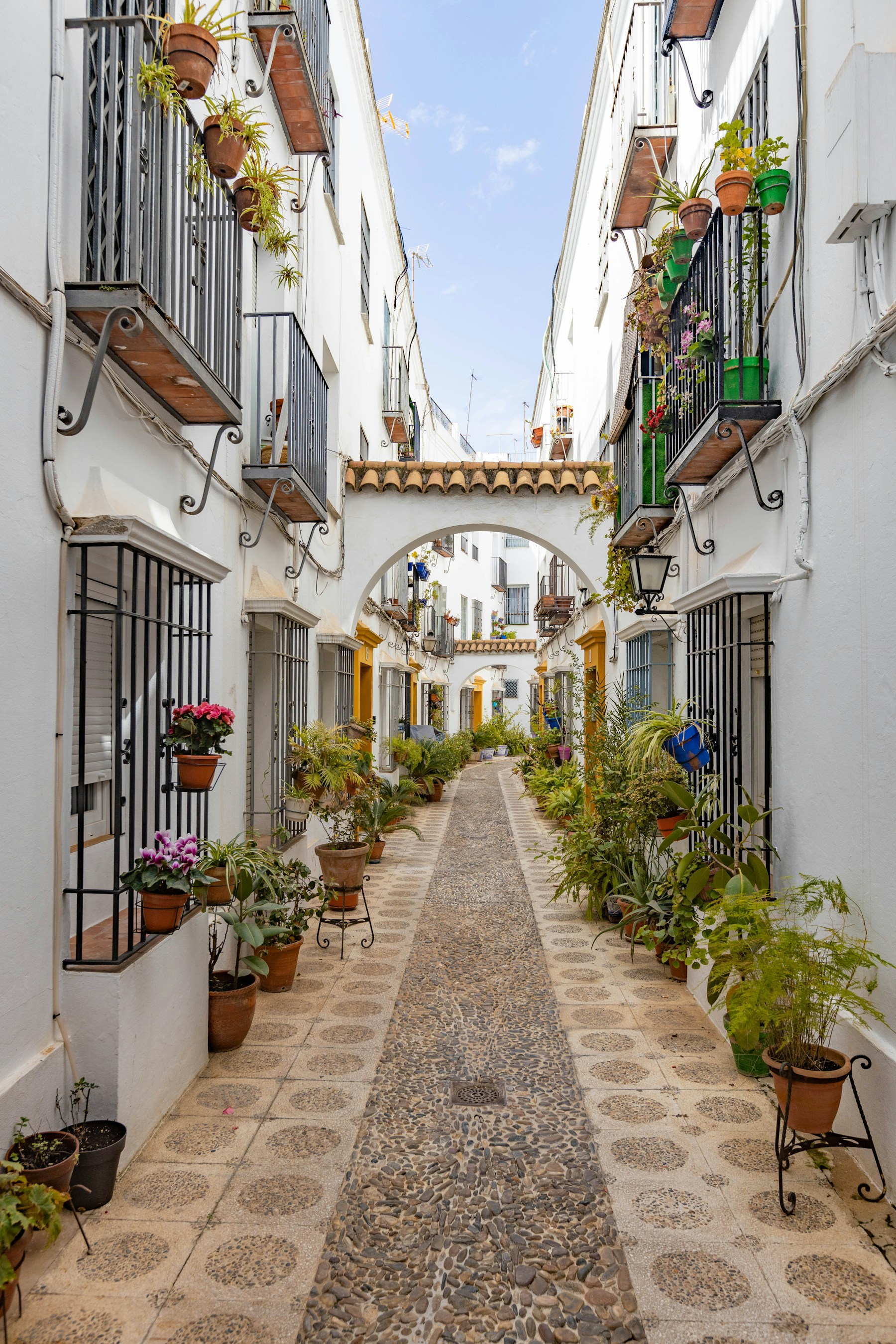
Around the Mosque-Cathedral stretches the Jewish Quarter, a maze of narrow streets, white façades and flowerpots that turns a walk into a sequence of small discoveries. Calleja de las Flores is the famous postcard, but the real charm appears when you move away from the main flow and let the shade guide you.
Here Córdoba becomes intimate. There are workshops, half-open patios, discreet taverns and squares where time seems to sit down. The small and delicate Synagogue recalls the importance of the medieval Jewish community, while street names and corners preserve echoes of a city that once crossed languages, religions and knowledge.
Patios: the architecture of private life
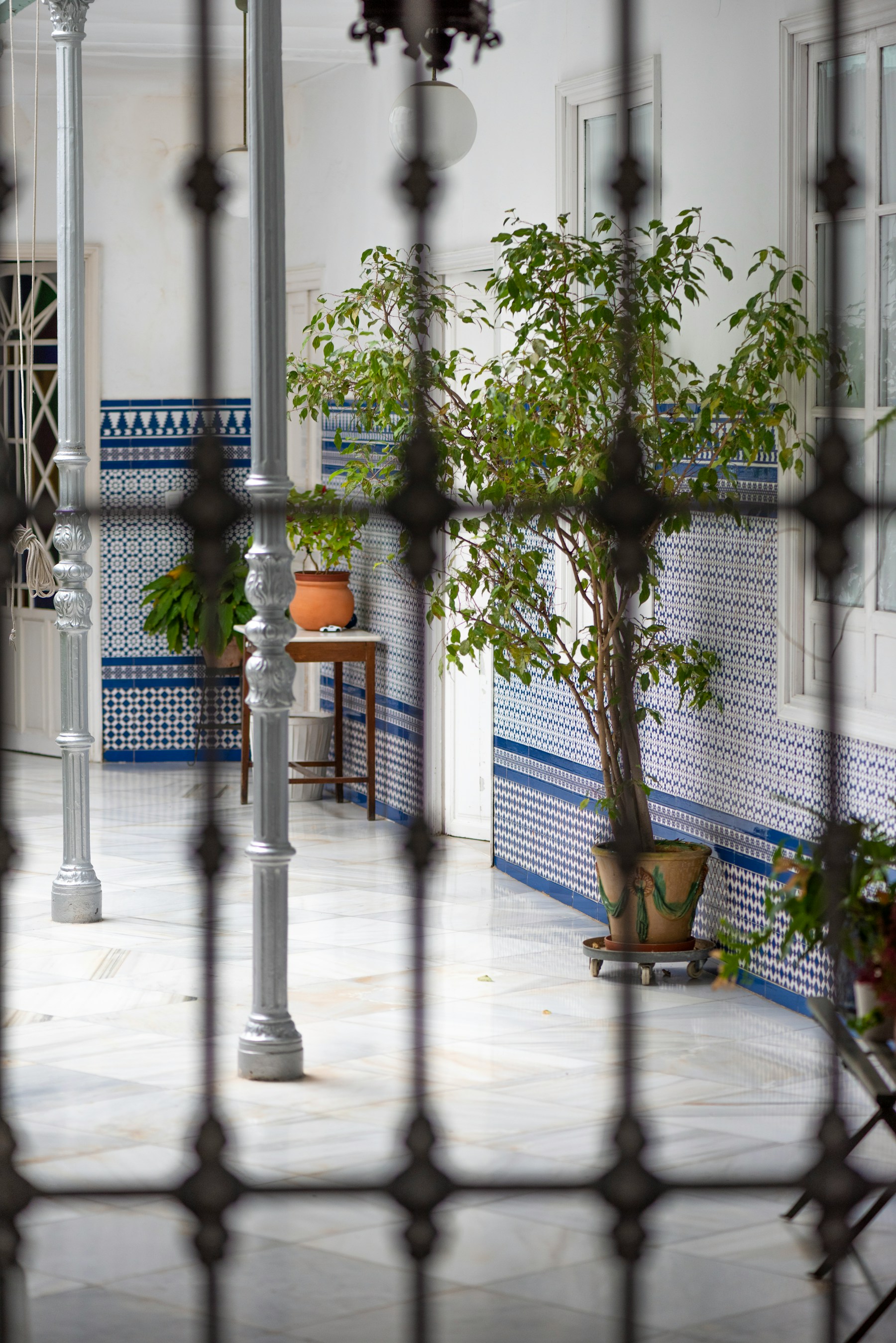
Córdoba’s patios are far more than a May attraction. They are an intelligent response to climate, a way of making heat livable and an expression of domestic pride. Behind quiet walls appear wells, tiles, geraniums, jasmine and flowerpots arranged with a precision that only looks spontaneous because it has been practiced for generations.
During the Patio Festival, the city opens some of its most beautiful houses, but patios can also be visited outside those dates in areas such as San Basilio. The important thing is to look slowly: a Cordoban patio does not shout, it cools.
The Roman Bridge and the city at dusk
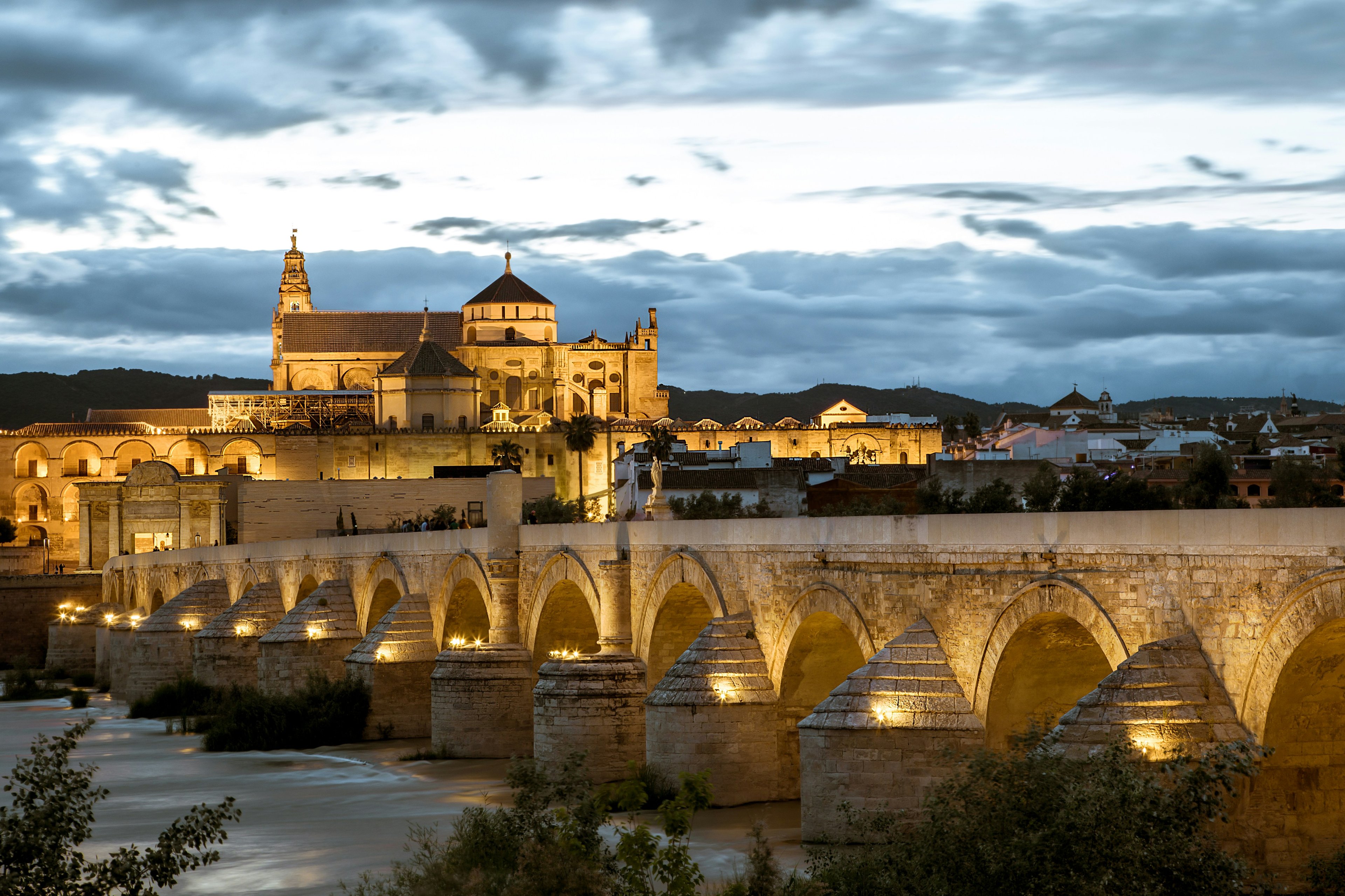
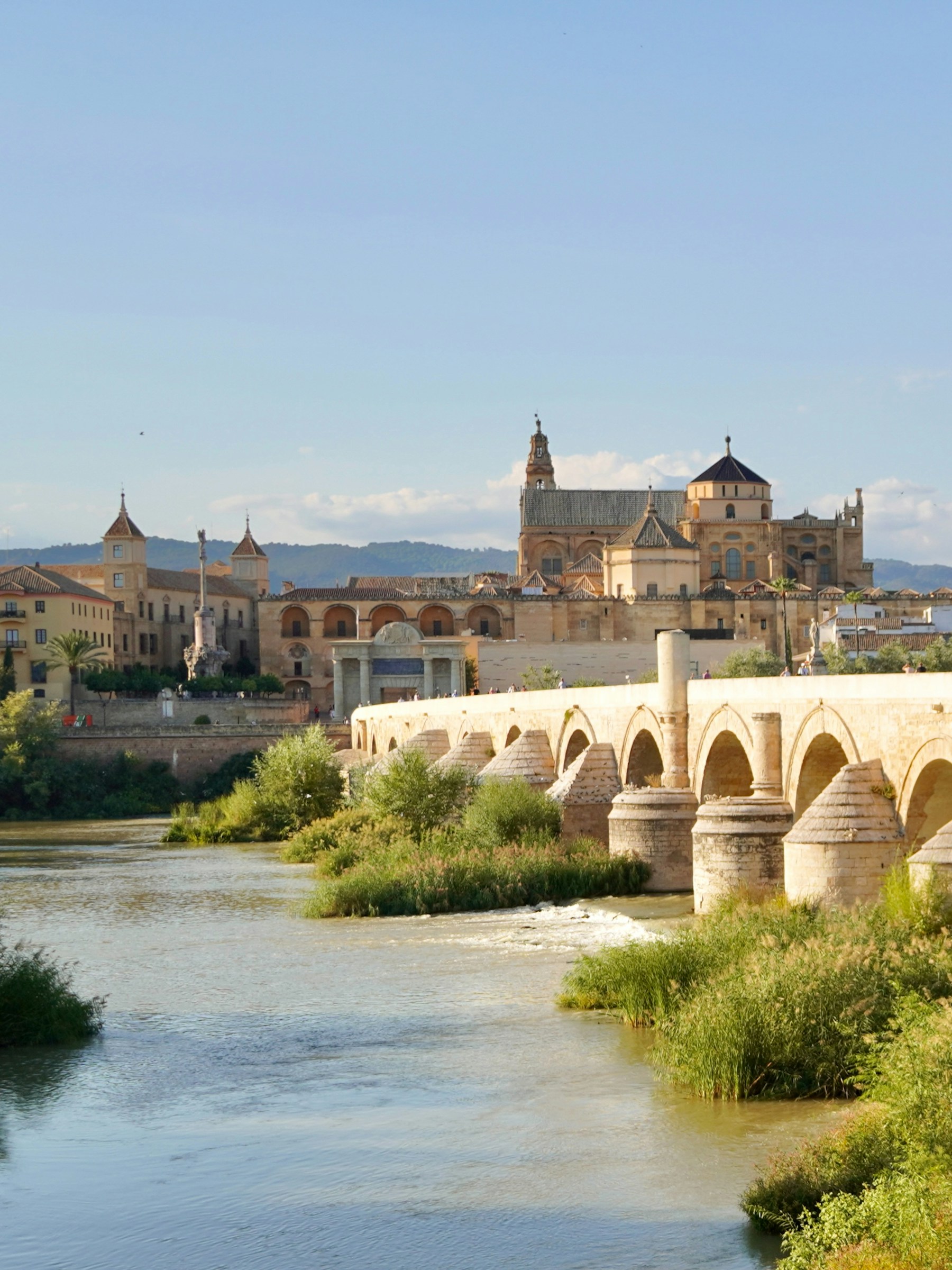
Crossing the Roman Bridge, Córdoba is understood from another distance. The silhouette of the Mosque-Cathedral, the Calahorra Tower and the Guadalquivir River form one of Andalusia’s most serene views. At sunset, the stone turns warm and the city seems to gather into itself.
The walk works both ways: from the center toward Calahorra to look back, or from the far bank toward the old gate of the city. It is a good moment to slow down and let Córdoba do what it does best: turn history into landscape.
Taverns, salmorejo and rooted cooking
Córdoba is eaten with a spoon, bread and conversation. Salmorejo cordobés is the emblem: thick, cold, bright and topped with egg and ham. But the local table continues with flamenquín, oxtail, fried eggplant with honey, artichokes, mazamorra and wines from Montilla-Moriles that accompany without stealing the scene.
The taverns of the center and neighborhoods such as San Lorenzo or San Andrés preserve a way of eating tied to the bar and to familiarity. Do not obsess over one famous place: Córdoba rewards stepping into somewhere with the sound of plates, old tiles and people who seem to have known the waiter for years.
Medina Azahara: the lost city
A few kilometers from the center, Medina Azahara opens another door into caliphal Córdoba. Abd al-Rahman III ordered this palatine city built in the 10th century as a symbol of power, refinement and political ambition. Today its ruins allow you to imagine halls, gardens, administrative courtyards and a court that stood among the great centers of the Islamic world.
The visit complements the Mosque-Cathedral perfectly because it shifts the perspective: this is not only the current historic city, but the capital of a caliphate that was a cultural, scientific and artistic beacon. Go in the morning and save time for the site museum.
When to go and how to move around
Spring is Córdoba’s most celebrated season: patios, crosses, flowers and still-manageable temperatures. May is beautiful, but also very popular. For a calmer visit, March, April, October and November work very well. In summer the heat can be extreme, so plan monuments early and hide from the midday sun.
The historic center is best explored on foot, and that is part of the experience. Córdoba does not require big distances, but good timing, comfortable shoes and a willingness to get a little lost. The train connects well with Seville, Madrid and Málaga, making it a perfect stop on an Andalusian route.
A city that teaches you to lower your voice
Córdoba leaves a different impression from other monumental cities. Its beauty does not always arrive as spectacle: often it is in an open door, the coolness of a narrow street, a humble recipe or the exact shadow of an arch. Perhaps that is why it is remembered so clearly. Córdoba does not impose itself; it remains.
A Food Route With Real Stops
A balanced day in Córdoba works best like this: in the morning, enter the Mosque-Cathedral early and leave time to look, not just pass through; around midday, walk the Jewish quarter and patios with shaded pauses; in the afternoon, drop toward the Roman bridge or rest during the hardest hours; at sunset, see the city from the riverbank before dinner; and at night, look for a quiet tavern and walk again when heat fades. The point is not to fill every minute, but to avoid the most common friction points: heat, queues, long transfers and meals chosen when everyone is already tired.
Areas Where Eating Makes Sense
Think of the experience as a simple line: Mosque-Cathedral, Jewish quarter, patios, riverbank and taverns. This mental map helps you decide what to skip if the day gets slower than expected. A good itinerary is not the one that covers the most places, but the one that keeps the route coherent and gives each stop enough time to be remembered.
If You Eat Near Your Lodging
If you sleep in the old town, ask about access and parking. The location can be beautiful, but not every lodging is easy with luggage or a car.
Signs That Help You Avoid Bad Choices
Do not treat the Mosque-Cathedral as a half-hour box to tick; do not leave patios for the hottest hour; and do not confuse a pretty terrace with good Cordoban cooking.
Timings, Bookings And Accessibility
May is special for patios but also busier; spring and autumn are best; summer requires shade planning. For transport, choose the simplest connection back to your lodging before adding extra stops. For accessibility, reduce cobbled streets, steep climbs or long beach approaches when travelling with children, older guests, wheelchairs or heavy luggage.
Our Criteria For Choosing A Table
Choose salmorejo, aubergines, flamenquín or tavern cooking where you see local turnover; areas around the Jewish quarter can work if you avoid overly universal menus.
Common questions before you go
Quick answers to decide whether Córdoba Through Patios And Taverns: Mosque, Jewish Quarter And Salmorejo fits your trip and how to plan it with a Destinations lens.
How much time should I set aside for Córdoba Through Patios And Taverns: Mosque, Jewish Quarter And Salmorejo?
A half day is the sensible minimum. If it is your first visit, leave time to walk slowly and add a proper meal or rest stop.
What is the best season for this experience?
It works year-round, but spring and autumn usually offer the best balance of weather, light and crowds.
What is the best way to get around?
Combine public transport with short walks. Moving a car between central stops usually costs more time than it saves.
What is your advice if I am staying nearby?
Use the proximity to split the plan in two: the main visit in the morning and a freer walk late in the day.
What mistake should I avoid?
The most common mistake is trying to see everything in one day. Choose a coherent route and leave something for another time.
Operating a Rental in this area?
Stay fully compliant with Spain's strict tourism regulations. HazCheckin automates your guest registration and legal reporting directly to Spanish authorities.