By Inés Valls
Guide reviewed under editorial standards
This experience is structured to provide an itinerary, local context, transport, recommended season and mistakes to avoid. See how we review guides
How to make the most of this experience
Useful planning notes for Cádiz On Foot And Hungry: Market, La Viña And La Caleta Sunset with a Destinations lens, especially if you are travelling with limited time or staying nearby.
Recommended duration
Between half a day and two days, depending on your pace and the stops you add.
Best season
Summer and late spring, avoiding the middle of the day for outdoor plans.
How to get around
Prioritise public transport and walking sections; avoid moving the car between nearby stops.
Best for
First-time visitors, couples, apartment-based travellers and weekend breaks.
Accessibility
Check slopes, cobbles and real walking distances before closing the route.
Estimated budget
Medium: combine free visits with one or two well-chosen paid entries.
Keep the most demanding visit for the morning and leave the afternoon for walks from your stay.
Trying to see everything in one day and ending up jumping from photo to photo.
Cadiz has something that cannot be built: an intimate relationship with the sea. The city appears almost surrounded by water, bright and salty, as if the Atlantic had been polishing it for centuries. Its narrow streets, watchtowers, small squares and outward-facing way of life make the visit feel close rather than monumental, even though heritage is everywhere.
This experience follows the Silver Cup from the Cathedral to La Caleta, through El Populo, Torre Tavira, the market, seafront walks and the simple food culture of fried fish, shrimp fritters and cold wine. Cadiz is understood on foot, slowly, letting the light change and the wind set the pace.
The Cathedral beside the Atlantic
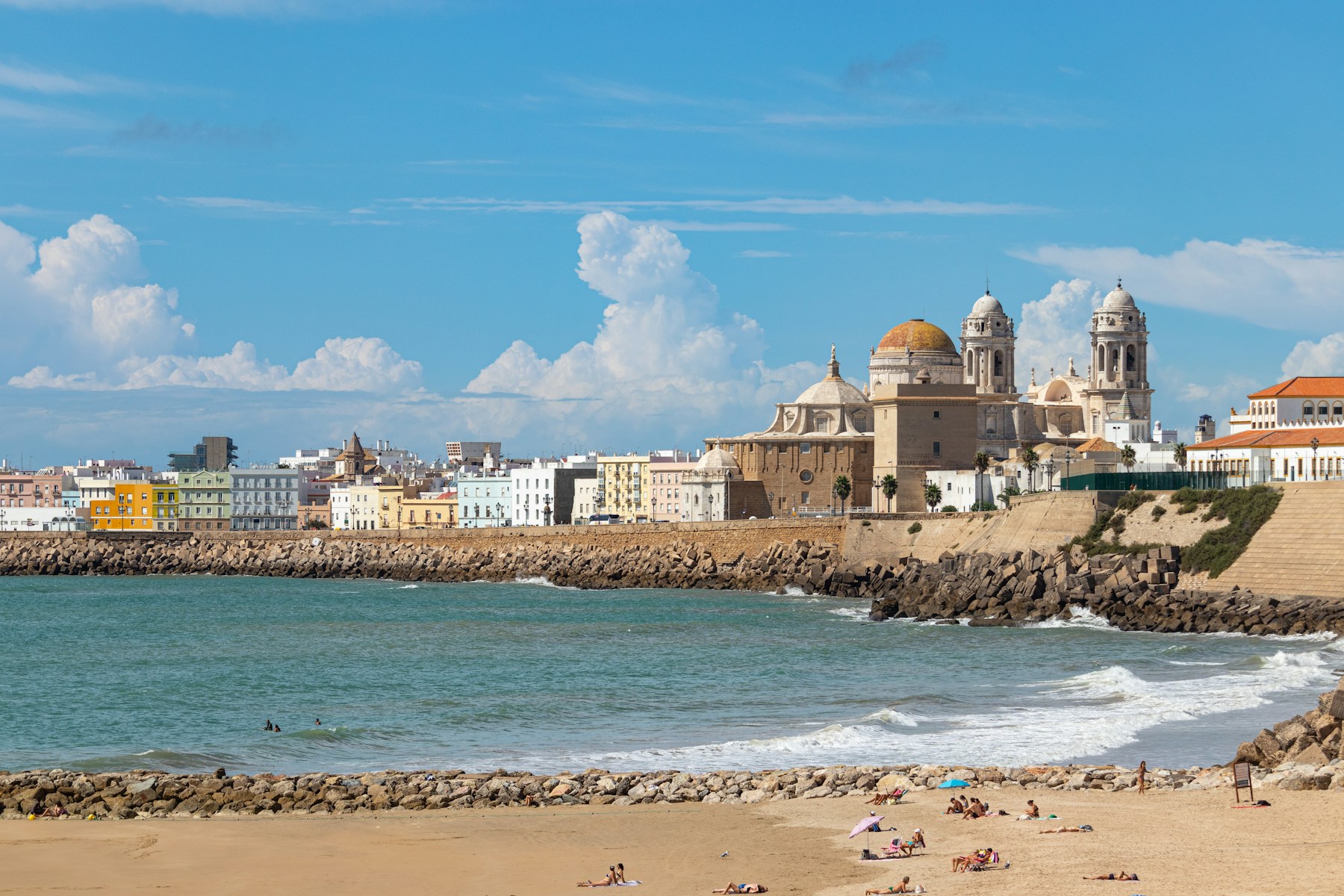
Cadiz Cathedral seems to look at the sea naturally. Its golden dome, visible from many parts of the city, captures the local character well: elegant without being overly solemn, historic yet open to the salty air. The square in front of it works as a bright antechamber, with terraces, palm trees and a constant flow of locals and visitors.
Walk around it before going inside. From Campo del Sur, the Cathedral profile becomes stronger with the ocean behind it and colourful facades holding the line of the promenade. Inside, the mixture of styles reminds you that the building took more than a century to complete, across changing tastes, budgets and periods. Climbing its towers helps you read the city as a small white and blue map.
El Populo and the oldest city
El Populo preserves the oldest memory of Cadiz. Medieval arches, narrow lanes, small squares and traces of wall coexist with bars, guesthouses and corners where everyday life continues without too much staging. Here history does not feel like a closed museum, but like another layer of the walk.
Entering through Arco de la Rosa or Arco del Populo changes the rhythm of the city. Streets suddenly narrow, facades come closer and every corner takes on a domestic scale. It is a good place to begin slowly, linking the Cathedral, the Roman Theatre and nearby taverns.
Torre Tavira and the rooftops of Cadiz
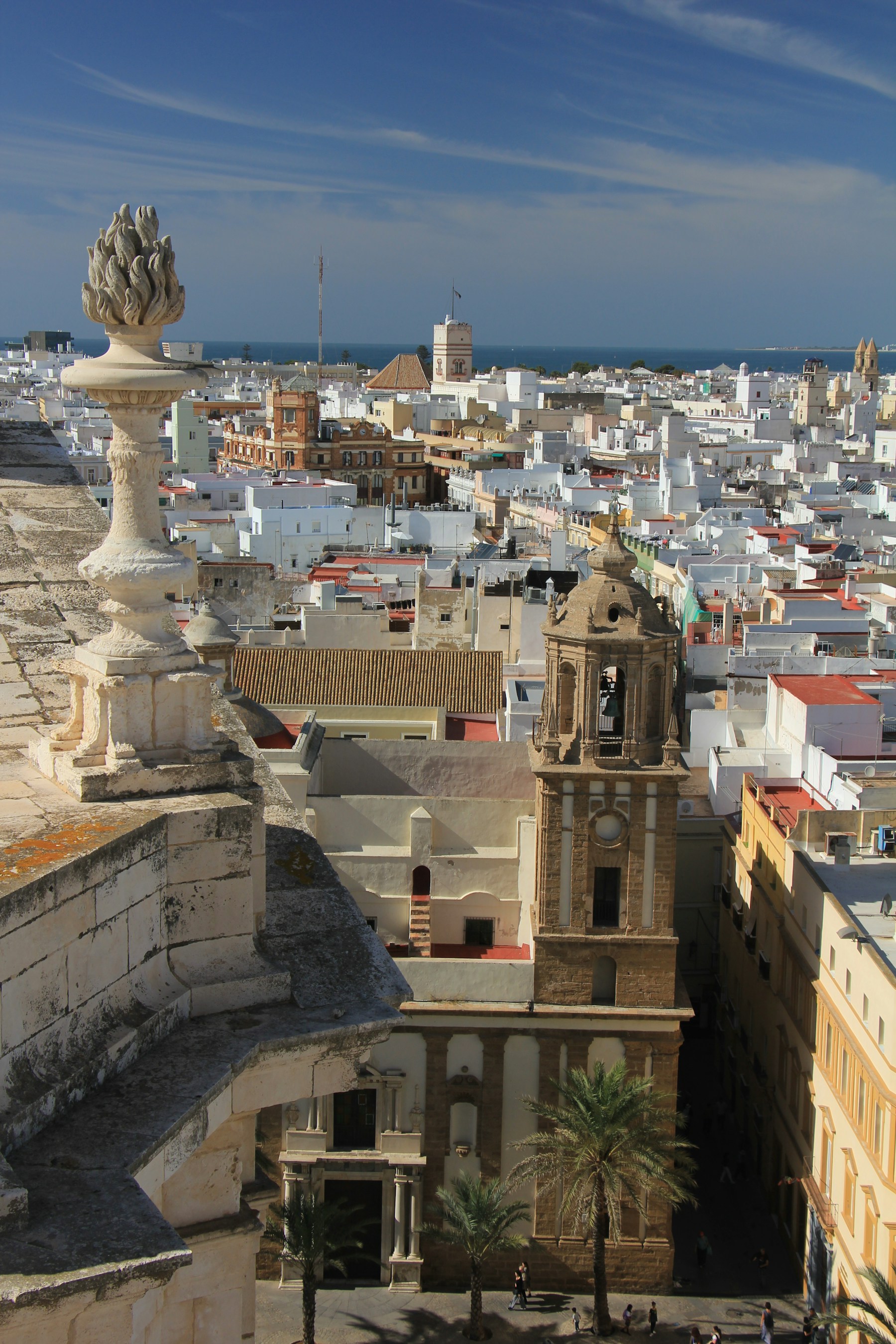
Cadiz was a city of merchants who watched the harbour from above. That is why so many watchtowers remain, built to observe the arrival of ships and goods. Torre Tavira is the best known and one of the clearest ways to understand the urban fabric: white rooftops, inner patios, churches, squares and the sea always appearing in the background.
The camera obscura adds surprise, but the essential moment is on the rooftop. From there Cadiz looks compact, luminous and almost floating. It is one of those viewpoints that does more than show a view: it mentally orders everything you have walked through.
La Caleta: beach, neighbourhood and sunset
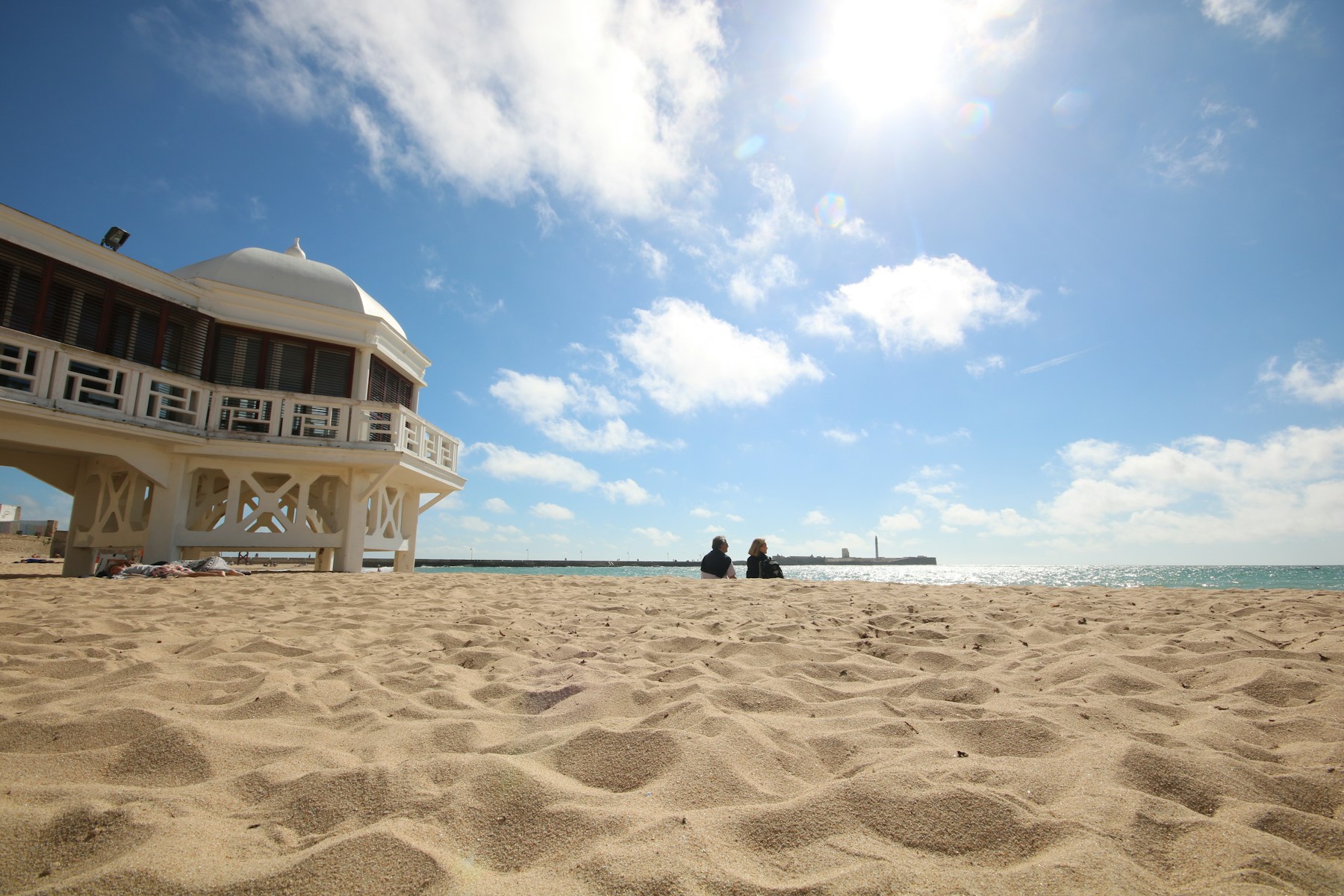
La Caleta is not just an urban beach. It is a small emotional scene of Cadiz, framed between the castles of Santa Catalina and San Sebastian, with moored boats, oyster stone, evening light and a deeply local rhythm. Swimming, strolling and conversation belong to the same habit here.
Sunset at La Caleta is almost compulsory, but it still works. The light drops over the Atlantic, silhouettes sharpen and the city seems to pause and look outward. If the levante wind blows, the mood changes; if the air is calm, the sea becomes a mirror. Either way, Cadiz becomes more itself.
Market, fried fish and lively bars
The Central Market is a perfect stop for feeling the pulse of the city. Fish, seafood, vegetables, traditional stalls and a food area where you can taste quick bites without losing contact with the atmosphere. Cadiz is best eaten without too much complication: clear produce, well-made frying and a desire to share.
Shrimp fritters, marinated dogfish, sea anemones, almadraba tuna, dressed potatoes or mackerel with piriñaca say more than a restaurant checklist. In Cadiz food has the quality of an everyday celebration. You order, comment, share and keep walking.
Walks between fortresses and ocean
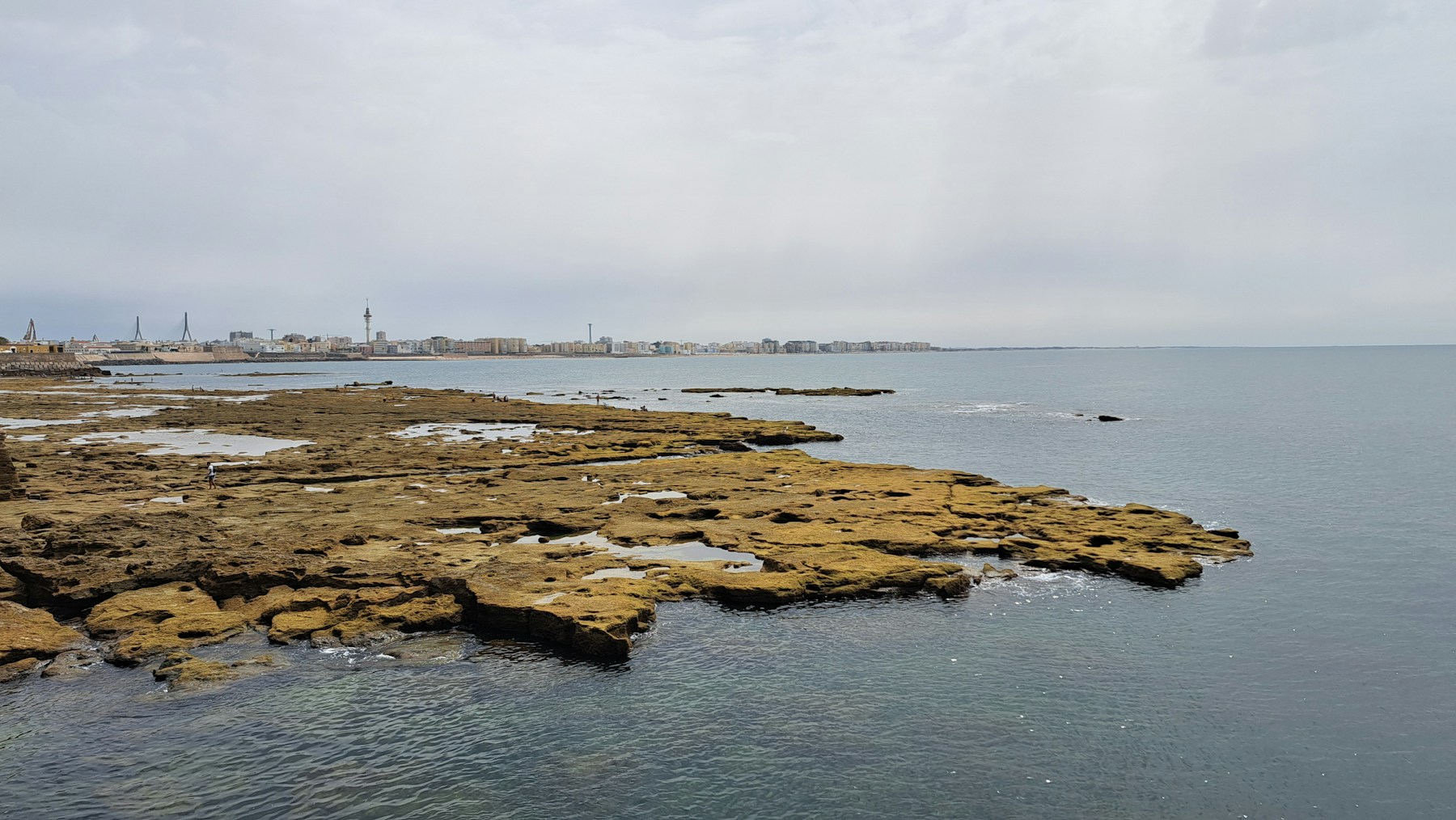
One of the great pleasures of Cadiz is walking its seafront edge. From La Caleta toward Parque Genoves, or along Campo del Sur toward the Cathedral area, the route alternates fortresses, gardens, old facades, waves and natural viewpoints. The city does not need long distances to change atmosphere.
The Castle of Santa Catalina and the area around the Castle of San Sebastian recall the defensive importance of Cadiz, always exposed to the sea and trade. Today those stones also serve for looking, breathing and understanding that the urban landscape here is never separate from the Atlantic horizon.
Carnival, accent and street life
Cadiz is famous for joy, but that joy is not superficial. Carnival reveals a critical, popular and witty tradition, where humour becomes a way of looking reality straight in the face. Even outside carnival season, something of that spirit remains in conversations, bar names and the quickness of local replies.
The city is lived very much in the street. Squares such as San Juan de Dios, Mina, San Antonio or Las Flores invite you to stop without turning it into a plan. Benches, terraces, children, older residents, students, travellers and constant crossings keep the historic centre from feeling like an empty postcard.
When to go and how to explore it
Spring and autumn are excellent times for Cadiz: good light, pleasant temperatures and less tourist pressure. Summer brings swimming and long nights, though booking ahead is wise. In winter, if the wind allows, the city keeps a very special luminous calm.
Ideally, give it at least two full days. One for the historic centre, the Cathedral, El Populo, Torre Tavira and the market; another for La Caleta, fortresses, seafront walks and slow meals. Cadiz is not measured in kilometres, but in changes of light, pauses and the wish to stay a little longer.
A city with salt in its memory
Cadiz leaves a physical sensation: salt on the skin, wind on the face, white light in the eyes and a mixture of history and humour unlike almost any other Andalusian city. It is ancient without becoming grave, maritime without easy postcard clichés, popular without losing beauty.
Those who arrive looking for monuments find a complete city. Those who arrive looking for sea find character. And those who allow themselves to walk without an agenda discover that Cadiz is visited not only for what it shows, but for how it changes your rhythm while you are inside it.
A Food Route With Real Stops
A balanced day in Cádiz works best like this: in the morning, enter through the Cathedral and Pópulo before the sun gets strong; around midday, eat near the market or in a neighbourhood with clear Cádiz produce; in the afternoon, pause and walk toward La Viña or Santa María; at sunset, keep La Caleta as the central moment, not a quick photo; and at night, have tapas in La Viña or the centre without getting too far from your lodging. The point is not to fill every minute, but to avoid the most common friction points: heat, queues, long transfers and meals chosen when everyone is already tired.
Areas Where Eating Makes Sense
Think of the experience as a simple line: Cathedral, old-town neighbourhoods, market, La Caleta and Atlantic promenade. This mental map helps you decide what to skip if the day gets slower than expected. A good itinerary is not the one that covers the most places, but the one that keeps the route coherent and gives each stop enough time to be remembered.
If You Eat Near Your Lodging
If you sleep in an old-town apartment, ask about parking first. Cádiz is wonderful on foot, but entering by car can be harder than the visit itself.
Signs That Help You Avoid Bad Choices
Do not come only for the beach; do not improvise driving in the historic centre; and do not give La Caleta only five minutes if the sky looks promising.
Timings, Bookings And Accessibility
Summer is lively but full; spring and September are very comfortable; winter gives a bright, more local Cádiz. For transport, choose the simplest connection back to your lodging before adding extra stops. For accessibility, reduce cobbled streets, steep climbs or long beach approaches when travelling with children, older guests, wheelchairs or heavy luggage.
Our Criteria For Choosing A Table
Eat with judgement by looking for well-made fried fish, tuna, tortillitas and the catch of the day. The market, La Viña and side streets usually offer better clues than seafront claims.
Common questions before you go
Quick answers to decide whether Cádiz On Foot And Hungry: Market, La Viña And La Caleta Sunset fits your trip and how to plan it with a Destinations lens.
How much time should I set aside for Cádiz On Foot And Hungry: Market, La Viña And La Caleta Sunset?
A half day is the sensible minimum. If it is your first visit, leave time to walk slowly and add a proper meal or rest stop.
What is the best season for this experience?
It works year-round, but spring and autumn usually offer the best balance of weather, light and crowds.
What is the best way to get around?
Combine public transport with short walks. Moving a car between central stops usually costs more time than it saves.
What is your advice if I am staying nearby?
Use the proximity to split the plan in two: the main visit in the morning and a freer walk late in the day.
What mistake should I avoid?
The most common mistake is trying to see everything in one day. Choose a coherent route and leave something for another time.
Operating a Rental in this area?
Stay fully compliant with Spain's strict tourism regulations. HazCheckin automates your guest registration and legal reporting directly to Spanish authorities.